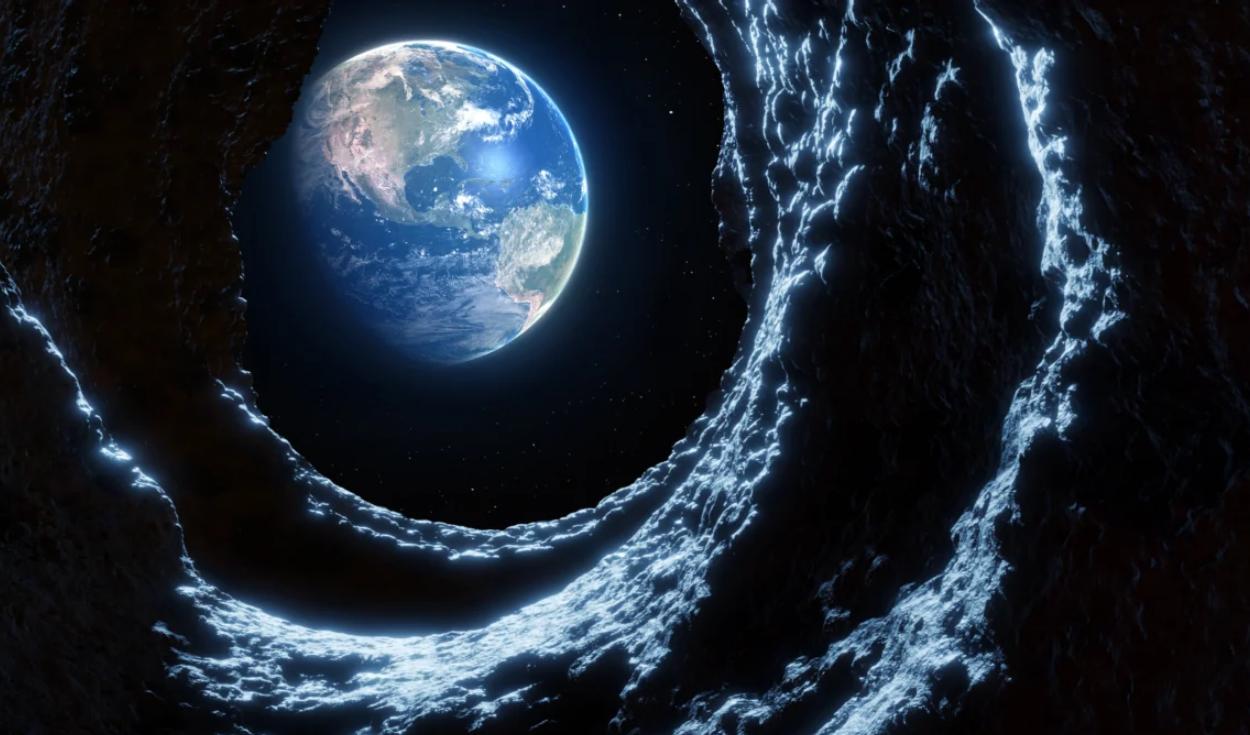
Scientists have detected gravitational signals consistent with four possible giant tunnels hidden beneath the surface of the Moon, according to a new study by geoscientists at the University of Illinois Chicago, a public research university based in Chicago, Illinois. The researchers say the structures have not been confirmed to exist, but their estimated size and location offer fresh clues about the Moon's volcanic past.
The four candidates match the gravitational signatures of lava tunnels less than two kilometers wide, buried under roughly 100 meters of lunar rock, according to the study, published in the journal Icarus. The team analyzed a model of the Moon's gravitational field that NASA released in May 2025. Icarus is a peer-reviewed scientific journal that specializes in research on planets, moons and other bodies of the solar system.
Lava tubes are long, cave-like channels that form as flowing lava drains away, leaving a hollow passage behind. On Earth, well-known examples lie beneath Hawaii's Kilauea volcano and Iceland's volcanic fields, and some have since been explored on foot.
How Scientists Found Signs of the Tunnels
To locate the structures, researchers studied small variations in the Moon's gravity. The method relies on a basic property of underground spaces: an empty tunnel contains less mass than an equivalent volume of solid rock, so its presence can produce a slight dip in gravitational pull in that area.
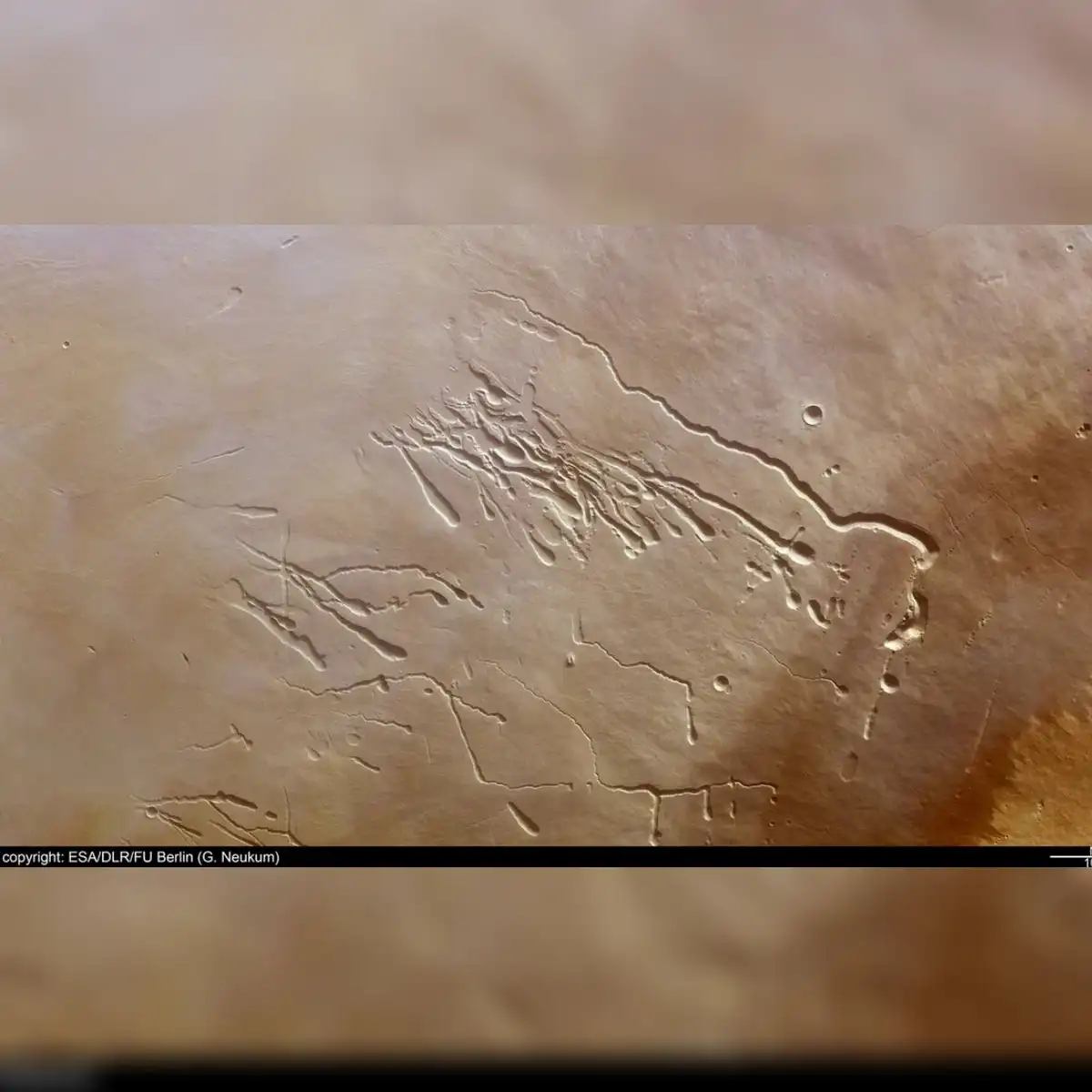
Similar collapsed lava tubes have been spotted elsewhere in the solar system, including on the flanks of Pavonis Mons, a giant volcano on Mars, giving scientists a comparison for how molten rock can shape a planet's crust.
The scientists drew on records from NASA's GRAIL mission, short for Gravity Recovery and Interior Laboratory, in which twin spacecraft mapped the Moon's gravitational field between 2011 and 2012. The probes orbited in tandem and measured minute changes in the distance between them as they passed over regions with differing levels of gravity. GRAIL's mission ended in December 2012, but the gravity data it collected has continued to inform lunar research since.
Using the most recent gravity data, the study's authors, identified as Losarcos and Dombard, picked out small anomalies after accounting for the characteristics of the surrounding terrain. They then compared those signals with simulations of underground tunnels of different sizes and searched for surface geological features that could support the presence of cavities.
The analysis turned up four candidates whose gravitational signals matched those expected from structures less than two kilometers wide, situated beneath about 100 meters of lunar rock.
Where the Four Possible Tunnels Are Located
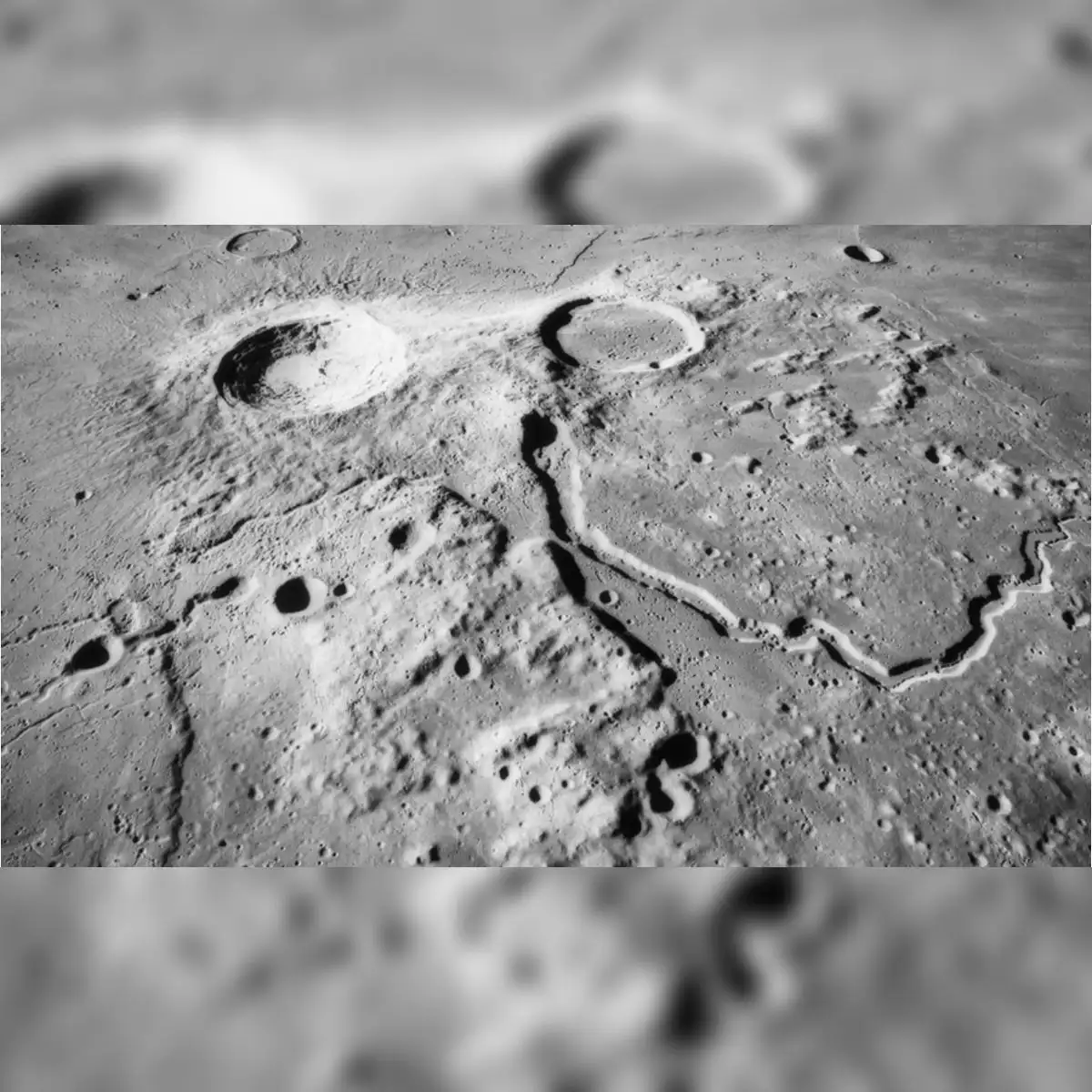
The possible tunnels are spread across three sectors of the lunar surface. One lies near Vallis Schröteri, the largest sinuous channel identified on the Moon, which was photographed from lunar orbit during NASA's Apollo 15 mission in 1971. A second candidate sits close to Rima Mairan, while the remaining two were found in the vicinity of the Wollaston crater. All three regions lie in volcanic plains on the Moon's near side, an area long studied for evidence of ancient lava flows.
The researchers believe the formations could be linked to ancient volcanic activity. On Earth, lava tubes form when the outer layer of a flow of molten rock cools and hardens while the material inside continues to move. Once the lava stops flowing, an empty conduit can remain beneath a crust of volcanic rock.
However, the team suggests the lunar candidates may have formed differently. They propose the tunnels began as small underground channels that widened gradually under the heat and movement of molten rock, which wore away the surrounding material over time.
Could the Tunnels Serve as Shelters for Astronauts?
The conduits could preserve evidence of the Moon's volcanic and thermal evolution. Any that remain intact could also offer natural protection to future explorers from radiation and the extreme temperatures found on the lunar surface.
The Moon has no protective atmosphere or magnetic field, which leaves its surface exposed to radiation, and temperatures there can swing from scorching heat during the day to deep cold during the lunar night. NASA's Artemis program, which aims to return astronauts to the Moon, has made the search for safe, shielded locations for future crews a priority.
Scientists have previously identified lava tube skylights on the Moon, including one in the Mare Tranquillitatis region, formed where part of a tunnel's roof has collapsed.
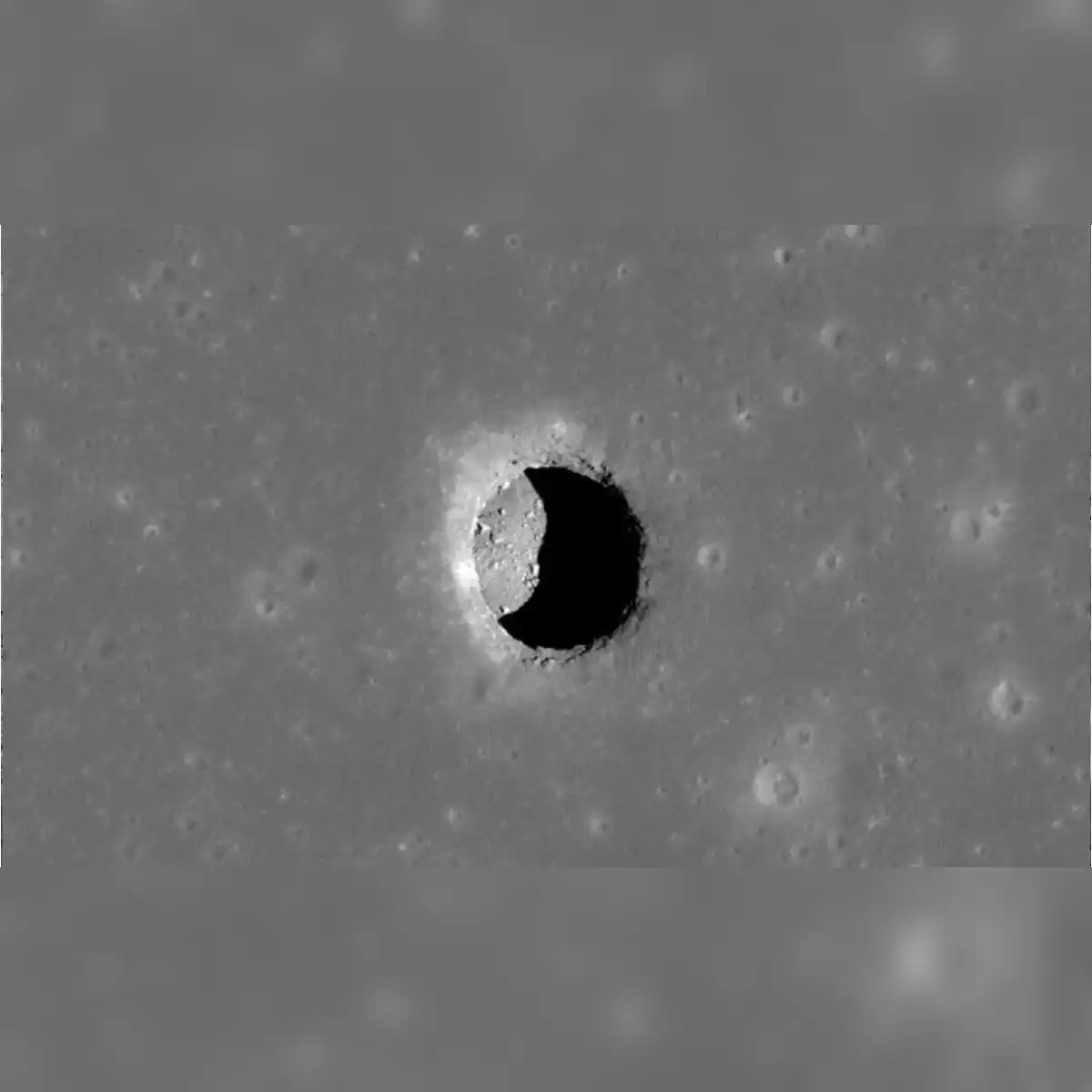
Even so, the scientists cannot yet confirm that the four tunnels exist. Variations in rock density can produce similar gravitational signals, and the method used does not allow researchers to directly determine the size of the cavities.
For that reason, new observations using radar and more detailed geological maps will be needed, the researchers said. They also warned that fully intact lava tubes could be harder to locate, since they lack the visible sinkholes that would otherwise reveal their presence from the surface.
The researchers said these pristine tubes could preserve important evidence of the Moon's volcanic and thermal evolution, even if they prove less accessible for exploration.
What happens next
The researchers said new radar observations and more detailed geological maps will be needed to confirm whether the four tunnels actually exist.
Test yourself
Which university led the study identifying the possible lunar tunnels?
How wide are the four possible tunnels estimated to be?
Which NASA mission provided the gravity data used in the study?
Have your say
Should future Moon missions prioritize exploring possible lava tube shelters?