


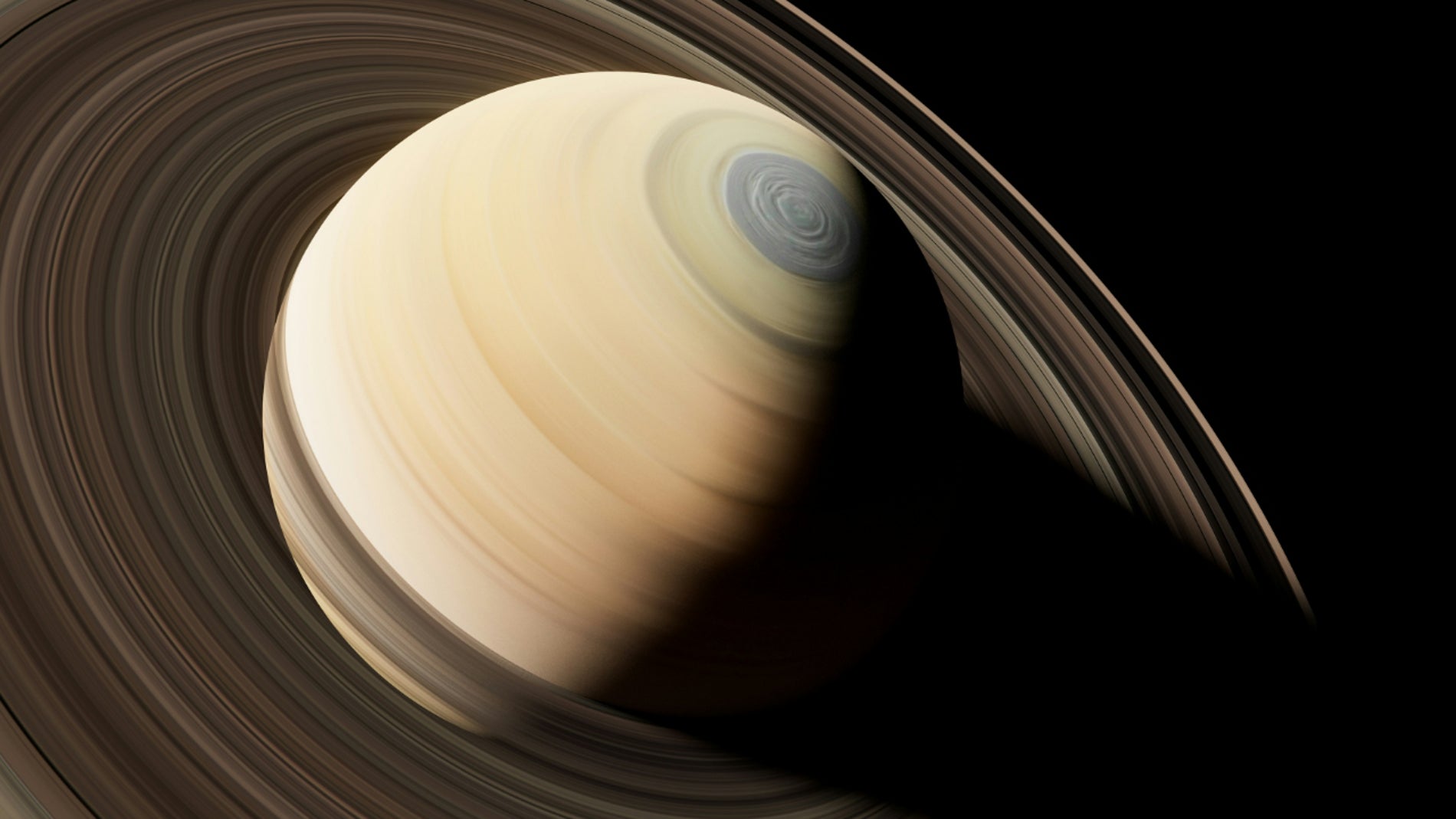
Scientists led by the University of the Basque Country have discovered a giant ten-sided decagon structure in the southern atmosphere of Saturn.
The phenomenon is a giant atmospheric wave trapped within a high-speed jet stream around Saturn's south pole, making it the second massive polygonal feature found on the planet alongside its famous northern hexagon.
The discovery, published in the scientific journal Science Advances, provides crucial insight into gas giant atmospheric dynamics. While the northern hexagon was long considered an isolated anomaly, finding a second structure indicates that Saturn's atmosphere can generate polygonal wave patterns across both hemispheres.
The University of the Basque Country, known in Spanish as Universidad del País Vasco or EHU, is a public research university based in northern Spain. Saturn, the sixth planet from the Sun, is the second-largest planet in the solar system and is composed predominantly of hydrogen and helium gas.
Atmospheric Wave Characteristics
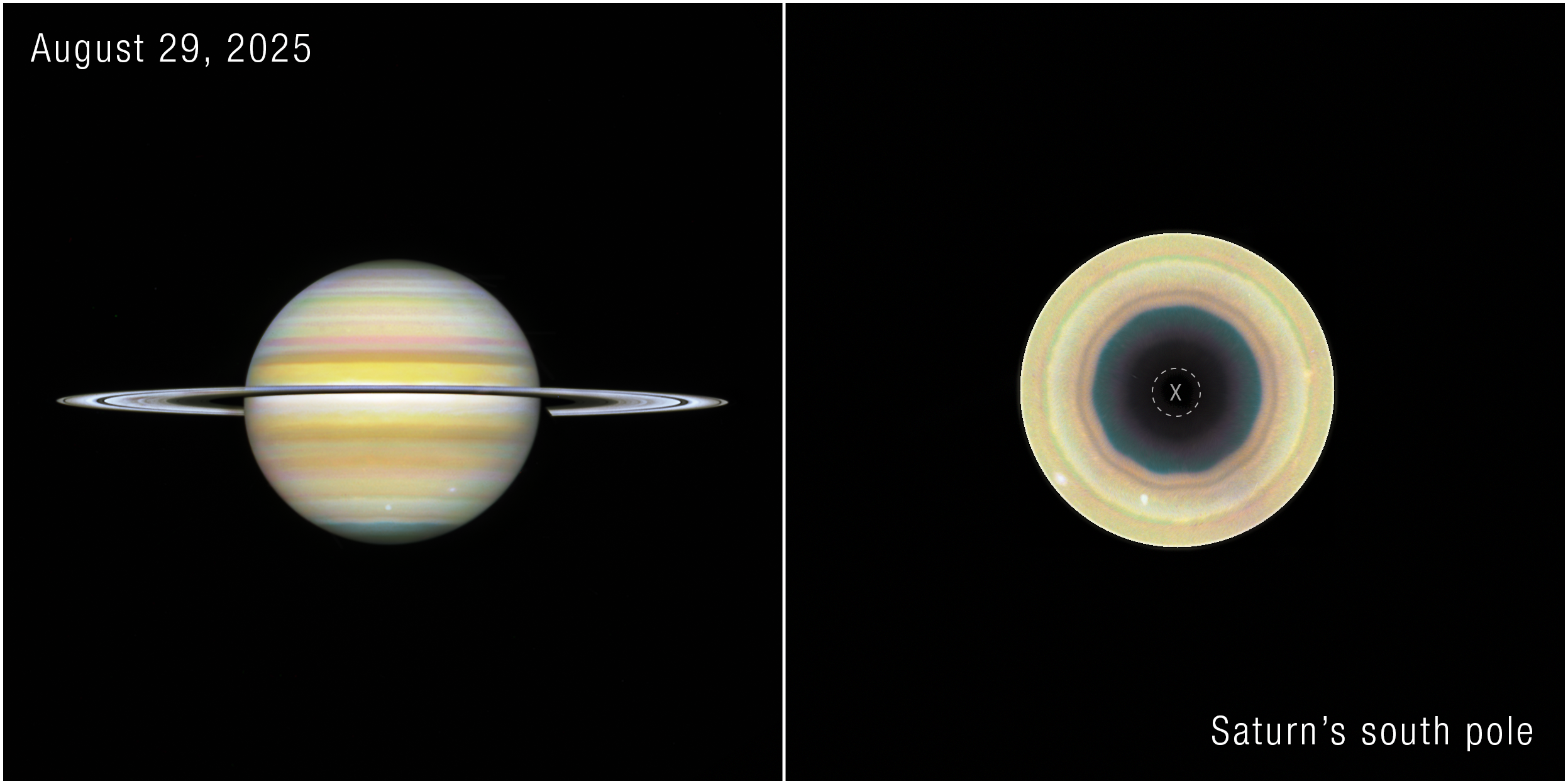
The study was led by Agustín Sánchez-Lavega, a researcher at the University of the Basque Country. According to the research team, the decagon is located at approximately 60 degrees south latitude and is not a solid object or a collection of aligned storms.
Instead, the feature forms when a powerful air current encircling the planet adopts a ten-sided shape rather than a perfect circle. Researchers compared the process to river water forming waves and eddies when encountering contrasting currents, occurring on a planetary scale with winds reaching hundreds of kilometers per hour.
Each of the ten sides of the decagon spans approximately 16,800 kilometers in length. The surrounding jet stream flows eastward at roughly 420 kilometers per hour, while the ten-sided pattern itself rotates much slower at around 10 kilometers per hour and displays an oscillation cycle of about 32 days.
Multi-wavelength observations confirmed that the polygonal wave penetrates multiple atmospheric layers rather than existing solely as a surface cloud pattern. In planetary atmospheric science, jet streams are fast-moving bands of wind that drive weather systems across gas giant planets.
Discovery Timeline and Hubble Observations
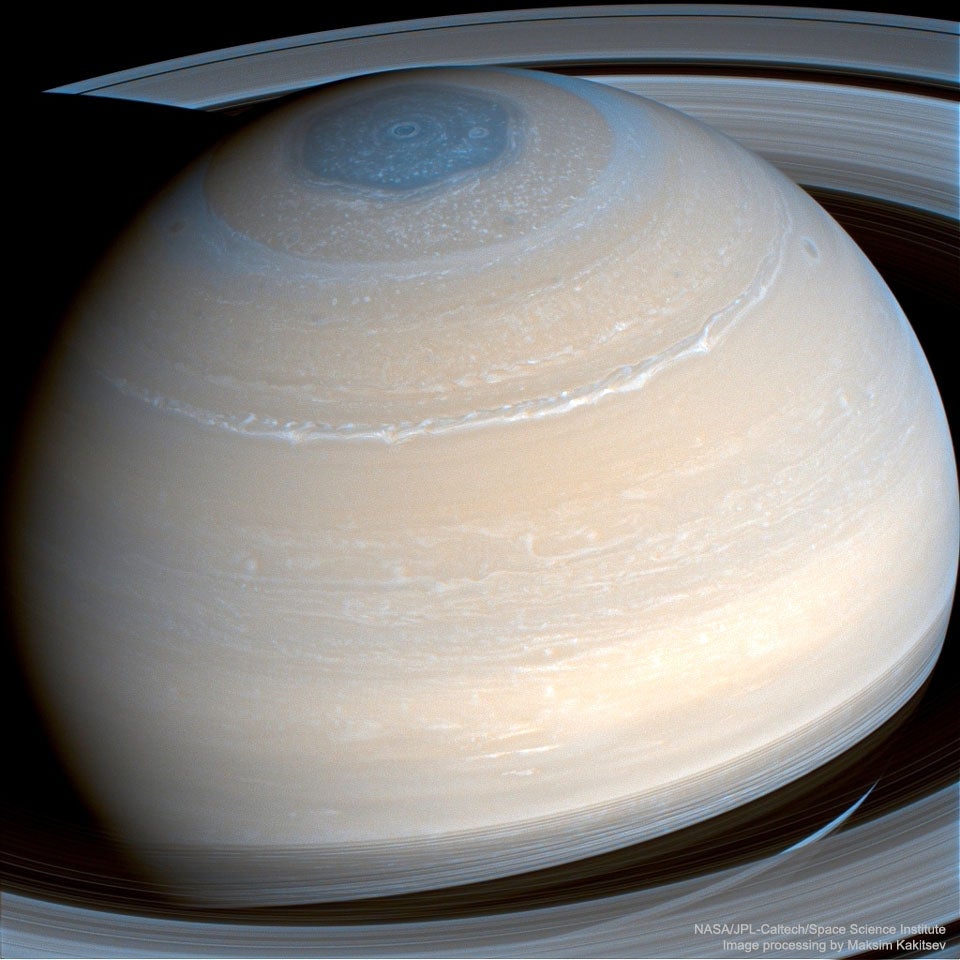
Initial clues of the structure emerged in 2024 when amateur astronomers detected a dark, wavy band moving across Saturn's southern hemisphere. Professional astronomers subsequently targeted the area using the Hubble Space Telescope to analyze the feature in detail.
When reviewing earlier observational data, the research team discovered that the faint outline of the decagon was already visible in images taken in 2023.
The feature was not detected by NASA's Cassini spacecraft during its orbit around Saturn between 2004 and 2017, nor did it appear in earlier Hubble images. Investigators stated that the decagon is either a relatively recent atmospheric formation or intensified significantly in recent years to become visible.
The Hubble Space Telescope is an orbital observatory operated jointly by NASA and the European Space Agency that has imaged celestial bodies since 1990. NASA's Cassini mission spent 13 years orbiting Saturn to study the planet, its rings, and its moons before ending its mission in 2017.
Comparison with the Northern Hexagon
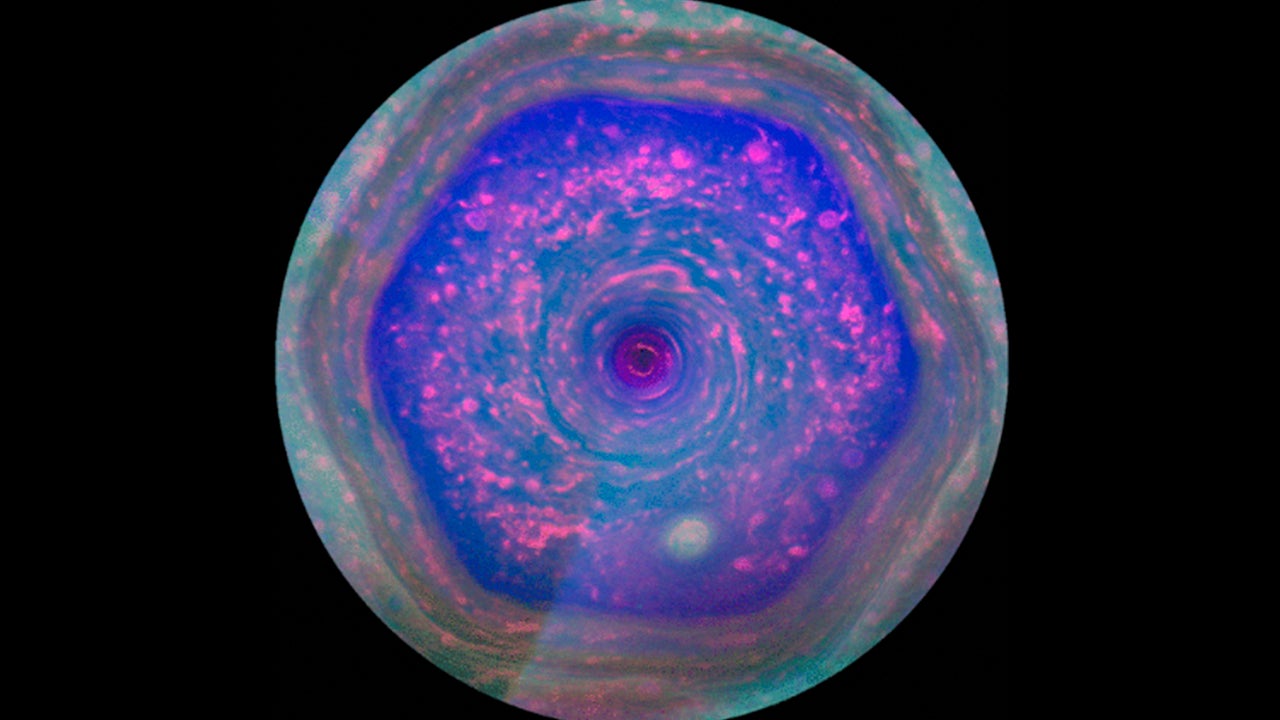
The newly identified decagon differs significantly from Saturn's northern hexagon, which has remained stable since it was first photographed by NASA's Voyager spacecraft in the early 1980s.
In contrast, the southern decagon is more dynamic, subject to change, and located further from the pole. A massive anticyclone measuring about 4,000 kilometers in diameter sits near the decagon and may have contributed to its formation, though computer simulations run by the team have not yet successfully reproduced the exact structure.
NASA's Voyager 1 and Voyager 2 probes conducted flybys of Saturn in 1980 and 1981, capturing the first detailed images of the northern hexagon. An anticyclone is a high-pressure weather system where winds rotate around a center.
Future Evolution and Atmospheric Research
Astronomers plan to monitor the south pole decagon over the coming years to see whether it disintegrates or stabilizes into a permanent atmospheric feature.
Scientists noted that tracking the structure will allow humanity to observe the birth and transformation of a giant polygonal atmospheric wave in real time, an opportunity missed with the northern hexagon because it was already fully formed when discovered.
Continued observations are expected to clarify the precise atmospheric mechanics that allow Saturn's high-speed wind currents to form planet-scale geometric patterns.


