


The ancient Hispano-Visigothic church of Santa Lucía del Trampal, located near Alcuéscar in Cáceres province, stands as the only surviving temple of its era in southern Spain.
Dating back more than 1,300 years, the historic monument is widely regarded by historians as one of the finest preserved examples of Hispano-Visigothic architecture across the entire Iberian Peninsula.
The site lies roughly four kilometres from Alcuéscar at the foot of the Sierra del Centinela, right beside the natural spring that gives the church its name. Remnants of an ancient monastic complex that once surrounded the building are still visible on the surrounding grounds.
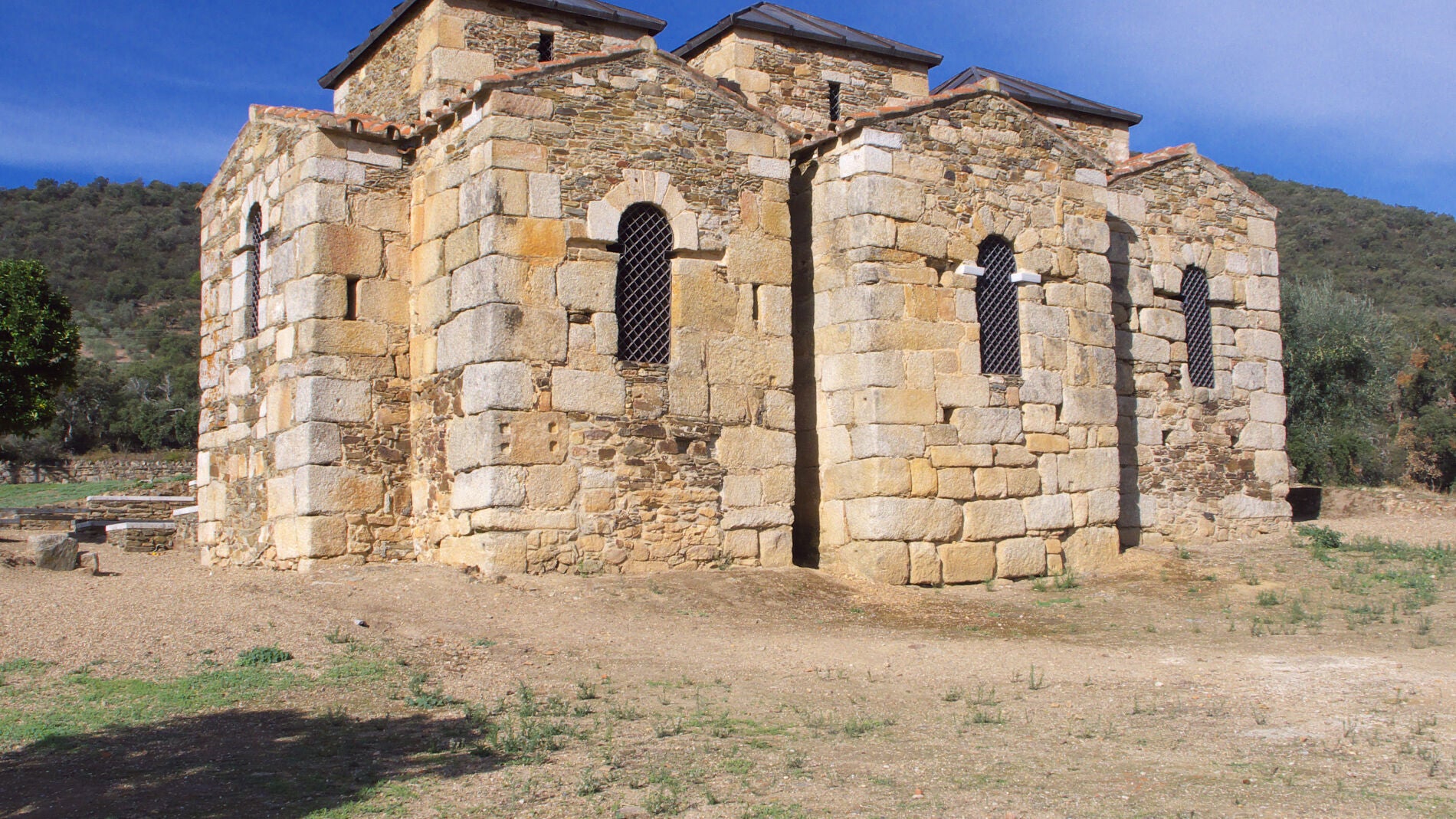
Construction of the temple is generally dated between the second half and the end of the seventh century, although experts noted that its precise date of origin has not been conclusively established. Despite long periods of abandonment and varied non-religious uses, much of the original structure has survived intact.
Architectural features and Visigothic design
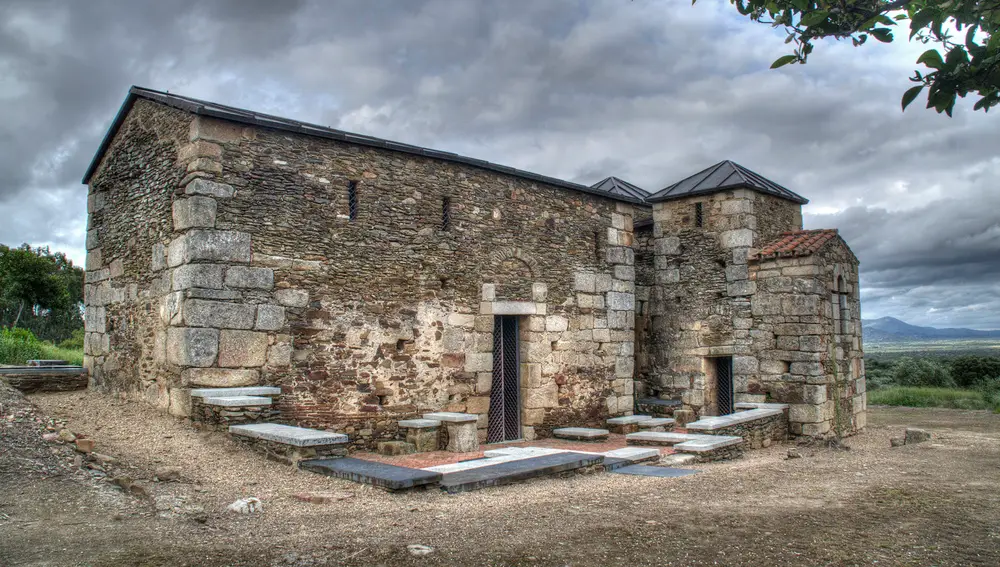
The oldest sections of the building include its sanctuary head, the central transept, and portions of the main nave. Its most defining features are three separate apses at the head, horseshoe-profile barrel vaults, and twelve interior columns from which six transverse arches spring.
Hispano-Visigothic architecture developed in Spain during the rule of the Visigoths, a Germanic group that governed the Iberian Peninsula following the collapse of Roman authority. Builders of this period adapted late Roman techniques, introducing distinctive horseshoe arches and detailed stone masonry that make surviving structures extremely rare historical landmarks.
Centuries of changing historical uses
Historical records indicate that the surrounding monastic complex maintained its activity during the period of Muslim rule in the region. Historians suggest the church was likely occupied by Mozarabic communities of Christians living under Islamic rule before being abandoned around the ninth or tenth century.
Centuries after its initial desertion, the building recovered part of its religious function during the late Middle Ages, when workmen renovated the site and incorporated Gothic structural elements. Its role transformed dramatically in 1811 during the Peninsular War, when military forces repurposed the church as a defensive fort in the context of the Battle of Arroyomolinos.
In the decades following the military conflict, local residents used the historic monument as a livestock stable and a temporary shelter for agricultural labourers. By the middle of the twentieth century, lack of maintenance had left the building almost entirely in ruins.
Archaeological excavation and restoration
The monument was saved from total decay between 1984 and 1990, following an intensive research and restoration initiative led by archaeologist Juan Rosco and Luisa Téllez.
Archaeological excavations conducted around the structure uncovered artifacts spanning several historical epochs, including Roman building materials and evidence of religious worship predating the church itself. Among the key discoveries were several votive altars dedicated to Ataecina, a pre-Roman Iberian goddess associated with nature and healing. Several of these carved stone altars were incorporated directly into the masonry of Santa Lucía del Trampal during its construction.
Visitor access and opening hours
Santa Lucía del Trampal is currently open to the public free of charge and features an Interpretation Centre that details the history of the site and displays major archaeological finds from the area.
During the summer season, the site welcomes visitors from Tuesday to Saturday between 10:00 and 14:00 and from 17:00 to 20:00. Sunday opening hours run from 10:00 to 14:00, while the facility remains closed to the public on Mondays.


