

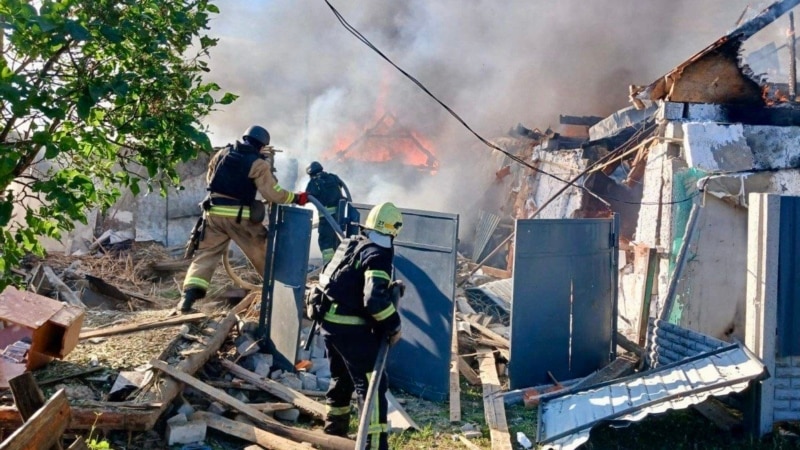
Russian troops attacked the center of Pavlohrad in Dnipropetrovsk region on the evening of August 8, wounding nine people including four children.
Oleksandr Hanzha, head of the regional military administration, reported that a private house and a car caught fire during the strike. He said medical personnel provided necessary care to four wounded children, including girls aged three months and three years, as well as boys aged 5 and 6.
Hanzha reported that two adults were hospitalized following the attack. He added that a 58-year-old woman remained in serious condition.
Russian forces regularly attack Ukrainian cities and civilian infrastructure across all regions using strike drones, missiles, guided aerial bombs, and multiple launch rocket systems. Ukrainian authorities and international organizations classify these targeted strikes as war crimes committed by the Russian Federation.
Evidence of genocidal actions
Attacks on life support systems and healthcare facilities intended to deprive populations of electricity, heat, water, communications, and medical care are signs of genocidal actions. Lawyers, genocide researchers, and human rights defenders state that Russia is committing acts that fall under the definition of genocide during the full-scale war.
These actions include public calls for destruction and declarations by the Russian president and officials that Ukrainians do not exist as an ethnicity. Russian officials have repeatedly stated that Ukraine is an artificially created nation, that those who disagree must be destroyed, and that Ukraine and Ukrainians should not exist in the future.
Legal experts and human rights advocates cite additional actions that fall under genocide definitions:
- Targeted shelling of healthcare and life support infrastructure to deprive citizens of vital living conditions.
- Persecution and destruction of people with pro-Ukrainian positions in occupied territories.
- Extermination of intelligentsia, including teachers, artists, and people who carry and teach Ukrainian culture.
- Implementation of educational systems in occupied regions aimed at changing children's identity.
- Deportation of parentless children to Russia to change their identity.
- Removal and destruction of Ukrainian books from libraries, looting of museums, and targeted theft of historical artifacts.
International genocide convention framework
The UN General Assembly adopted the Convention on the Prevention and Punishment of the Crime of Genocide in 1948. Its 149 member states are required to prevent and punish genocide in both war and peace.
The convention defines genocide as acts committed with intent to destroy, in whole or in part, a national, ethnic, racial, or religious group. Recognized signs of genocide include killing group members, causing serious bodily harm, deliberately creating life conditions calculated to destroy the group, preventing births, forcibly transferring children, and public incitement to commit such acts.
Russian leadership denies that its military targets civilian infrastructure or kills civilians during the full-scale war. Russian officials reject claims that forces destroy hospitals, schools, kindergartens, energy facilities, or water supplies.


