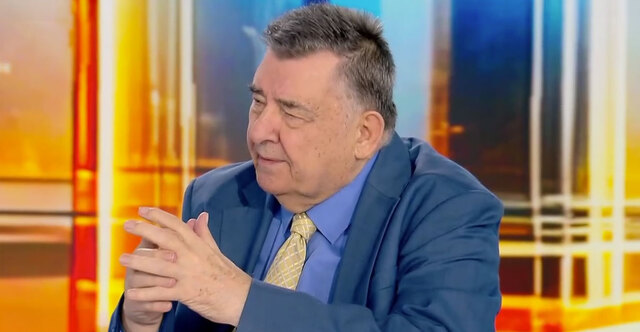

Brazilian presidential candidate Ronaldo Caiado announced plans on Tuesday to submit a constitutional amendment on his first day in office to establish a new spending cap tied to inflation and economic growth if elected. Speaking during an interview on the evening news broadcast Jornal Nacional, the former governor of Goiás state said public expenditure increases should be capped at inflation plus a maximum of 50 percent of gross domestic product growth.
Caiado, representing the Social Democratic Party, argued that securing a congressional majority to implement fiscal cuts would be feasible through his party. However, he declined to identify specific budget lines to trim, stating that he must formally assume the presidency before diagnosing the state of public finances.
He promised that low-income citizens would not face income reductions under his administration. Caiado, who trained as a physician before entering politics, said he was educated to save lives and insisted he would focus on government management while leaving the minimum wage, healthcare, and education intact.
Tax reform and pension review
The candidate also pledged to overhaul the tax reform package approved by Brazil's Congress in 2023. Expressing opposition to government bureaucracy, Caiado declared that the projected 28 percent value-added tax rate is excessively high and must be revised.
Brazil passed a landmark tax reform in 2023 to simplify its complex indirect tax system by merging several levies into a unified value-added tax. Caiado said he plans to consult various economic sectors, including micro-entrepreneurs, industrial leaders, and exporters, to retain only the beneficial aspects of the new framework.
When questioned about potential changes to Brazil's retirement system, Caiado avoided giving direct answers. He stated that economic specialists on his team must first analyze the details of the nation's financial system before any proposals are presented, leaving unanswered whether he would alter the minimum retirement age for men and women.
January 8 amnesty and election strategy
Caiado reiterated his support for a broad amnesty covering individuals convicted in connection with the January 8, 2023, riot and attempt to overthrow the government in Brasília. Thousands of supporters of former president Jair Bolsonaro stormed key state buildings following the 2022 presidential election.
Describing himself as an uncompromising democrat, Caiado argued that Brazil must avoid a cycle of revenge and noted that President Luiz Inácio Lula da Silva was previously amnestied by the Supreme Federal Court. He promised to submit legislation granting a broad, general, and unrestricted amnesty to heal national division, end political polarization, and stop what he described as a climate of one group against another.
Positioning himself as a third-way alternative to the polar ends of Brazilian politics, Caiado targeted both Lula's Workers' Party and Senator Flávio Bolsonaro of the Liberal Party. He accused Lula's administration of overseeing corruption, operating a bribery pipeline, showing connivance toward organized crime, and pursuing economic policies that amount to loan-sharking.
Caiado has also attacked Flávio Bolsonaro by linking him to former banker Daniel Vorcaro, characterizing the senator as a candidate who produces daily surprises. However, Caiado did not explicitly mention the son of former president Jair Bolsonaro during the televised interview.
Regional security and foreign policy
Turning to public security, Caiado proposed establishing a regional security framework across South America. He asserted that neighboring nations could be persuaded to join an interstate police force because all border countries are currently led by center-right presidents.
Caiado compared his proposed regional agency to Europol, claiming the European body possesses authority to carry out arrests. In reality, the European Union Law Enforcement Agency based in The Hague coordinates intelligence sharing between member states rather than conducting direct law enforcement operations. He added that the presence of the United States in the region would be one of the issues addressed by the proposed security force.