Dominican Vice President Raquel Peña has confirmed she will contest the Modern Revolutionary Party presidential nomination, insisting she will not withdraw quietly from the race.
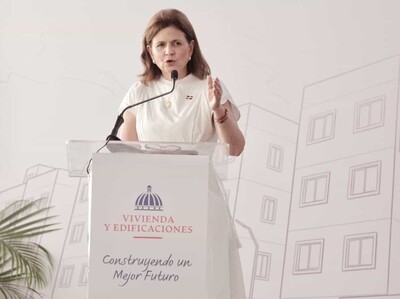
After months of discretion as her presidential ambitions appeared to lose momentum, the vice president raised her tone and sent an unmistakable message to colleagues in the ruling Modern Revolutionary Party, known as the PRM. Speaking on a morning television programme, Peña said she did not need to push anyone down to rise herself, taking direct aim at escalating internal rivalries.
Peña denounced a smear campaign and claimed she had advance knowledge from the National Palace of attacks against her, amid accusations arising from the SeNaSa state healthcare scandal.
Although she did not identify those responsible, she warned that the internal presidential contest could be deteriorating relations within the ruling party.
Response to political criticism
Peña also responded indirectly to Milagros Ortiz Bosch, a prominent party veteran and former vice president who had publicly questioned her political experience.
The vice president recalled her involvement in the 2012 presidential campaign of former president Hipólito Mejía, while pointing to her own record of six years in office as vice president.
The relaunch is difficult to imagine without a prior conversation with President Luis Abinader, though there is no public confirmation of any talks. Consent from Abinader does not equal an endorsement, but Peña's active presence broadens the contest while preserving the president's role as arbiter.
Trailing in internal polls
Time represents Peña's primary challenge as she confronts competitors who have spent months building support. In an October survey of PRM members conducted by ACD Media, David Collado led preferences with 49.9 percent, followed by Carolina Mejía with 24.6 percent and Peña with 9.5 percent.
The vice president maintains that she will not conduct street campaigning because she has to govern. However, winning a party nomination demands territorial organisation, local leaders, and the capacity to mobilise supporters across the country.
Peña has abandoned her previous caution at a time when rivals have spent months building strength. Her relaunch alters the calculations of the presidential succession, though she must still prove she can command the support required to recover lost ground.