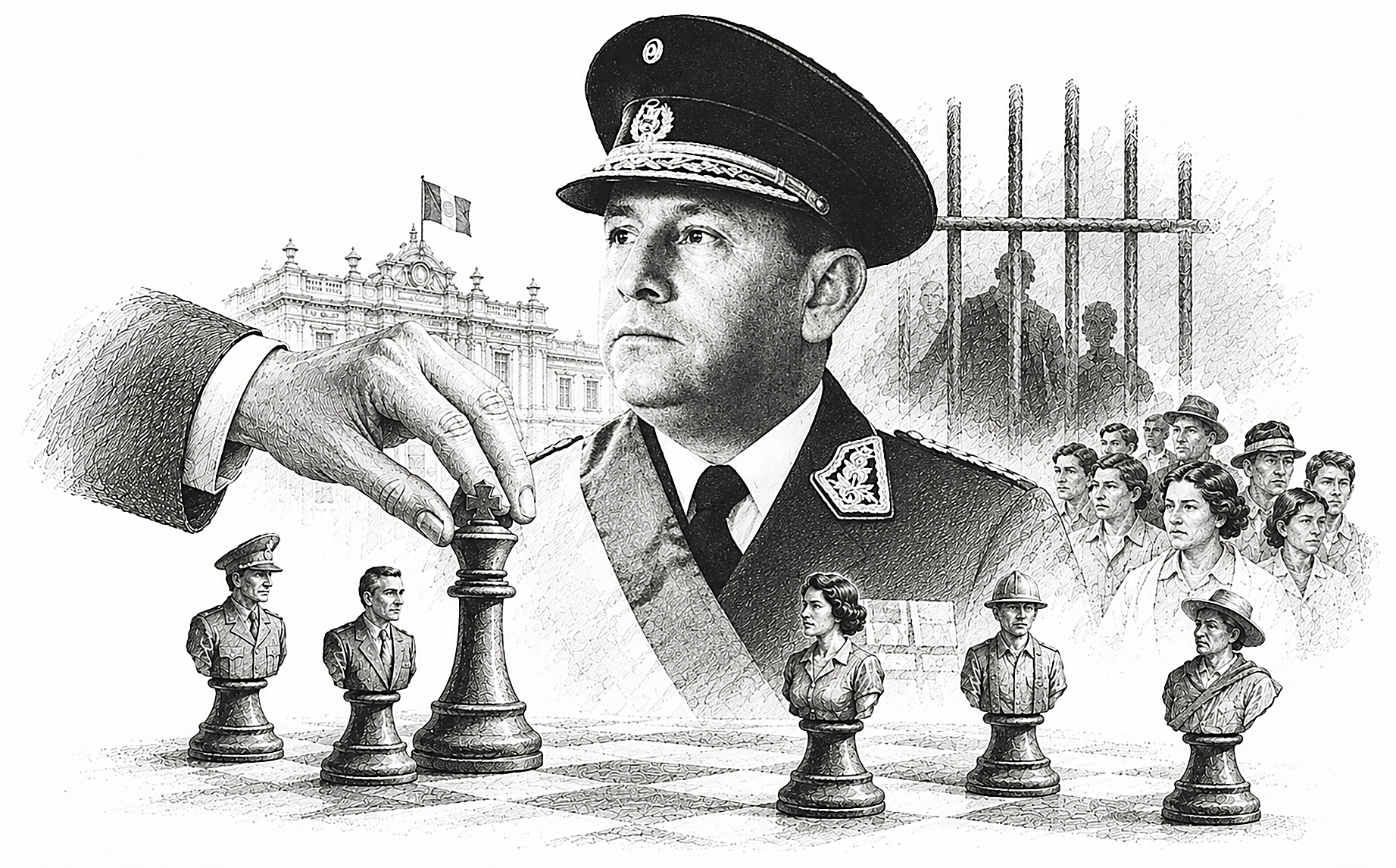
Declassified Central Intelligence Agency files show the United States government actively plotted with Dominican dissidents to overthrow or assassinate dictator Rafael L. Trujillo. American authorities maintained contact with local conspirators while simultaneously conducting diplomatic efforts to persuade the ruler to step down.
The secret communications and covert plans spanned the administrations of President Dwight D. Eisenhower and President John F. Kennedy. American officials operated primarily through the United States consulate in the Dominican capital, led by Consul General and Embassy Counselor Henry Dearborn.
Trujillo ruled the Dominican Republic, a nation located on the island of Hispaniola in the Caribbean, as an absolute dictator starting in 1930. His regime was defined by political violence and terror, prompting growing covert intervention from Washington during the height of the Cold War.
Diplomatic persuasion and Operation EMDEED
Declassified CIA document 104-10214-10034 outlines Operation EMDEED, the cryptonym assigned by the intelligence agency to covert activities designed to remove the regime. As part of this diplomatic strategy, General Edwin Clark, a close confidant of President Eisenhower, traveled to the Dominican Republic on March 27, 1960.
Clark attempted to convince Trujillo to leave power peacefully, but his mission ended without positive results. As diplomatic attempts failed, Dominican conspirators pressed forward with plans to assassinate the dictator, driven by rising anti-American sentiment over perceived hesitation by the United States.
The Central Intelligence Agency had expanded its covert operations across Latin America during Eisenhower's presidency. Eisenhower, who served as president from 1953 to January 1961, authorized clandestine initiatives that continued after Kennedy took office in early 1961.
Operation Lancet and ambassador proposal
Joseph S. Farland, who served as United States ambassador until June 28, 1960, took an active role in coordinating with the plotters. Farland, a former Federal Bureau of Investigation employee who considered himself a clandestine operator, forwarded a plan developed by dissidents called Operation Lancet.
Operation Lancet proposed sending a confidential American envoy to give Trujillo a 12 to 18-hour ultimatum to leave the country under threat of collective intervention. On April 9, 1960, the State Department sent a telegram asking whether dissident elements could successfully take power.
Farland replied on April 11, stating that taking power was possible, but specified that it would require clandestine arms shipments, sabotage, or the incapacitation or assassination of Trujillo.
Covert weapons shipments and delay
Following Farland's recommendation, acting CIA Deputy Director C.P. Cabell approved a plan to supply the dissidents with weapons. The authorization called for sending 12 Springfield M1903 rifles fitted with telescopic sights and 500 rounds of ammunition.
The Springfield M1903 is a bolt-action military rifle that served as a standard firearm for American armed forces during the early 20th century. Its precision when equipped with telescopic sights made it well suited for targeted long-range fire.
Although some weapons arrived in the country, United States diplomatic and consular headquarters received instructions on January 12, 1961, not to deliver them. However, the Special Group later approved making limited supplies of light arms available to the dissidents, provided the Dominicans transported the weapons themselves.
The plotters originally scheduled the assassination attempt for April 1961. However, the failure of the Bay of Pigs invasion in Cuba between April 17 and April 19, 1961, forced the dissident group, the CIA station, and American consular officials to postpone the operation to avoid another Caribbean failure.
The Bay of Pigs invasion was a failed covert landing on the southwestern coast of Cuba executed by CIA-backed exiles attempting to overthrow Fidel Castro. The defeat severely impacted American intelligence planning across the Caribbean region.
Dominican dissidents and American operatives
The conspiratorial network involved prominent Dominican figures alongside American diplomatic and intelligence personnel. Key Dominican participants included Armed Forces Secretary José René Román, General Antonio Imbert Barreras, General Juan Tomás Díaz, Luis Amiama Tió, and his assistant Andrés Freitas.
Other local figures named in the declassified records were Lorenzo D. Berry, known as Wimpy, and his wife Flérida, alongside Donald Read Cabral, Aulio Brea, José Francisco Tapia, Severo Cabral, Luis Baqueró, and Dr. Jordi Brossa.
American officials participating in the operations included Assistant Secretary of State Roy R. Rubottom, as well as CIA station officers Charles Cookson and Isabel Cintrón, who worked directly alongside the Dominican conspirators.