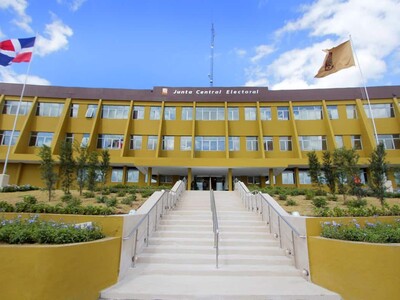
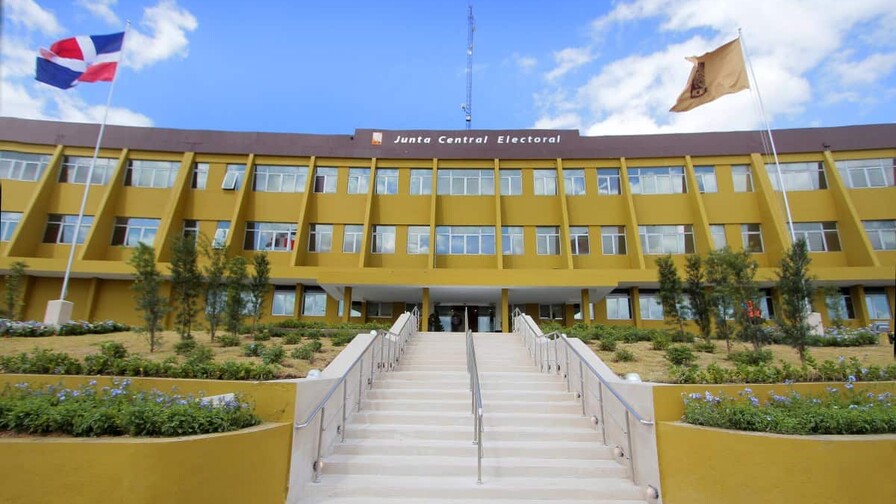
Two members of the Central Electoral Board in Santo Domingo have questioned the agency's decision to provisionally suspend a ban on electoral polls outside official campaign periods.
Board members Hirayda Marcelle Fernández Guzmán and Rafael Armando Vallejo Santelises voted against the measure adopted on August 20 by a three-to-two majority. The decision provisionally suspends Article 13 of the regulation governing polling firms and survey publications while courts review its constitutional validity.
The suspended article barred the publication or dissemination of election polls outside designated pre-campaign and campaign windows. It also established restrictions on internal polling studies conducted for political parties.
The board majority, comprising Román Andrés Jáquez Liranzo, Dolores Altagracia Fernández Sánchez, and Samir Rafael Chami Isa, voted to hold the regulation in abeyance pending a final judicial ruling on its constitutionality.
Procedural Objections and Judicial Authority
In a dissenting opinion spanning pages 15 to 23 of the resolution, Fernández Guzmán argued that the electoral authority should not intervene by independently suspending a contested regulation while a constitutional challenge remains pending in court.
Fernández Guzmán stated that a formal regulation carries normative authority and cannot be set aside by a basic administrative resolution. She noted that any effort to modify, suspend, or repeal a regulatory rule must strictly follow the same formal procedure used to enact it.
The Superior Electoral Tribunal, which handles election disputes in the Dominican Republic, had previously declared itself lacking jurisdiction to evaluate the merits of a challenge against the polling ban. The tribunal ruled that the case fell under the concentrated constitutional review reserved for the Constitutional Court.
Because the matter rests before the constitutional court, Fernández Guzmán argued that determination belongs strictly to that judicial tribunal. She warned that using an administrative resolution to suspend regulatory rules creates uncertainty regarding which law applies and threatens legal certainty.
Hierarchy of Norms and Parallelism of Forms
Vallejo Santelises raised similar procedural objections in a separate dissenting vote recorded between pages 23 and 28 of the board resolution, focusing his critique on the principle of the hierarchy of norms.
In his opinion, Vallejo Santelises stressed the legal distinction between an administrative act, which applies to specific individuals or situations, and a regulation, which establishes general rules within the broader legal system. He stated that administrative suspension powers cannot be applied to regulatory norms.
While acknowledging that the electoral board has authority to modify its regulations, Vallejo Santelises argued it must do so through a normative act of equal hierarchy following established procedures. He cited the legal principle of parallelism of forms, which requires a rule to be amended or repealed through the same procedural mechanism used to create it.
Vallejo Santelises warned that allowing a routine administrative resolution to override a formal regulatory provision distorts the hierarchy of norms governing the institution.
The Central Electoral Board is the independent constitutional body tasked with overseeing general elections and maintaining the civil registry in the Dominican Republic. Electoral regulations issued by the five-member board dictate campaign conduct, political financing, and voter identification rules across the nation.