

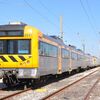
Portugal and Spain have notified the European Commission that they will not convert their railway networks to the standard European track gauge.
The decision means both Iberian nations will continue operating on their wider 1,668-millimetre track standard, effectively remaining isolated from the rest of continental Europe's rail system.

Official estimates indicate that replacing the existing lines across both countries would take 30 years to complete. The European Union has sought in recent years to standardise rail infrastructure across member states to streamline cross-border movement, but the track configuration originally established in the 19th century will remain unchanged.
Economic and operational obstacles
A government report in Spain revealed that switching the entire national rail network would cause severe economic and operational disruption, according to reporting by Portuguese newspaper Público. Beyond the immense construction expenses, migrating the track gauge would force widespread alterations to train services throughout Spain.
Portugal faces similar structural hurdles, though the issue is more widespread. While Spain already maintains limited sections of standard European gauge dedicated to high-speed rail trains, Portugal's entire active network uses the wider Iberian measurement. Even the proposed high-speed rail line connecting Lisbon, the capital, and Porto, the country's main northern commercial hub, will be constructed using the traditional Iberian gauge.
Financial costs for Portugal
The financial burden of changing the network is substantial. In 2024, converting the track in Portugal was calculated to cost roughly 100,000 euros for every kilometre of line.
Carlos Fernandes, vice-president of state-owned infrastructure company Infraestruturas de Portugal, stated at the time that Portugal would only consider moving forward with a gauge conversion when Spain chose to do so. Infraestruturas de Portugal, which manages the nation's rail and road networks, reports that Portugal has approximately 2,526 kilometres of railway track. Converting the entire network would require an investment of nearly 260 million euros.
Technical background and future review
Track gauge refers to the minimum distance between the inner edges of the two parallel steel rails that form a railway track. Standard gauge, used across most of Western and Central Europe, measures 1,435 millimetres. The Iberian gauge, used across Portugal and Spain, measures 1,668 millimetres, creating a break of gauge at the border with France that requires specialised dual-gauge trains or passenger transfers.
Both Iberian governments plan to evaluate the detailed costs and benefits of a potential future migration to the European gauge by 2027.


