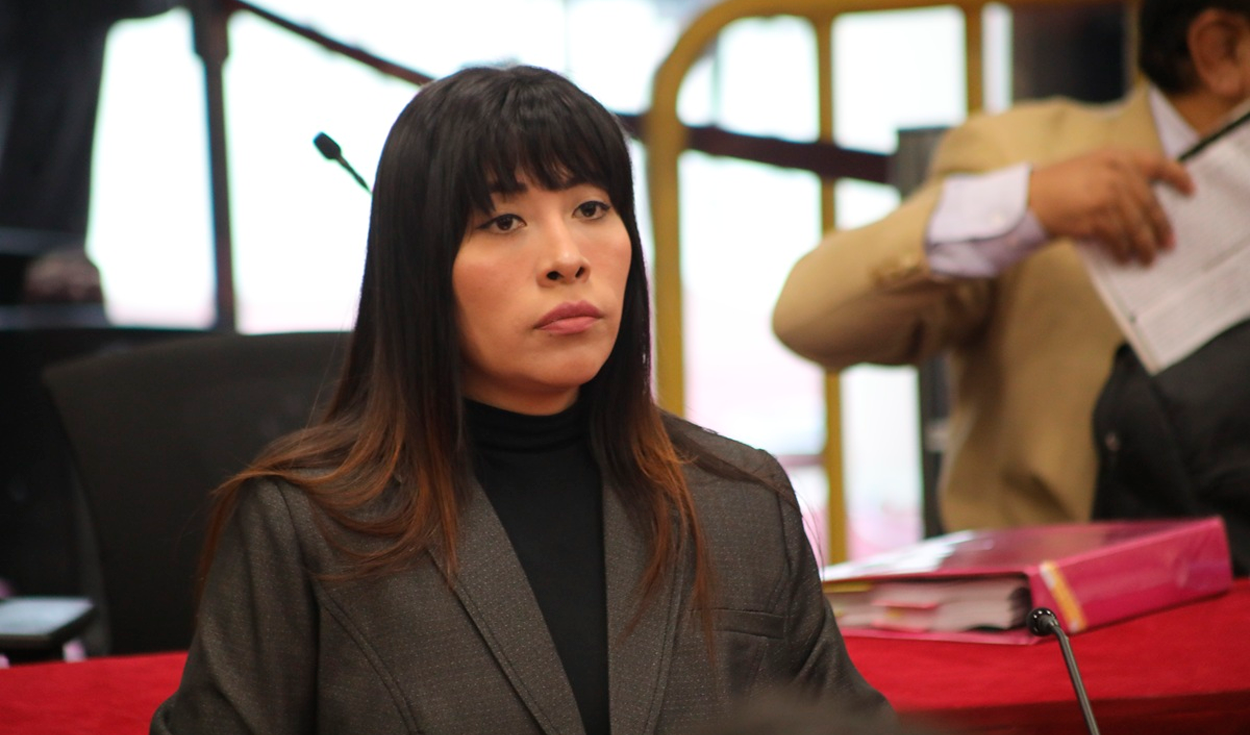
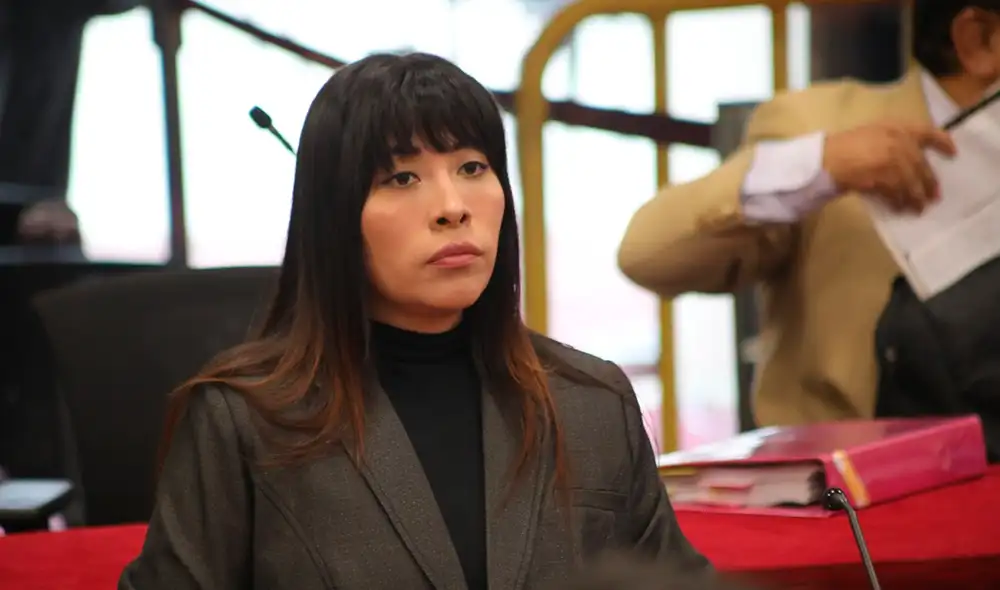
Peru's Supreme Court has renewed the national and international arrest warrants against Betssy Chávez, the former minister under ousted President Pedro Castillo, to ensure she serves her sentence of 11 years, 5 months and 15 days for her role in the December 2022 attempted coup.
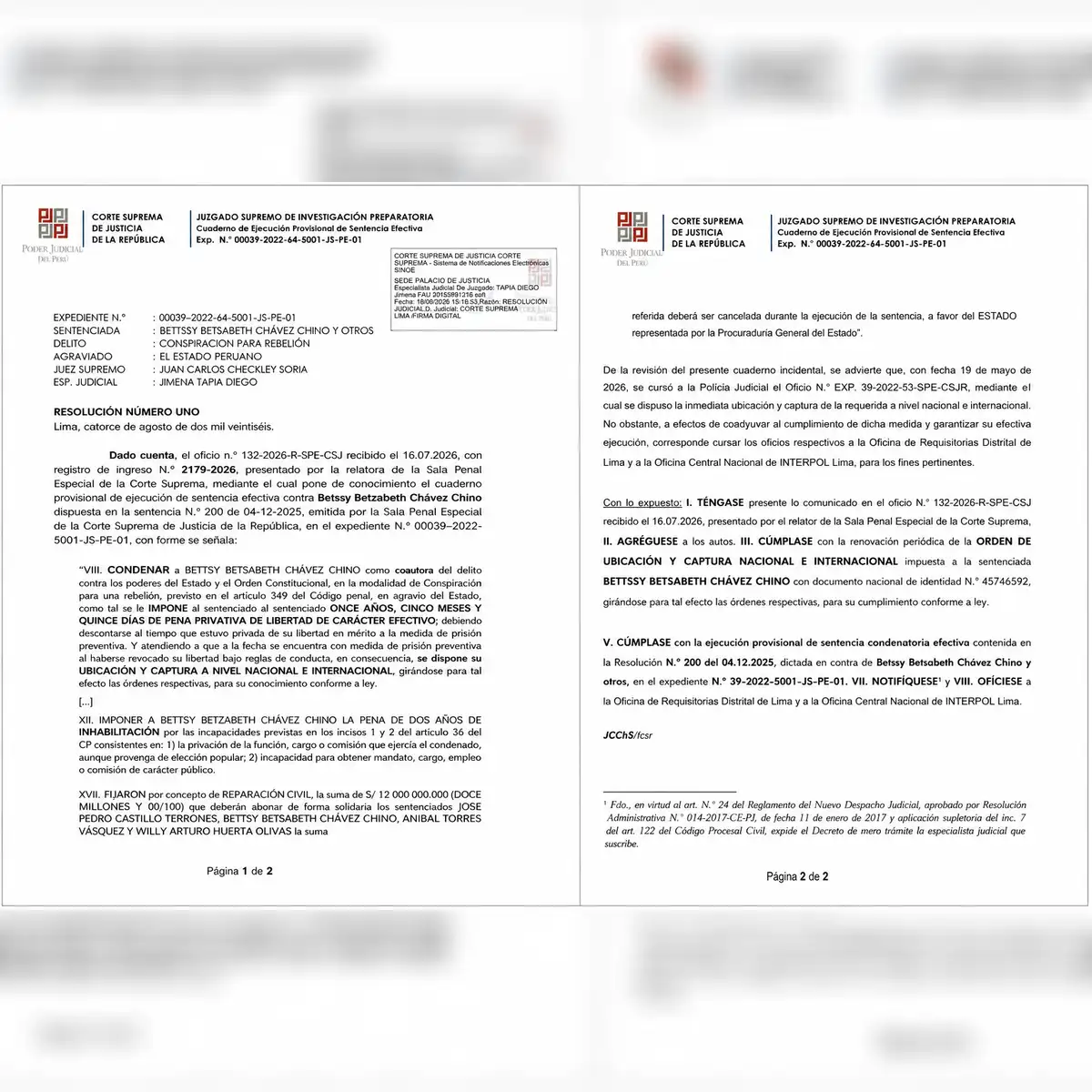
Supreme Court judge Juan Carlos Checkley issued the order in line with the ruling handed down by the Supreme Court's Special Criminal Chamber, which last December convicted Castillo, Chávez and other defendants of conspiracy to commit rebellion. The court also notified Interpol, the International Criminal Police Organization, of the measure.
Chávez is currently living in asylum in Mexico after the Peruvian government, then led by Keiko Fujimori, granted her safe conduct to leave the country.
Order aims to keep warrant active
The resolution, issued on August 14, also directs that the decision be notified to Lima's District Requisitions Office and to Interpol's National Central Bureau in Lima for the relevant purposes.
The Judiciary ordered that the periodic requisition for the national and international location and capture order imposed on the convicted defendant be carried out, with the corresponding orders issued so it can be enforced according to law. The measure was taken so that the arrest order does not expire while the enforcement of Chávez's sentence remains in force.
Case tied to the December 2022 coup attempt
Chávez served as prime minister under Castillo at the time he attempted to dissolve Congress and seize emergency powers in December 2022, a move that led to his removal and arrest. Chávez was among those later convicted alongside Castillo for conspiring to carry out the rebellion.
Chávez's lawyer pushes back
Raúl Noblecilla, the lawyer representing Chávez, criticized Checkley's decision on his account on X, formerly known as Twitter. He said Chávez, as a political asylee, is perfectly locatable in Mexico, and suggested the judge needed to catch up with that fact.
Noblecilla added that what would not be possible is her capture, because Mexico, which he described as a sovereign, democratic country that defends human rights, protects her from those who, in his view, use the justice system to carry out the wishes of people seeking to eliminate the country's political leaders. He closed his message by telling the judge goodbye.