A Peruvian psychoanalyst argues that his country's ruling regime is using official decorations and targeted prosecution to dismantle the distinction between truth and falsehood as a deliberate political strategy.
Jorge Bruce, a psychoanalyst at the Pontificia Universidad Católica del Perú, writes that a government which rewards figures such as Jerí, Arriola, and Cerrón while pursuing internationally decorated journalist Gustavo Gorriti is doing more than embracing absurdity. It is sending a message to the nation.
Bruce describes that message as a familiar formula: for friends, everything; for enemies, the law. He adds a qualification he calls not minor: in this context, friends means those who allow fifty people to be executed in the streets without consequence.
Enemies, he writes, are those who insist the state should respect Peruvian laws and international treaties.
The grotesque decorations awarded to figures accused of rape or suspected of criminal acts serve a clear objective, Bruce argues: to discredit the idea that any difference exists between truth and falsehood. By delegitimizing that boundary, he writes, the regime consolidates the notion that there is no point worrying about matters handled by the highest levels of power, which he describes as captured by figures who have effectively governed through puppets, naming Boluarte, Jerí, and Balcázar.
The Bukele model
Bruce identifies what he calls the Bukele model at work: citizens are asked to surrender their rights in exchange for a promise to jail the gang members making their lives impossible. He argues the security plans on offer amount to more of the same. Deploying the army to the streets, he writes, merely pushes extortionists into areas where soldiers are not present.
He draws a historical comparison, noting that the Shining Path was defeated not by military force but by police intelligence, and that those responsible were careful not to alert Montesinos or Fujimori to their plans.
Collective amnesia
Bruce describes a broader project of collective amnesia at work in efforts to suppress the vladivideos, weaken the Lugar de la Memoria museum, and delegitimize the Truth and Reconciliation Commission. The goal, he writes, is not only to prevent people from thinking but to prevent them from remembering crimes committed during the internal armed conflict, crimes carried out by both the Shining Path and the armed forces.
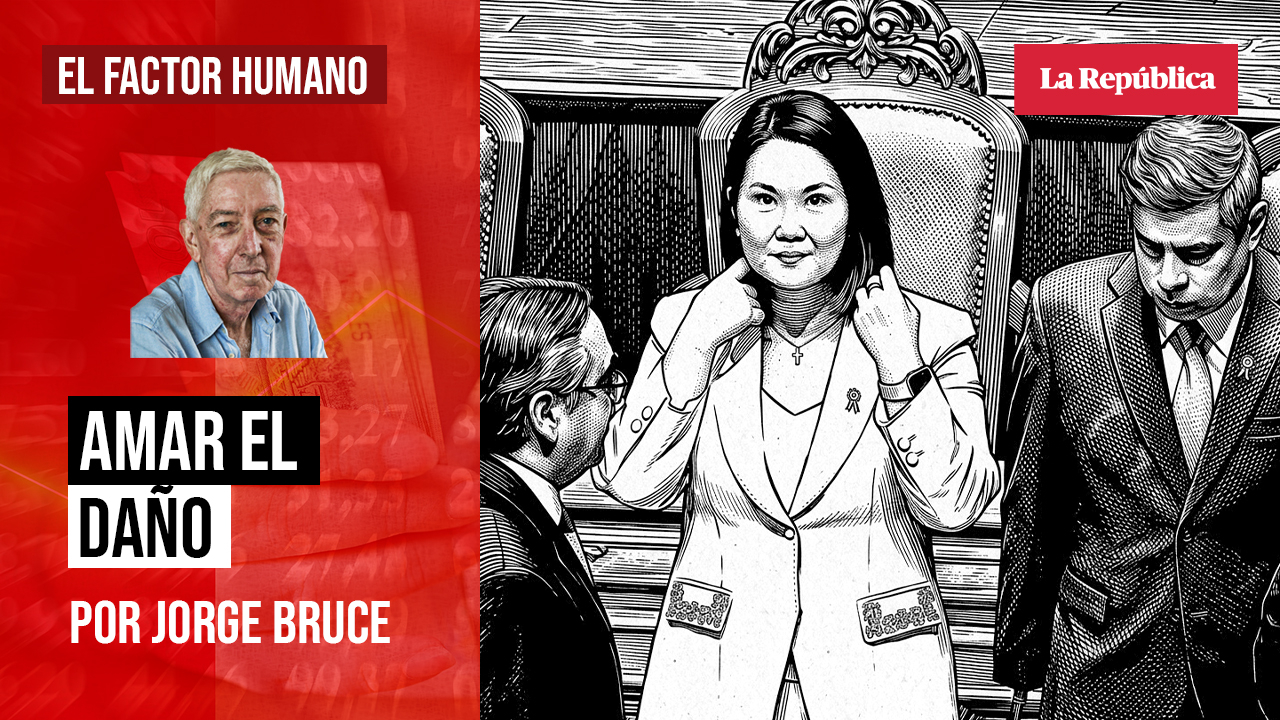
Turning to Keiko Fujimori, who has said she will govern for all Peruvians including especially those who did not vote for her, Bruce writes that what can be observed points in the opposite direction. He describes the effort to erase atrocities from collective memory as incompatible with a pledge to govern with respect for democratic will.
The column takes its title from a verse in a celebrated Quevedo sonnet from Spain's Golden Age. Bruce closes by describing Eros as the only force capable of opposing efforts to frighten, stun, and compel Peruvians to accept that nothing can be done. That acceptance, he writes, would include treating figures such as Tomás Aladino Gálvez and Patricia Benavides as irreproachable judges, and Alberto Fujimori as Peru's greatest president rather than one of history's most corrupt autocrats.