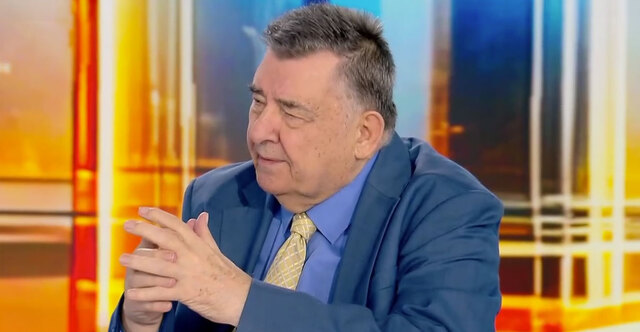

Greece's main opposition Panhellenic Socialist Movement will present an economic alternative focused on social support rather than political bidding wars, party spokesman Kostas Tsoukalas declared in a television interview on public broadcaster ERT ahead of the annual Thessaloniki International Fair.
Tsoukalas said party president Nikos Androulakis will outline the movement's vision for the country during the fair, promising strong democratic institutions, sustainable economic growth, and a reinforced geopolitical stance.
The upcoming policy platform includes measures to protect primary residences, grant borrowers a call option right, restore the 13th pension and 13th salary, bring back the EKAS grant for low-income retirees, unfreeze supplementary pensions, return minimum wage negotiations to social partners, and introduce a 120-installment debt settlement scheme with interest and surcharge write-offs for all taxpayers.
PASOK, officially known as the Panhellenic Socialist Movement, is a social-democratic political party in Greece that currently serves as the principal opposition force in the Hellenic Parliament. The Thessaloniki International Fair, held every September in Greece's second largest city, is traditionally the main venue where Greek political leaders deliver annual policy addresses and unveil their economic platforms.
Economic Proposals and Government Costing
Tsoukalas criticized the ruling administration for failing to leave a lasting economic development footprint despite having access to billions of euros in European Union funding. He said PASOK aims to convert European resources into long-term productive power while building a strong social welfare state.
Addressing government estimates, Tsoukalas condemned ministers for placing a generic 2.2 billion euro price tag on opposition proposals without providing detailed breakdowns. He questioned how citizens could trust an administration that claimed the available fiscal space was 1 billion euros just one month ago before suddenly revising that figure to 2.2 billion euros.
The spokesman said this shift in official calculations proved that PASOK was correct about the existence of fiscal room for social support policies. He argued that the government previously lied to discredit the opposition before the public, only for the truth to be exposed when the revised fiscal estimates were published.
EKAS, formally known as the Social Solidarity Benefit for Pensioners, was a targeted monthly allowance provided to low-income retirees in Greece before being phased out under international bailout agreements. The 13th pension and 13th salary refer to traditional annual bonus payments that were suspended during the country's financial crisis, while the 120-installment model is a standard debt settlement mechanism designed to help citizens resolve tax and pension fund arrears.
Election Strategy and Coalition Red Lines
Tsoukalas asserted that PASOK is fully prepared in both political personnel and policy proposals to assume government responsibility and manage the upcoming Greek presidency of the Council of the European Union. He added that the party's goal to win the next national election remains clear regardless of current opinion polls, which reflect only a single moment in time.
Outlining potential election scenarios, Tsoukalas said voters face a choice between a New Democracy government forming a coalition with right-wing political figures, or a progressive government built around PASOK. He specified that a New Democracy victory could lead to a joint administration involving Kyriakos Velopoulos, Antonis Samaras, Afroditi Latinopoulou, and Kyriakos Mitsotakis or another prime minister.
Tsoukalas firmly rejected any scenario in which PASOK would join a coalition with New Democracy. Prompted by recent social media comments from George Siakantaris, described as a close associate of a former prime minister and an ideological guide who drafted party manifesto text, who left open the possibility of cooperating with New Democracy without being censured by his party, Tsoukalas stressed that PASOK disagrees with New Democracy on fundamental principles and will not cooperate with them.
New Democracy is the centre-right political party currently governing Greece under Prime Minister Kyriakos Mitsotakis. The other political leaders mentioned by Tsoukalas, including former Prime Minister Antonis Samaras, Greek Solution leader Kyriakos Velopoulos, and Voice of Reason leader Afroditi Latinopoulou, represent various right-wing and conservative factions across the Greek political spectrum.
Government Statements and Foreign Policy
The spokesman dismissed recent statements by Minister of Health Adonis Georgiadis regarding a sensational period of European prosperity for Greece, describing the remarks as deeply offensive and comical. Tsoukalas remarked that the nation requires a functional cabinet rather than a comedy theater performance.
Tsoukalas also challenged comments made by the Minister of Justice, who suggested that failure to re-elect Mitsotakis would invite external attacks from across the border and place the country in national danger. The PASOK spokesman warned that no political group should play games with national security issues.
Turning to foreign policy, Tsoukalas questioned why the prime minister has not raised the issue of European Union sanctions against Turkey during international summits. He argued that even if European partners might ultimately decline to impose sanctions, Greece must still actively assert its sovereign rights and press its demands on the international stage.
Greek-Turkish relations are defined by longstanding maritime, airspace, and territorial disputes in the Aegean Sea and Eastern Mediterranean, both nations being NATO members with complex diplomatic ties. ERT, the Hellenic Broadcasting Corporation, operates as Greece's state-owned public broadcaster, delivering news and programming across the country.