

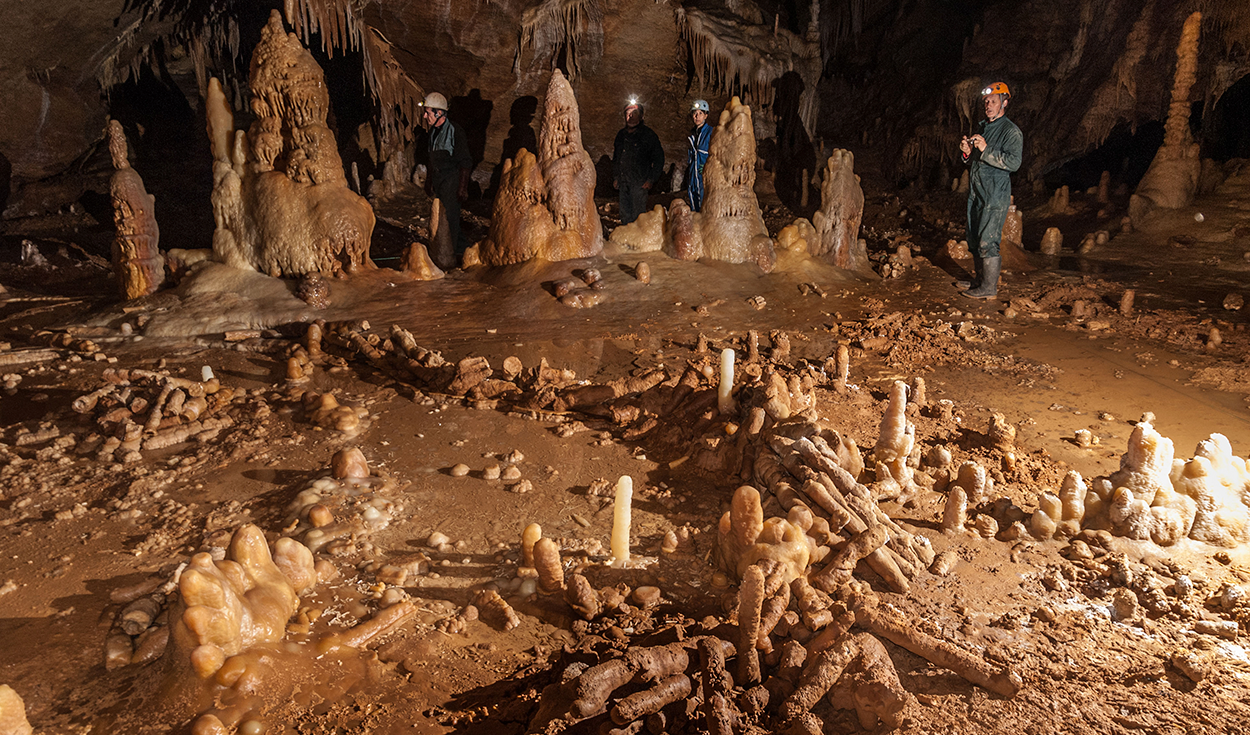
Neanderthals built circular structures out of stalagmites deep inside Bruniquel Cave in southwestern France roughly 176,500 years ago, according to researchers.
The site, located in the Aveyron gorges, features two low rings of broken stalagmites set 336 meters from the entrance. The natural entrance to the cave was sealed during the Pleistocene, leaving the chamber isolated for thousands of years until local speleologists reopened it in 1990.
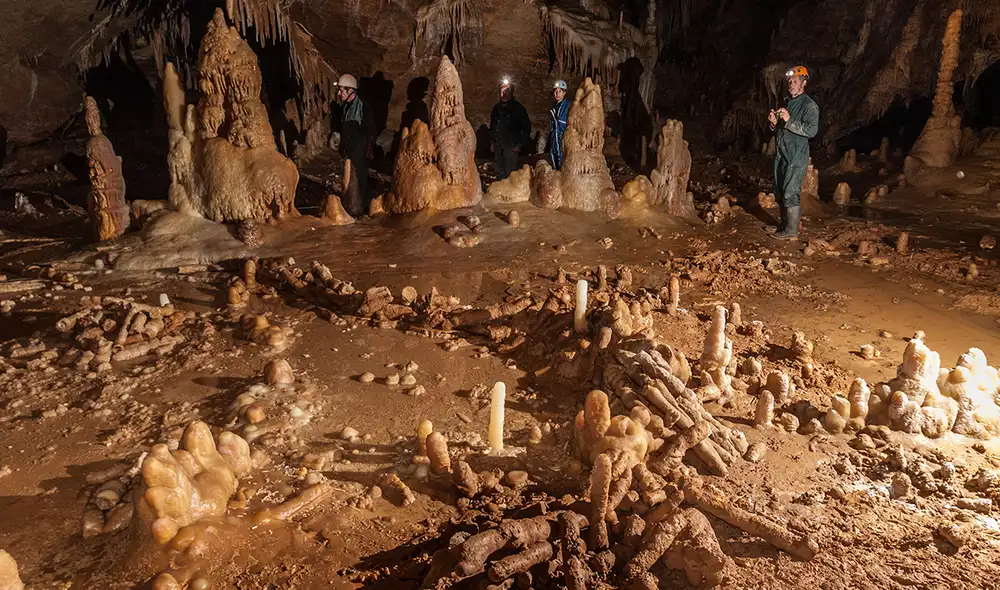
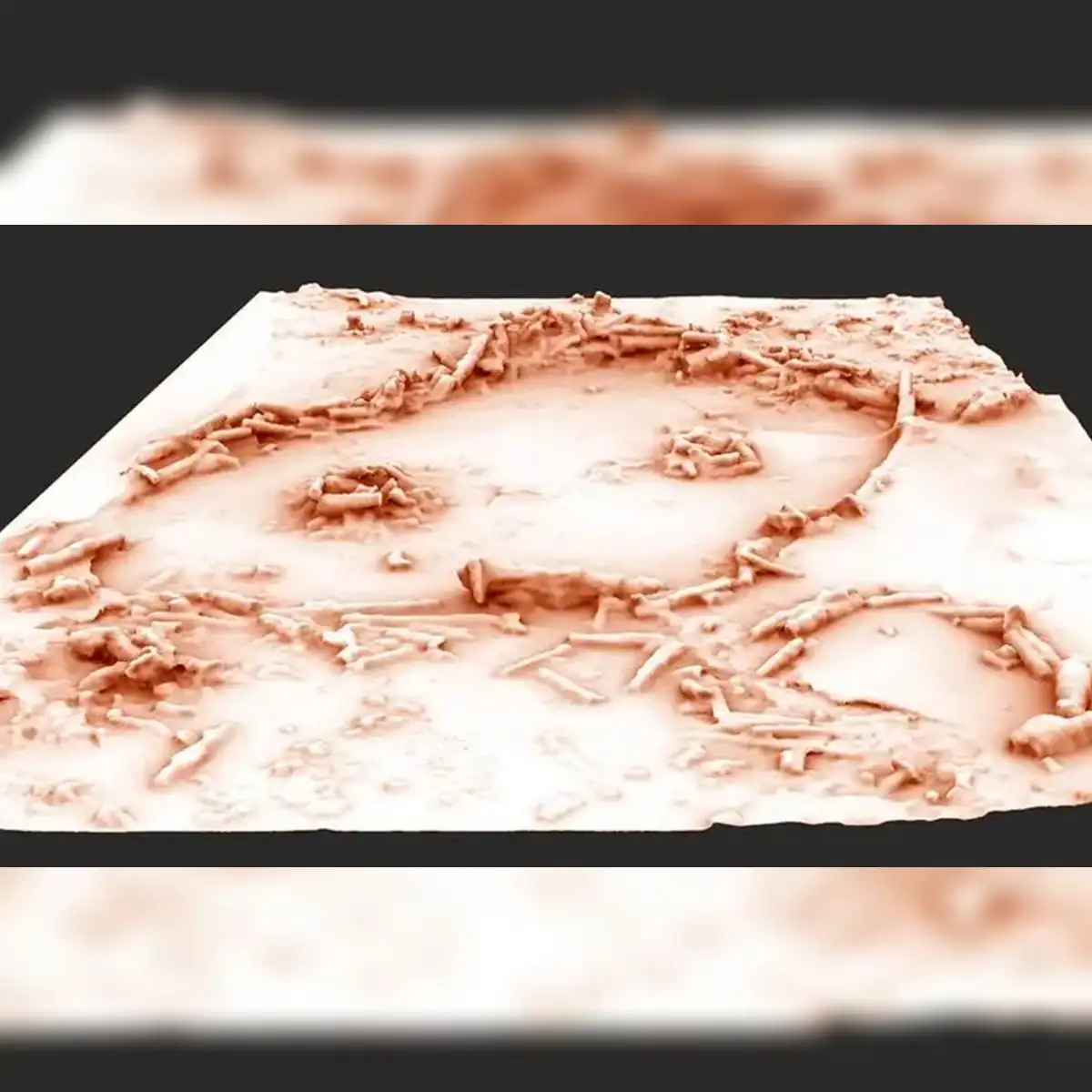
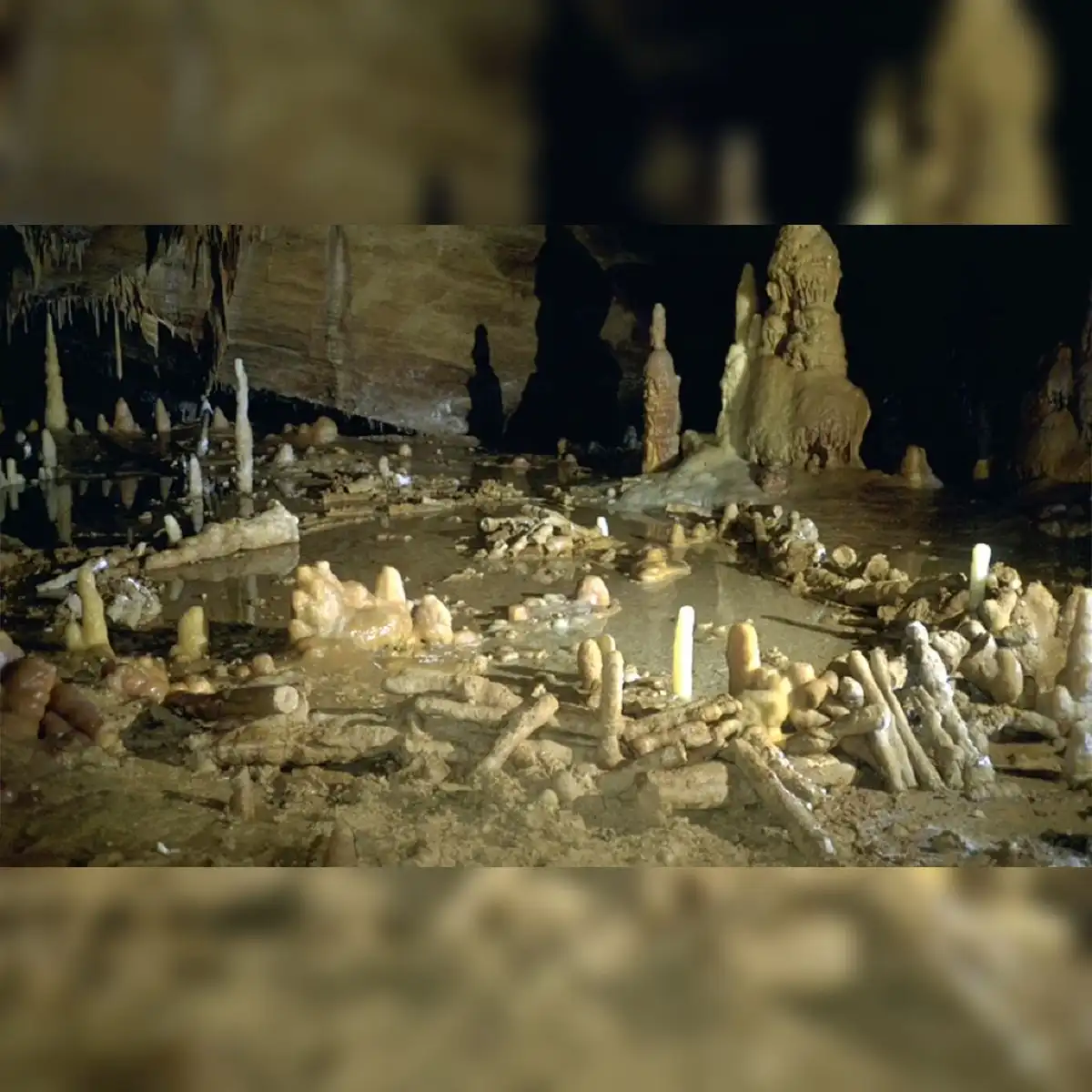
The structures were built deep inside a chamber entirely removed from natural light. Researchers found that stalagmites had been broken deliberately and arranged into two ring-like formations alongside four smaller piles.
The larger ring measures approximately 6.7 by 4.5 meters, while the smaller ring measures about 2.2 by 2.1 meters. Together, the formations contain around 400 stalagmite fragments known as speleofacts.
The accumulated length of the fragments exceeds 112 meters, with a total estimated mass of about 2.2 tons. Builders stacked some pieces into low layers and placed others vertically against the rings, indicating deliberate selection and arrangement rather than natural accumulation.
Dating and archaeological history
Researchers long believed the structures were much more recent. Early radiocarbon testing on a burned bone provided only a minimum age, a method no longer considered reliable for dates that old, and initial archaeological work halted after the death of archaeologist Francois Rouzaud, who studied the site during the 1990s.
A decisive breakthrough came when researcher Jacques Jaubert and his colleagues returned to the site to analyze calcite linked to the formations. Their 2016 study, published in the journal Nature, used uranium-series dating on calcite layers and related materials to establish an age of 176,500 years, with a margin of about 2,100 years.
This date places the Bruniquel structures more than 100,000 years before Homo sapiens expanded across Europe during the Upper Paleolithic. For comparison, Homo sapiens fossils from Bacho Kiro in Bulgaria are dated directly to around 45,000 years ago, representing some of the earliest evidence of modern humans on the continent.
The date confirms that Neanderthals were the builders. The findings show that Neanderthals were capable of venturing hundreds of meters underground, navigating in total darkness with artificial light, and modifying subterranean spaces far from cave entrances.
Evidence of fire and planning
Reaching the chamber 336 meters from the entrance required artificial light and careful navigation through underground passages. Researchers found evidence of fire inside the cave, including heat-altered stalagmite fragments and burned bones associated with the structures.
While fire clearly played a role in activities deep inside the cave, the archaeological remains do not reveal what type of lighting Neanderthals used or how they transported fire underground. Nevertheless, reaching and modifying the space required significant planning and spatial orientation.
Uncertain purpose of the structures
The exact reason Neanderthals built the rings remains unknown. The evidence does not confirm that the chamber served as a temple, sanctuary, or ritual space, though researchers cannot rule out a symbolic meaning.
The coordinated effort required to break hundreds of stalagmites and arrange them into geometric shapes shows organized activity. Some researchers have suggested practical uses such as shelter, though the distance from the entrance makes conventional living space unlikely.
Other researchers have suggested that the acoustic properties of the chamber may have influenced the choice of location. Ultimately, the discovery proves that a group of Neanderthals entered the deep cave 176,500 years ago, used light sources, and constructed complex stone structures whose purpose remains hidden in the dark.


