

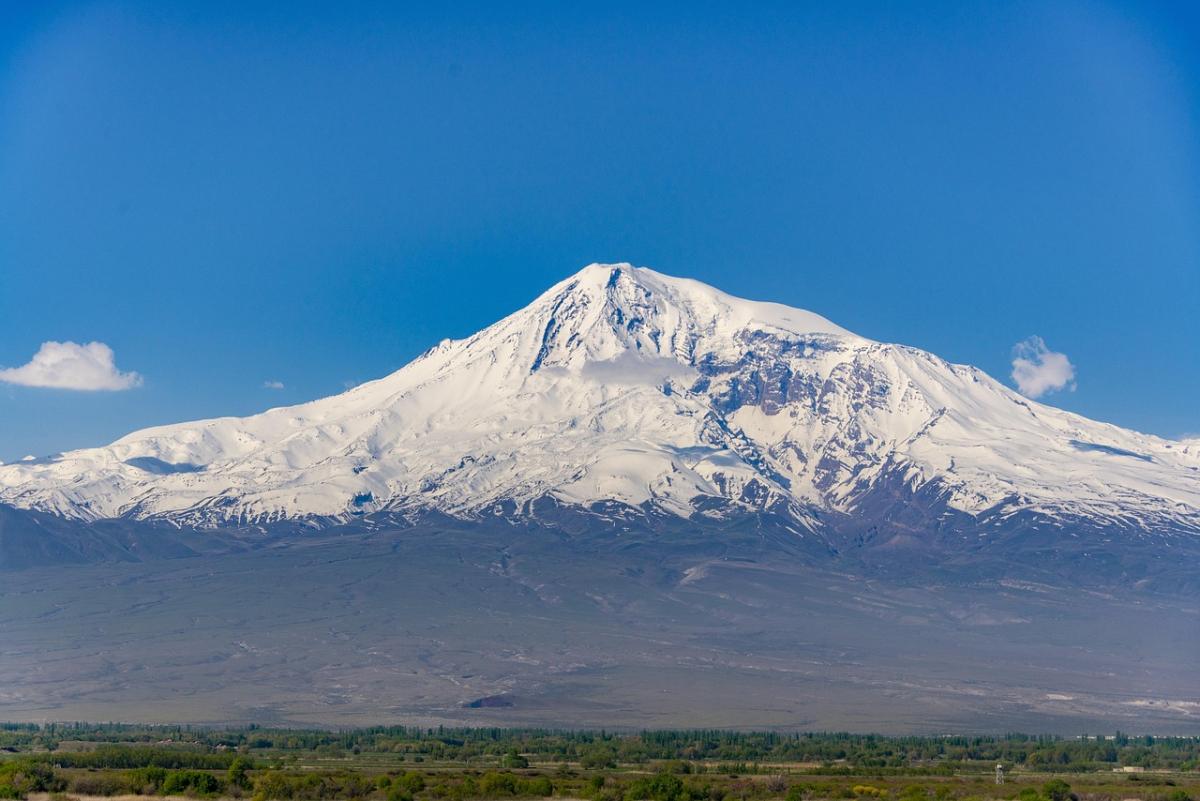
A joint team of German and Turkish scientists has launched a landmark study on Mount Ararat to extract ice samples from its shrinking summit glaciers.
Researchers took their initial ice samples at an altitude of more than 5,000 meters in July 2026, marking the first phase of an unprecedented scientific effort to map the volcano's frozen natural archive.
National Geographic reported that the expedition also completed ground-penetrating radar and seismic surveys across the summit ice cap. Radar measurements allow geologists to gauge ice thickness, identify rock formations beneath the ice sheet, and pinpoint distinct layers containing ancient volcanic ash. Seismic tests provide further detail on the internal structure of the glacier and underlying bedrock.
Plan for deep ice core drilling
The research team is working to locate the site where the thickest and oldest continuous ice layer is preserved. Scientists plan to conduct deep ice core drilling during their next expedition, which would mark the first such operation in the history of research on Mount Ararat.
Air bubbles, dust particles, and trace substances trapped inside the ice offer vital data for paleoclimatologists. These preserved materials can reveal past atmospheric composition, historical volcanic eruptions, prevailing wind directions, and broad climate shifts across millennia.
Mount Ararat is a dormant volcano situated on the border between Turkey and Armenia, rising to a summit elevation of 5,137 meters. Its location makes it scientifically significant, as it stands near Anatolia, the Caucasus, and Mesopotamia, regions that played pivotal roles in the development of human civilization.
Climatic shifts and historical evidence
Researchers hope the ice cores will contain distinct markers from major climate periods, including the Roman Warm Period and the widespread cooling observed in the sixth and seventh centuries. The ice may also contain micro-particles associated with early agricultural practices and ancient metallurgy.
Despite Mount Ararat's long-standing connection to the biblical story of Noah, researchers emphasized that the expedition is not searching for Noah's Ark. The sole objective is to analyze the ice and rock layer before climate change melts the ancient records away.
The rapid retreat of mountain glaciers worldwide has increasingly exposed historic artifacts and human remains. In the Swiss Alps, melting on the Theodul Glacier near the Matterhorn recently revealed the remains of a German mountaineer who disappeared 37 years ago, with DNA analysis confirming his identity alongside recovered hiking gear. Scientists note that melting glaciers in high-altitude mountain ranges continue to expose victims of past accidents as global temperatures rise.


