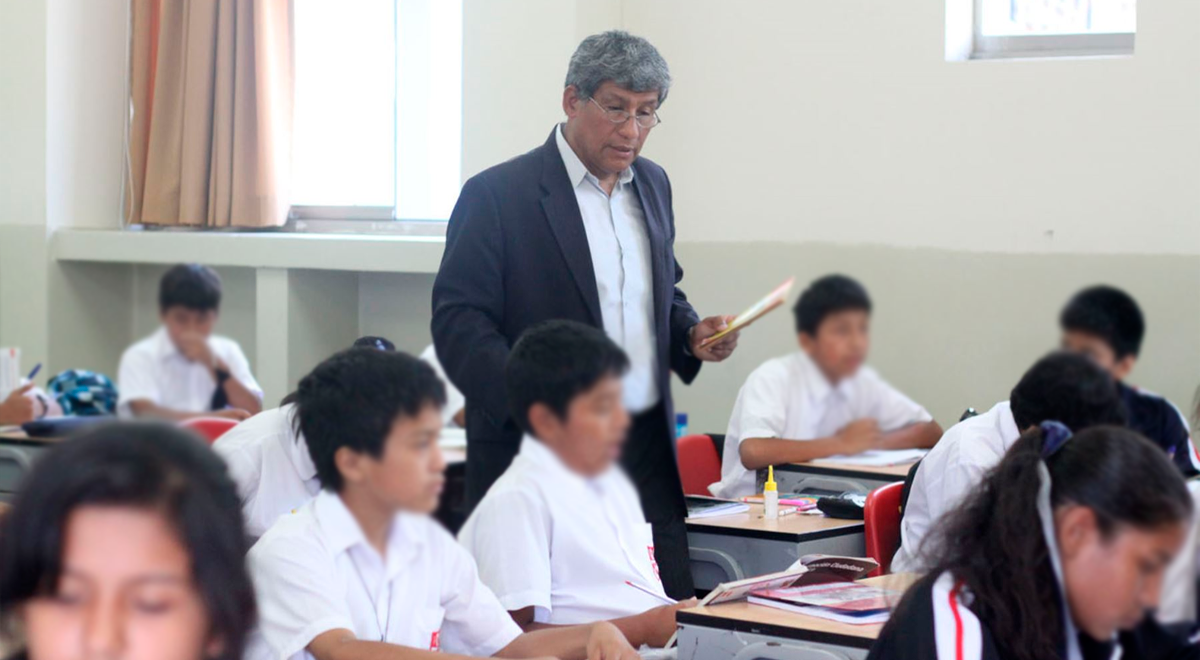
Peruvian advocacy coalition Mision Educacion has presented a strategic reform proposal to overhaul school leadership and reduce administrative burdens across Peru's education system.
The collective, backed by Peruvian national newspaper La Republica, announced the initiative ahead of the country's upcoming general elections to push for policy changes in public education. The proposal was developed with collaboration from Luis Guerrero Ortiz, director of the Peruvian educational group Educaccion.
According to data from the Organisation for Economic Co-operation and Development, school principals currently spend only 21% of their time on pedagogical leadership. The Paris-based international body found that the remaining time is absorbed by routine duties and system administrative demands, leaving school leaders with limited energy to overcome institutional resistance to change.
At the same time, statistics from Peru's Ministry of Education indicate that only 0.1% of teachers actively promote critical thinking in the classroom. Mision Educacion stated that Peruvian instruction remains focused on the uncritical transmission and repetition of isolated knowledge.
Bureaucratic obstacles in Peruvian classrooms
The advocacy coalition noted that global education systems were challenged three decades ago to adapt to the learning requirements of the 21st century. However, management in Peru remains bound to bureaucratic control over teaching rather than fostering reflective and critical learning.
When educational policy prioritizes routine, systems favor administrative managers over pedagogical leaders, converting bureaucracy into an end in itself and subordinating teaching needs to administrative efficiency. Mision Educacion stressed that effective leadership emerges when structural breaks and new rules are established.
In Peru, local educational administration is handled by regional bodies known as Unidades de Gestion Educativa Local, or UGELs. These administrative units function as direct extensions of the Ministry of Education, supervising teacher compliance and managing administrative tasks across local school districts.
Five strategic steps for reform
To make leadership viable in schools, Mision Educacion outlined five strategic actions for national education policy:
- Debureaucratize schools: Provide administrative support staff directly to educational institutions so principals can focus their efforts on pedagogical leadership.
- Transform local management: Replace the punitive control exerted over teachers by UGEL administrative units with increased pedagogical guidance and technical assistance.
- Train in leadership: Prioritize the development of social skills and more reflective leadership capabilities among school directors.
- Create learning communities: Institutionalize continuous self-evaluation so schools develop habits of learning from their own experience and resolving errors collaboratively.
- Grant institutional autonomy: Allow schools to introduce innovations suited to their local realities, providing centralized support so successful models can scale across the national system.
Electoral debate and future policy
Mision Educacion announced that it will publish contributions every two weeks in an open forum supported by La Republica. The publications will feature diverse educational topics, territories, and learning environments to influence public policies, government programs, and candidate debates ahead of the elections.
The collective asserted that systemic educational reforms are ultimately driven by school directors who possess the time, willingness, and competence to lead classroom change. Mision Educacion added that when quality education becomes a genuine priority for society and political leaders, the future ceases to be a promise and becomes reality.