Santo Domingo columnist Mirope Bragui Pérez has rejected claims by readers and artificial intelligence tools that her name is a pseudonym, insisting in her latest column for Diario Libre that she is a real person writing from retirement.
Pérez, a septuagenarian grandmother living in the Dominican Republic, stated that automated software queries and several readers had expressed doubts about her existence after she began publishing articles on books and literary affairs.
She said her sister Ariadne laughed after receiving a message from a user named Mafalda displaying artificial intelligence responses that identified her name as a pen name. Pérez added that she had retired to the country of her maternal ancestors after raising her children, spoiling her granddaughters, and mourning the premature loss of her partner, adding that she wished to protect her peace and the privacy of her personal library.
Literary Debates and Upcoming Induction
Pérez reported that poet and essayist Basilio Belliard is scheduled to deliver a speech on rhythm as a sign of poetic language on Tuesday, August 18, at 6:00 p.m. at the corner of Las Damas and El Conde streets in Santo Domingo. Belliard will deliver the address upon his induction as a full member of the Academy of Sciences.
She noted that two readers had accused her of bad faith after she mentioned the upcoming induction in a column published the previous Friday. Pérez defended her commentary, stating that literary theory and scientific linguistic analysis had been contentious subjects among Dominican literary factions for decades, in a city with few bookstores but thousands of writers and online influencers.
Literary References and Religious Texts
Reflecting on identity and literary tradition, Pérez cited fourteen lines of endecasyllable verse from Elogio de la Sombra by Argentine author Jorge Luis Borges, noting that Borges had also questioned his own existence and that the poem contained a repeated line referencing poet Robert Frost.
She discussed stories spanning ancient literature, including the story of Potiphar's wife, known in Sufi Quranic tradition as Zuleica, meaning a luminous female of dazzling beauty. In the Genesis narrative and Hebrew Tanaj, Potiphar served as a court official to the Egyptian Pharaoh seventeen centuries before Christ, during the era of the patriarch Jacob, who was later named Israel. Jacob had twelve sons who founded the twelve tribes of Israel, including Joseph, his favorite son by Rachel after a period of sterility.
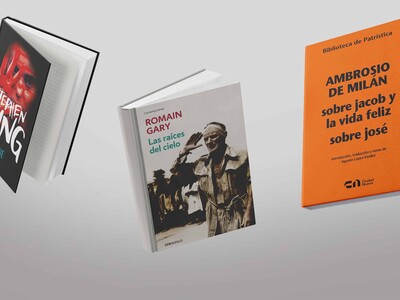
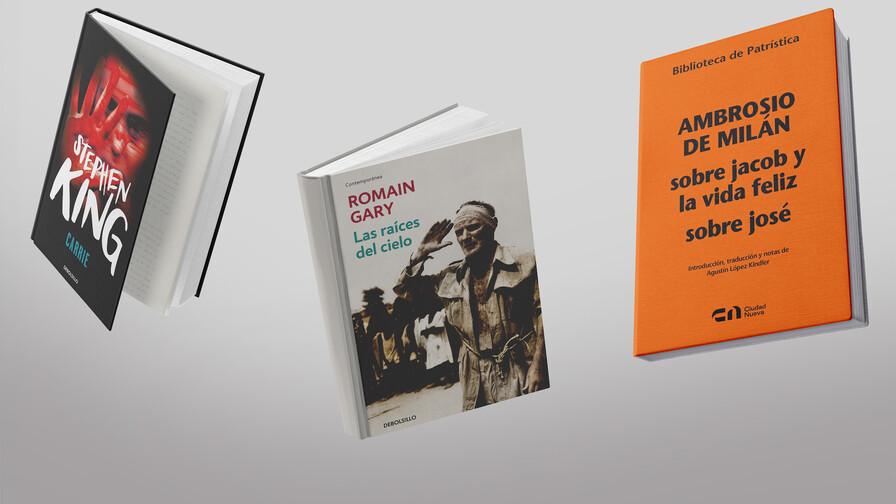
Pérez explained that after Joseph rejected Zuleica's sexual advances, she falsely accused him of assault. To better understand Jacob and Joseph, Pérez recommended the 1998 Spanish translation of Sobre Jacob y la vida feliz / Sobre José by Saint Ambrose of Milan, an 180-page volume published by Ciudad Nueva that compiles two fourth-century pastoral treatises translated from Latin.
Historical Pseudonyms in World Literature
Addressing the history of pen names, Pérez cited French writer, diplomat, and military aviator Romain Gary, who was born in Vilnius in 1914 and died in Paris in 1980. Gary won the Goncourt Prize in 1956 for his 578-page environmental novel Les racines du ciel, published in Spanish translation by Luis de los Arcos as Las Raíces del Cielo in 1958 by Janés. The novel focuses on a protagonist named Morel who fights to protect hunted elephants in Chad prior to its independence from France in 1960.
The Goncourt Prize, established in 1903 and awarded each November in Paris with a symbolic ten-euro purse, guarantees massive book sales for recipients such as Simone de Beauvoir, Marguerite Duras, and Marcel Proust, but forbids authors from winning a second time. To prove his work was judged on merit rather than fame, Gary submitted the 1975 novel La vie devant soi, published in Spanish as La vida ante nosotros in 1976, under the pseudonym Émile Ajar, winning the prize a second time and sending his nephew to collect the award before revealing the trick in his posthumous memoirs.
Pérez noted that Gary had described humor as a declaration of dignity and an affirmation of human superiority over circumstances. She contrasted Gary's stunt with 2007 Nobel laureate Doris Lessing, who was born in Tehran in 1919 and died in London in 2013. Lessing wrote two novels in 1983 and 1984 under the pseudonym Jane Somers to expose publisher discrimination against unknown authors, leading her London editor to reject manuscripts that were later published by Alfred A. Knopf in New York.
She also highlighted American author Stephen King, born in Portland in 1947, who adopted the pseudonym Richard Bachman to publish titles such as The Running Man in 1982, later adapted into a 1987 film starring Arnold Schwarzenegger. King, whose early works included Carrie in 1974 and The Shining in 1977, created the alias because he wrote faster than publishers could release his books.
National Literature Awards and Cultural Leadership
Turning to domestic cultural news, Pérez highlighted the announcement of the Premio Anual de Literatura 2026 winners by the Dominican Ministry of Culture. The category winners included Carlos Diloné for history, Manuel García Cartagena for novel, Ingrid Luciano for theater, Gustavo Olivo for short story, César Sánchez Beras for children's literature, Ysabel Tejeda for essay, and Alberto Eloy Tejera for poetry.
Pérez commented on the Minister of Culture, known as Robertico, noting his background as a television entertainment producer and director of poor-quality films. She mentioned that relatives had praised his efforts to promote reading and regional book fairs, while politically active friends preferred an intellectual in the post. Comparing him to Ukrainian President Volodymyr Zelensky, a former television comedian who became a prominent statesman, she lightheartedly cautioned the minister against taking similar political ambitions.
The Importance of Reading and Reflection
Pérez concluded her column by reflecting on the necessity of reading, recalling King's statement that a life without books was a thirsty existence and living without poetry was like living without images. She also cited Mark Twain, who stated that individuals who could read but chose not to reduced themselves to the level of illiterate people.
Referencing Albert Einstein's warning that unreflective reading leads to mental laziness and over-reliance on the ideas of others, Pérez stated that her own existence was defined by reading, thinking, and engaging with her audience through published print.