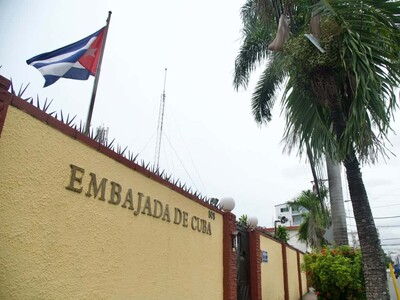
Dominican Republic President Luis Abinader has decided to expel ten members of the Cuban diplomatic mission along with their families from Santo Domingo.
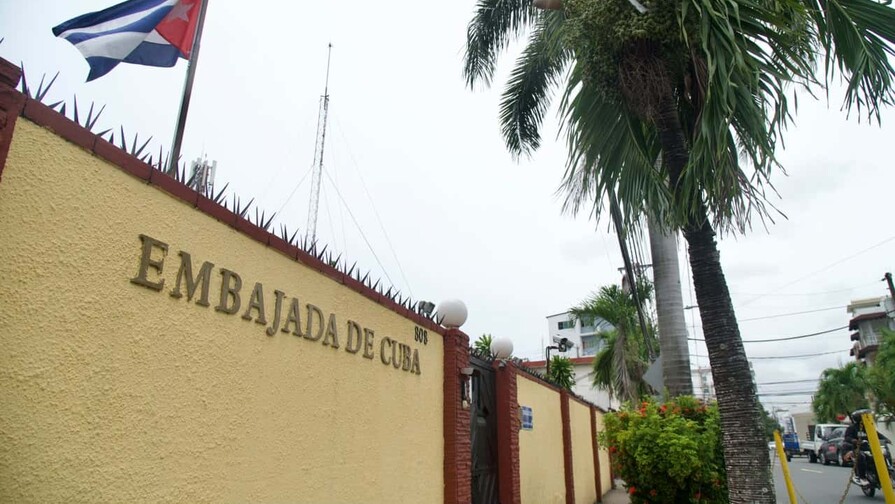
The diplomatic removal has renewed a broader national debate in the Caribbean country over whether foreign policy moves adequately account for longstanding domestic sympathies toward Cuba.
Writing in the opinion section Agora for the Santo Domingo daily newspaper Diario Libre on August 20, 2026, columnist Rafael Mendez argued that the Abinader administration may have overlooked deeply rooted historical emotions when ordering the expulsion.
Mendez recalled a famous warning issued decades ago by the late Rafael Herrera, the revered chief editor of Listin Diario and a towering figure in Dominican journalism, who coined the expression describing the Cuban fanaticism of Dominicans.
A High Profile Television Feud
Herrera originally formulated his warning following a landmark public clash between Dominican television host Freddy Beras Goico and Cuban singer and songwriter Pablo Milanes. The dispute began when Milanes, visiting the Dominican Republic, failed to attend a scheduled performance on Beras Goico's popular Sunday variety show, El Gordo de la Semana.
Beras Goico, widely considered one of the most influential, beloved, and respected broadcast personalities in modern Dominican history, launched a fiery on air criticism of the artist. Milanes responded with an equally stern public reply, setting off an intense controversy across national media.
Despite Beras Goico's immense personal popularity and extraordinary rapport with the Dominican public, significant sectors of public opinion surprisingly sided with the Cuban visitor. The outcome demonstrated that challenging a prominent Cuban figure posed a steep disadvantage even for the country's most cherished media icons.
Reflecting on the episode at the time, Herrera explained that confronting Cuba meant stepping onto perilous ground, as deep seated public affection regularly eclipsed individual arguments or personal grievances.
Cultural Bonds and Generational Memory
In his analysis, Mendez emphasized that Herrera was not questioning the national identity or loyalty of Dominicans who expressed warmth toward Cuba. Rather, the veteran editor was giving a name to an intense, persistent emotional attachment capable of overriding political, ideological, and personal considerations.
That cultural affinity did not originate with Milanes, nor did it end with him. Cuba has long occupied a unique position in the Dominican imagination, sustained across generations by extensive cultural exchanges, migration, political ties, and shared revolutionary histories.
As a result, official actions concerning Havana are rarely evaluated in the Dominican Republic solely through the cold logic of statecraft or foreign policy goals. Instead, they pass through a collective memory in which Cuba maintains a remarkably durable emotional presence.
Repercussions of State Decisions
Mendez pointed out that national governments routinely calculate international alliances, geopolitical strategy, security concerns, and diplomatic convenience. However, official planning frequently ignores historical sentiments that never appear in foreign ministry reports.
The decision to expel the ten diplomats and request the withdrawal of Cuban mission personnel may be legally valid, diplomatically explainable, and politically defensible. Nonetheless, state actions can generate domestic repercussions that decision makers fail to anticipate adequately.
While an artistic feud on television and an official state expulsion operate on entirely different scales, Mendez noted that both possess the power to trigger the exact same emotional reaction among the populace.
Mendez concluded that just as Beras Goico had legitimate reasons to feel aggrieved during his television feud, the Dominican government may have valid grounds for its diplomatic stance. Yet neither could succeed by relying exclusively on their own justifications while failing to calculate how Dominicans process events involving Cuba.