
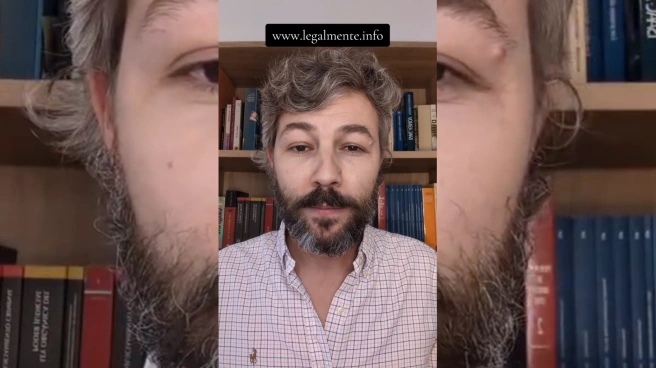
Spanish labor lawyer Juanma Lorente has warned workers who are injured on the job against two common mistakes that can wreck their chances of receiving compensation, in advice he shared on social media.

Knowing how to act after a workplace accident is essential to securing access to every benefit and payout a worker is entitled to, Lorente said. Poor handling of the situation from the start, he explained, can seriously undermine an employee's right to be compensated.

Mistake one: seeing the wrong doctor
The first error, which Lorente called "extremely serious," is going to a Social Security doctor instead of to the mutua, the insurer that collaborates with the employer to handle workplace injuries in Spain.
He said it is essential for the sick leave to be classified as a workplace accident from the very first moment, and that the mutua is the route for doing that. Taking this step "makes things a lot easier," he said, since it avoids having to launch a later procedure to get the professional origin of the accident officially recognized, a process that can complicate and delay the entire claim.
Mistake two: delay and missing evidence
Lorente considers the second error "even more important": waiting too long to act and failing to gather evidence.

He stressed the need to collect evidence immediately, including photos of the incident and the place where it happened. As an example, he said that if a worker is cut by a saw that had been left somewhere it should not have been, it is crucial to photograph the saw in that exact spot. He warned that the company "may have time to pick up the saw and put it back where it should be," pointing out how delay can allow evidence to disappear.
For that same reason, Lorente said his most important piece of advice is not to wait before filing a complaint with Spain's Labor Inspectorate. Acting quickly, he said, gives an inspector the best chance of verifying the conditions in which the accident happened. The faster the complaint is filed, he said, the easier it is for an inspector to confirm that risk-prevention rules were not being followed at the site, and for the worker to be awarded the compensation they are owed.
Three types of compensation that can be combined
When an accident is caused by an employer's failure to provide proper safety measures, a worker can claim up to three separate forms of financial compensation at once, according to Lorente.

The first is the Social Security or mutua benefit, which covers medical care and a sick-leave payment equal to 75% of the worker's regulatory base pay, starting the day after the accident. On top of this come a benefits surcharge and a separate damages payout.
The benefits surcharge: a penalty on the company
If it can be shown that the company breached workplace risk-prevention rules, Spain's National Social Security Institute (INSS) can impose a severe financial penalty on it, Lorente said.
This penalty, known as the recargo de prestaciones or benefits surcharge, adds between 30% and 50% on top of all the economic benefits the worker receives, whether for temporary leave or permanent disability.
The surcharge has one key feature: the company must pay it directly out of its own funds. Spanish law expressly bans this penalty from being covered by an insurance policy or by the mutua, so its full financial impact falls on the negligent employer. It works as a deterrent meant to punish employers who fail to protect their staff's health.
Deadlines: the clock is running
The third form of compensation is the damages payout, claimed through the labor or civil courts to cover after-effects, physical and emotional pain, and lost income.
The general deadline for this claim is one year, Lorente said, but it does not always start counting from the date of the accident.
This limitation period begins when the worker receives a final medical discharge, once any after-effects have stabilized, or from the date of the ruling that declares a permanent disability.
For that reason, Lorente said, filing an immediate complaint with the Labor Inspectorate and gathering reports is essential not only to prove what happened, but also to avoid the risk of the right to claim expiring.
Test yourself
What did Juanma Lorente call the mistake of seeing a Social Security doctor instead of the mutua?
How much can the 'recargo de prestaciones' surcharge add to a worker's benefits?
What is the general deadline to claim damages for a workplace accident, according to Lorente?
Have your say
Do you know what steps to take after a workplace accident?
Where it happened
Madrid, Spain