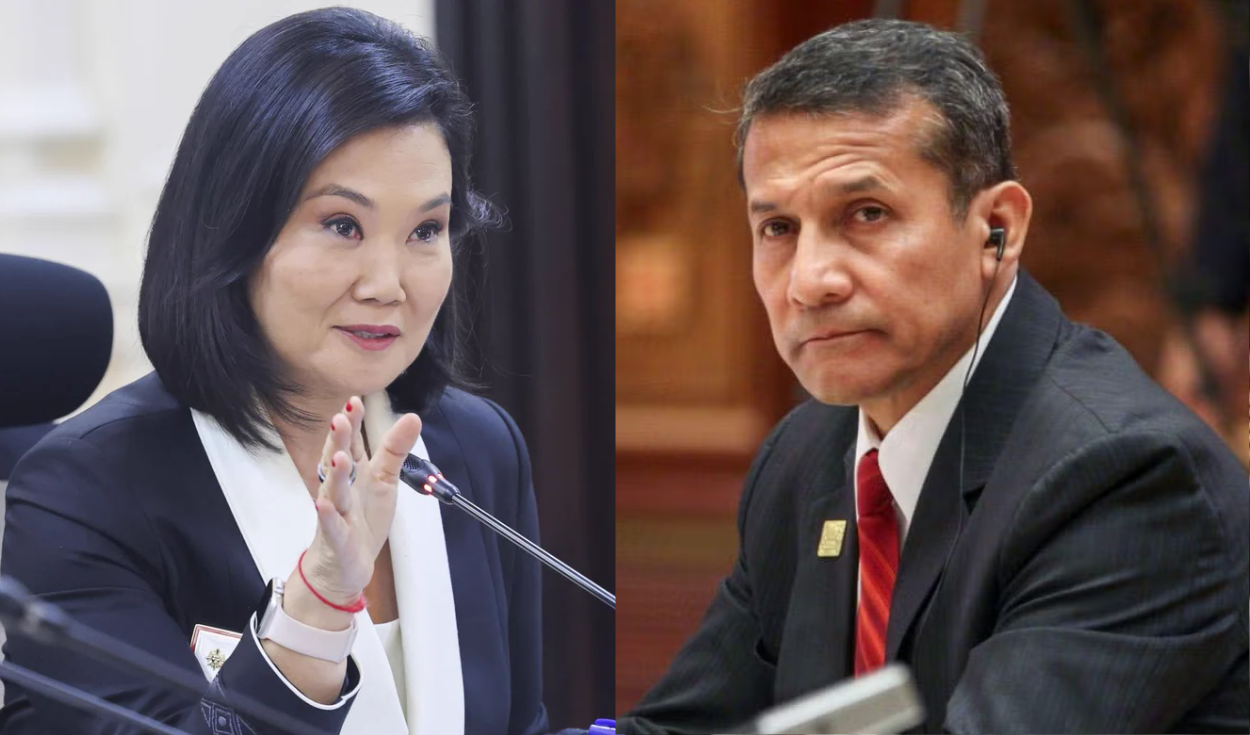
Peruvian opposition leader Keiko Fujimori expressed support for former president Ollanta Humala's release from Barbadillo prison after a court annulled his money laundering conviction, saying she welcomed the fact that he was finally free.
Fujimori argued that her own case and Humala's had very similar origins, both rooted in political campaign financing matters. She said it was logical that if her investigation had been archived, the same should happen to Humala.
The case Fujimori referred to is known as the 'Cocktails' case. The Second National Criminal Appeals Chamber ordered the permanent closure of the money laundering investigation against her, which stemmed from alleged irregular financing of her presidential campaigns in 2011 and 2016. Judges César Sahuanay, Javier Sologuren and Omar Córdova made that decision in compliance with a Constitutional Tribunal ruling, rejecting a prosecution request to reopen the file. The judges concluded that the public prosecutor's office could not extend a charge without legal basis following the tribunal's decision.
Humala freed after more than a year in custody
Humala left Barbadillo after spending one year and three months in prison. The First National Preparatory Investigation Court ordered his release in compliance with the Constitutional Tribunal ruling. The resolution, signed on July 31 by judge César Riveros Ramos, directed the National Penitentiary Institute to process his release.
Humala had been detained since April 2025, when the Third National Collegiate Criminal Court sentenced him and his wife, Nadine Heredia, to 15 years in prison for irregular campaign contributions in 2006 and 2011.
The Constitutional Tribunal sided with Humala by five votes to two, finding that the funds received for those campaigns did not constitute money laundering under the laws in force at the time. The tribunal noted that the concept of receiving illicit assets was only introduced into Peruvian law in November 2016, meaning its retroactive application was prohibited.