


Astronomers have identified a candidate for the first moon ever detected outside the solar system, and it is nearly as massive as Jupiter itself. The object orbits a brown dwarf rather than a conventional planet, prompting the European Southern Observatory (ESO) to describe it with a more cautious term: exosatellite.
After discovering more than 6,000 planets beyond the solar system, astronomers have yet to confirm a single moon orbiting any of them. The new candidate lies roughly 73 light-years from Earth and has a mass equivalent to about 90 percent of Jupiter, making it nearly as heavy as the largest planet in our own solar system.
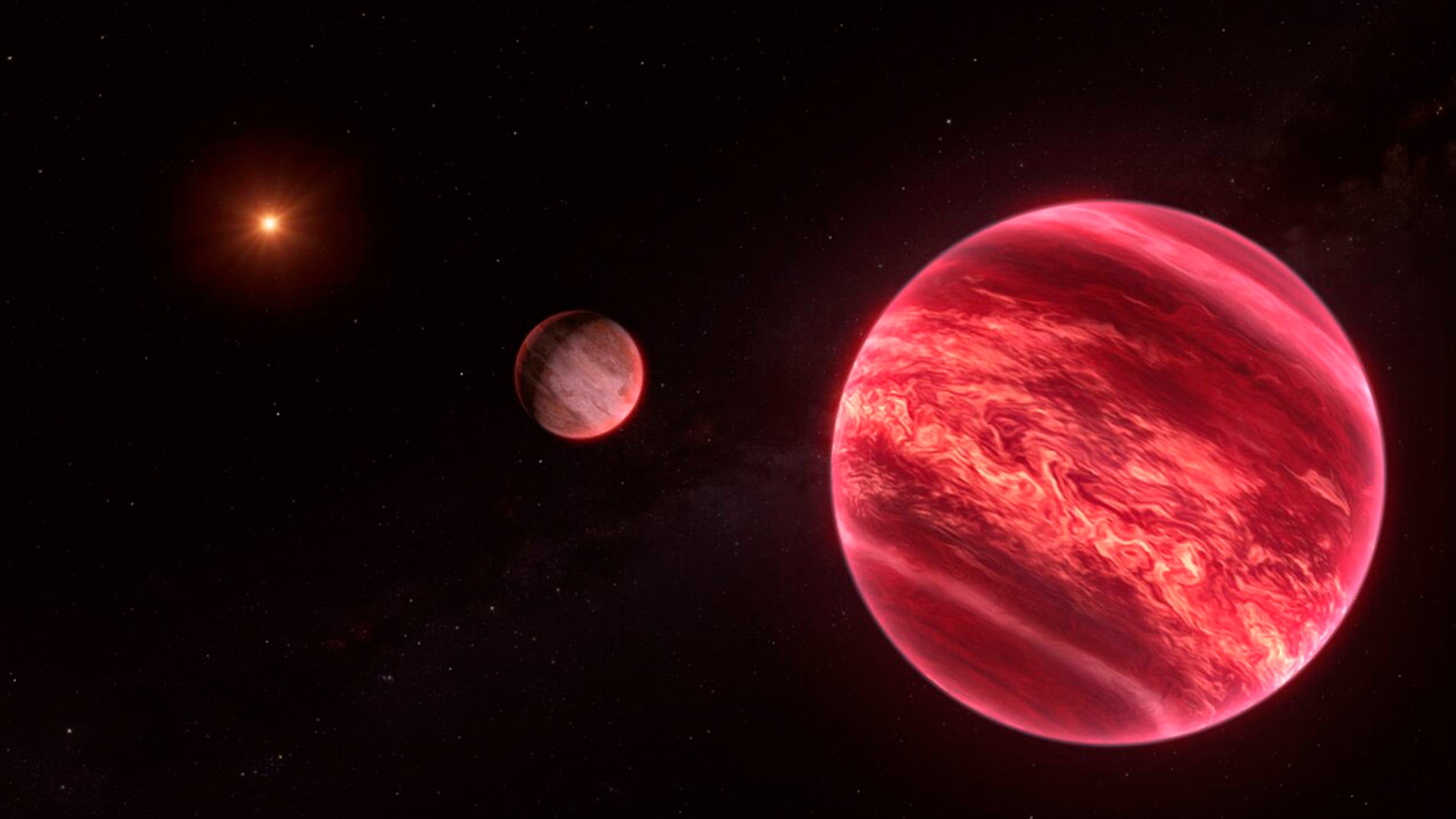
An exomoon that breaks the rules
The system is called CD-35 2722. It begins with a star roughly half the mass of the Sun. Orbiting that star is CD-35 2722 B, a brown dwarf about 37 times more massive than Jupiter. Brown dwarfs occupy a kind of no man's land in astronomy, too large to count as ordinary planets but not massive enough to sustain the hydrogen fusion that powers stars.
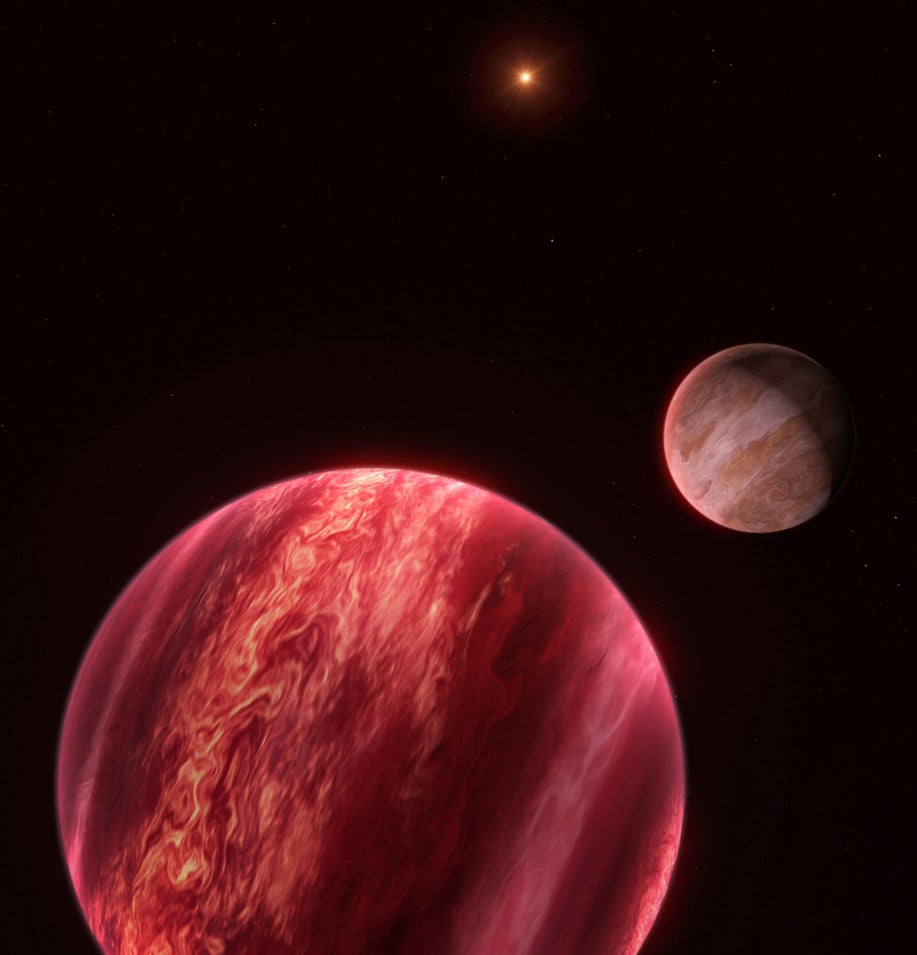
The surprise came when researchers looked around this brown dwarf. They found a signal consistent with another object completing an orbit roughly every 170 days, with a minimum mass of about 0.9 times that of Jupiter. The proportions are extraordinary even compared with other giant worlds found outside the solar system.
How it was detected
The team did not need to directly photograph the hypothetical moon to find it. Researchers used ESO's Very Large Telescope (VLT) in Chile, together with its CRIRES+ instrument, and detected small periodic variations in the brown dwarf's velocity. The invisible object's gravity tugs on the brown dwarf, producing a tiny wobble that can be measured from Earth.
It is the same radial velocity principle that has been used for decades to discover exoplanets. Applying it to a brown dwarf in search of even smaller bodies opens a new possibility. Several exomoon candidates have surfaced before, but none has achieved undisputed confirmation, even as instruments like the James Webb Space Telescope allow scientists to study increasingly strange worlds.
A classification problem
That history is exactly why classifying the new object is difficult. It behaves like a moon because it orbits a body that itself orbits a star. But it has planetary mass, and its host, the brown dwarf, is not technically a planet either.


