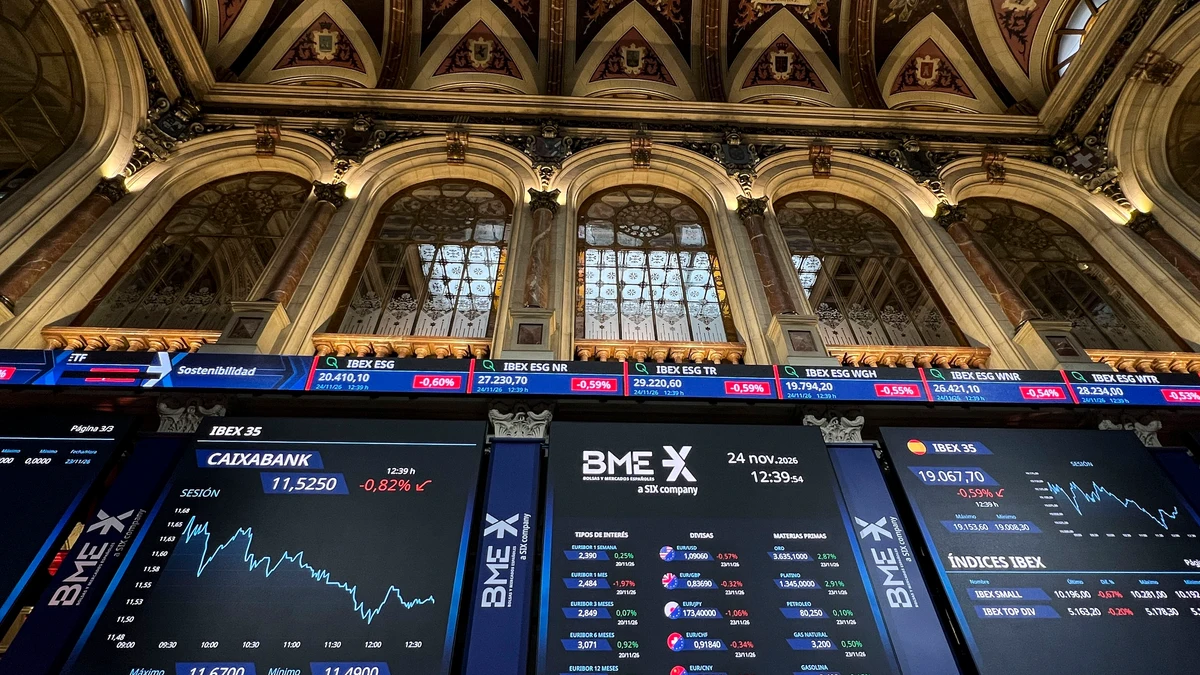
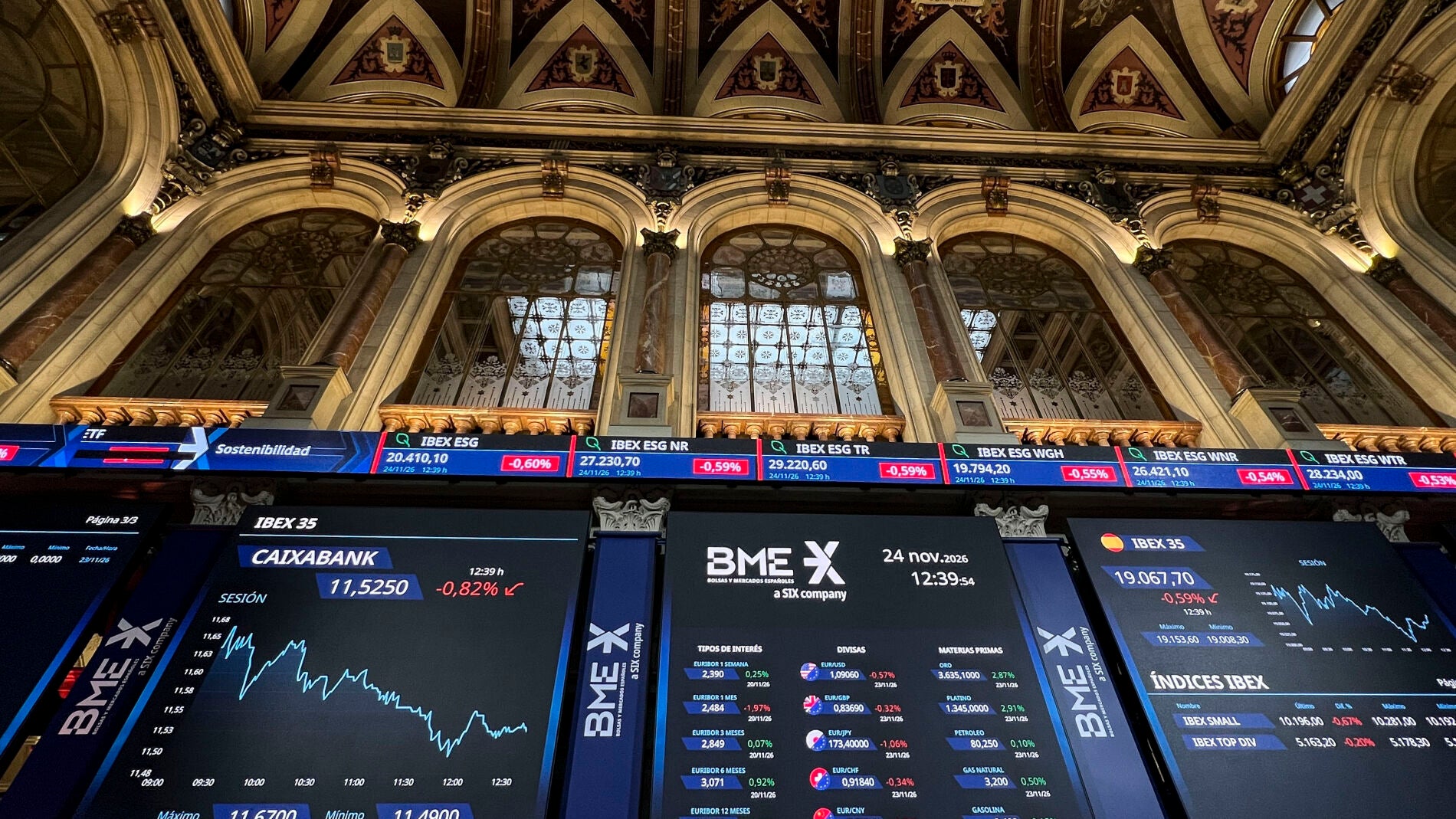
Spain's Ibex 35 stock index tested the 19,000-point threshold on Tuesday as investors weighed the prospect of new United States tariffs and growing doubts over whether the artificial intelligence boom is starting to deflate. The index extended its opening decline to 0.67%, falling below 19,100 points, according to Agencia EFE.
Most of the market is still trying to work out whether the AI bubble is finally bursting. Some of the sharpest rallies in market history have occurred during bear markets, so a single day's movement in the indexes should not be given too much weight.
Tariff fears hit steel and construction stocks
In Europe, the possibility that the United States could apply different tariff rates to each economy is again weighing on industrial stocks. ArcelorMittal led the declines on the Ibex 35, hit by profit-taking as well as still-high energy costs and weakness in the automotive sector, one of its main customers.
For European steelmakers, the scope of any tariffs matters twice over. New US duties could make it harder to sell steel in the American market, while also diverting steel from other producers toward Europe and putting further pressure on prices at home.
Doubts over investment in data centers also weighed on ACS and Solaria, given their exposure to the construction and electricity supply side of such projects. Utilities with more stable income held up better than most. A search for safety in government bonds pushed down bond yields, making dividend-paying stocks relatively more attractive again.
Nvidia and Anthropic reverse course
Wall Street went from celebrating Jensen Huang's return at the helm of Nvidia to selling off AI-linked stocks again within 24 hours. Nvidia, which jumped more than 31% the previous day, fell by as much as 8%.
Anthropic's stock proved even more volatile. Just days after its stock market debut, the company's shares dropped 11%, falling below the $83 placement price. The question facing investors has shifted in under a week: before the IPO, it was how many Anthropic shares they could get hold of; now it is at what price they are willing to keep holding them.
Doubts over how long it will take AI investments to turn a profit are compounded by debate over the safety of upcoming models from Anthropic and OpenAI. If their launch requires more testing or faces tighter restrictions, revenue could arrive later while the cost of chips and data centers is already being paid. That is where the limits of the previous day's rebound lie: Huang's return puts Nvidia's chief strategist back in charge, but his customers still have to justify the spending.
US consumer confidence rises ahead of Black Friday
The US economy sent a more encouraging signal. Consumer confidence rose from 91.9 to 103.3 points, its highest level in almost two years, helped by a better perception of employment and the broader economy.
The data arrived just ahead of Black Friday, at the same time Washington is considering new tariffs tailored to individual countries. For retailers, the question is how much room they have to pass on any rise in import costs to shoppers who are arriving more confident, but are still waiting for discounts.
Dollar gains pressure gold prices
Wall Street's rebound the previous day coincided with a fresh advance by the dollar, which weighed on gold again. The pattern seen after earlier rounds of tariffs helps explain why a tariff escalation can take time to benefit the metal.
After the "Liberation Day" tariffs, gold fell more than 2% from its April 3 high, partly because some investors sold gold to cover losses on other positions. Less than three weeks later, gold reached $3,500 an ounce, 10.5% above that level.
This time, the key is which risk dominates the market. If tariffs stoke fears of a slowdown, gold could regain its appeal as a safe haven. If concern about inflation prevails, expectations of further Federal Reserve rate increases could support the dollar and make US debt more attractive than an asset that pays no interest.
Test yourself
Which company led the declines on the Ibex 35?
How much did US consumer confidence rise, according to the article?
What happened to Anthropic's shares days after its stock market debut?
Have your say
Do you think new US tariffs would help or hurt global markets?
Where it happened
Madrid, Spain