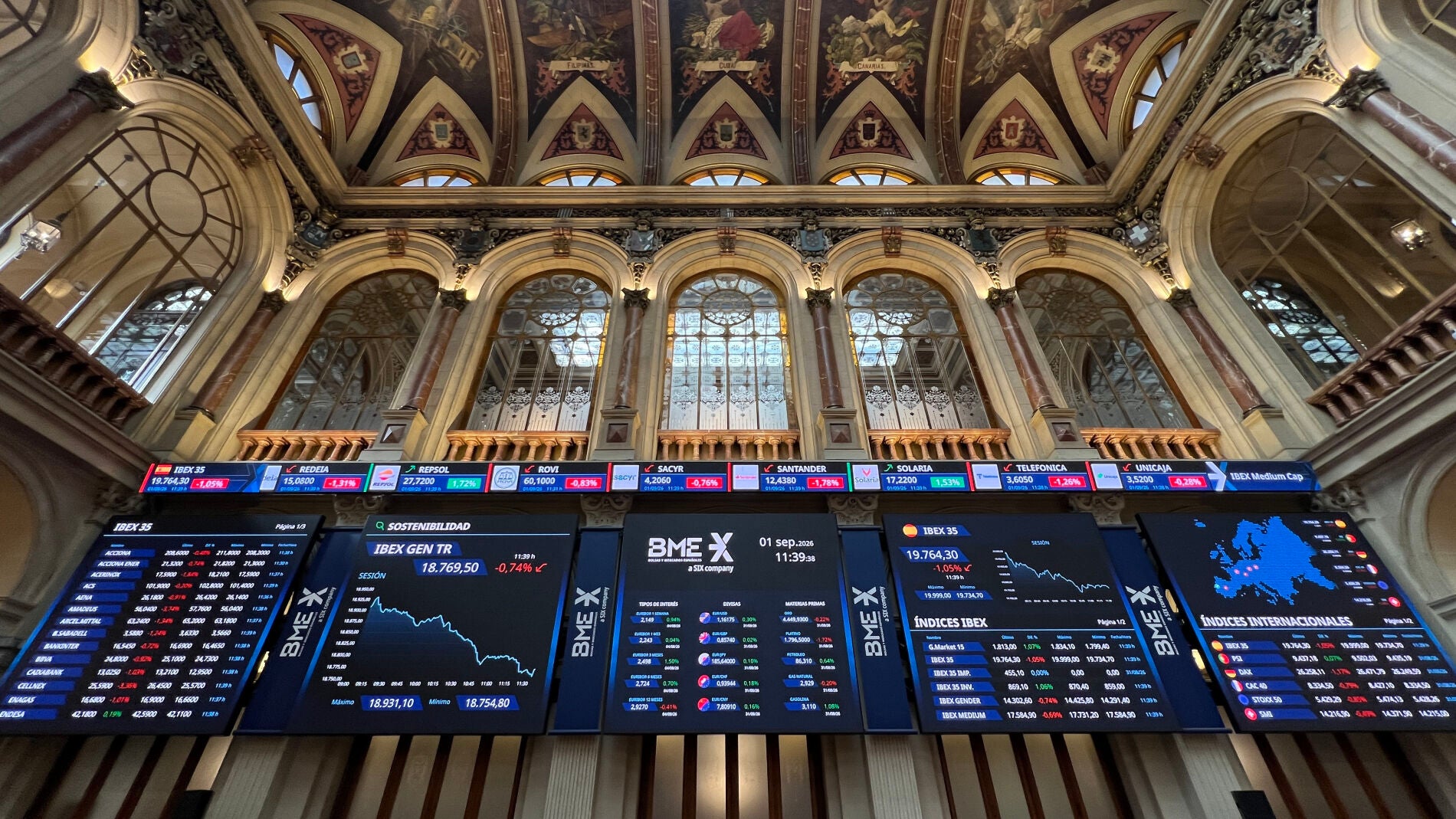
Spain's benchmark Ibex 35 stock index dropped sharply below 20,000 points on September 1 as surging global bond yields pressured financial markets.
Debt markets took center stage during the trading session, dragging down stock indexes at the start of September, a month that has historically been one of the weakest of the year for major market benchmarks.
Global bond yields climbed back to their highest levels in nearly two decades as a rebound in crude oil prices reignited inflation concerns and prompted investors to raise their expectations for future interest rates.
The upward shift in yields began on Friday after Federal Reserve Chairman Kevin Warsh reiterated his commitment to bring inflation back down to the central bank's target. The movement intensified this week following a new spike in energy prices driven by escalating military hostilities between the United States and Iran.
Yields on 30-year US Treasury bonds moved back toward levels seen before a major market disruption last month triggered by US Treasury Secretary Scott Bessent, when the Treasury announced plans to at least double its bond buyback program.
Rising borrowing costs and market pressures
Beyond rising oil prices, investors are demanding higher compensation for holding long-term debt. Concerns over persistent inflation have combined with heavy public spending and growing borrowing needs from governments and major technology companies funding artificial intelligence development, placing renewed upward pressure on the long end of yield curves.
The Ibex 35 index, which tracks the 35 most liquid stocks traded on Spanish exchanges, fell decisively below the 20,000-point threshold. Higher borrowing costs hit debt-heavy corporations, real estate firms, and consumer-focused stocks, while tourism companies faced rising operational cost expectations for airlines due to surging oil prices.
Banking stocks failed to provide a safe haven despite the environment of elevated interest rates. Although higher yields initially support net interest margins, market participants began pricing in broader economic fallout, including reduced credit demand, weaker client activity, lower fee income, and potential deterioration in loan quality.
Macroeconomic data and currency stability
Macroeconomic reports from the United States showed job openings increased slightly in July while layoffs declined, signaling stable but moderate labor demand. Meanwhile, US manufacturing activity expanded for the eighth consecutive month in August, though the pace of growth slowed slightly from recent four-year highs.
In Europe, consumer price index data for the eurozone matched market forecasts. The inflation reading left monetary policy expectations largely unchanged, keeping the euro virtually flat against the US dollar at approximately 1.16 dollars.
Corporate changes and commodity markets
In corporate developments, Apple Chief Executive Officer Tim Cook handed leadership of the technology giant to John Ternus. The transition concludes Cook's tenure heading the company, during which Apple established itself as one of the world's most valuable brands and largest companies by market capitalization.
Selling pressure also spread to commodity markets, where gold and silver prices fell sharply. The decline was driven by higher bond yields, a stronger US dollar, and expectations that interest rates will remain elevated for longer, increasing the opportunity cost of holding non-yielding assets.