Dominican actor and singer Héctor Aníbal is taking on the role of legendary baritone Eduardo Brito in the new theatrical production Brito in Santo Domingo. The biographical play, written by Reynaldo Disla and directed by Manuel Chapuseaux, examines the complex life and career of the late musician through the eyes of those closest to him, including his wife and professional associates.
Producer Dunia De Windt first contacted Héctor Aníbal nearly two years ago to propose the project. He explained that De Windt chose him because of his physical resemblance to Brito and his background as an experienced vocalist. The production is scheduled to run at the Sala Ravelo venue in Santo Domingo across two weekends, with performances on August 21, 22, and 23, and continuing on August 28, 29, and 30.
Vocal Challenges and Musical Preparation
Preparing for the role presented significant technical challenges, particularly adapting to Brito's unique vocal range. While Brito was a tenor-like baritone who possessed exceptionally powerful low notes, Héctor Aníbal is naturally a tenor. To prepare, the actor spent months studying historical recordings of Brito to approximate his register and distinctive singing style.
During the production, Héctor Aníbal performs live in several scenes depicting Brito's youth, accompanied by guitarist Ernesto Báez. He admitted that interpreting both the voice and individual style of an artist with such a distinct musical identity was demanding, adding that he worked constantly to comfortably reach Brito's impressive lower register.
![[object HTMLTextAreaElement]](https://resources.diariolibre.com/images/2026/08/17/29072026-entrevista-hector-anibal-luduis-tapia2-68fc2d4d.jpg)
The Tragic Life of Eduardo Brito
Through his research, Héctor Aníbal uncovered a life marked by extraordinary talent and repeated hardship. Born in Puerto Plata in 1906, Brito demonstrated an early affinity for music. He worked as a shoeshine boy and held various manual jobs before moving to Santiago, where he became locally known as the shoeshine boy who sings.
Brito's vocal talent eventually took him to the United States, where he secured a recording contract with RCA Records and performed on major international stages. However, the onset of the Great Depression disrupted his career, causing him to lose what he had built. He later relocated to Spain, where he achieved renewed success, appeared in films, and established a performing company employing 34 staff members.
![[object HTMLTextAreaElement]](https://resources.diariolibre.com/images/2026/08/17/29072026-entrevista-hector-anibal-luduis-tapia4-a0238628.jpg)
The outbreak of the Spanish Civil War altered his trajectory once again, forcing him to move to Paris. In the French capital, Brito lost his assets a second time and subsequently suffered severe health complications. Reflecting on Brito's life, Héctor Aníbal remarked on how circumstances repeatedly forced the baritone to rebuild his career from scratch.
Despite these hardships, Brito maintained a positive outlook and remained dedicated to his craft. Héctor Aníbal expressed deep admiration for Brito's resilience and described the play as a tribute to an artist who served as the Dominican Republic's first musical ambassador, dedicated to bringing Dominican music to audiences around the world.
![[object HTMLTextAreaElement]](https://resources.diariolibre.com/images/2026/08/17/29072026-entrevista-hector-anibal-luduis-tapia-211f002d.jpg)
Musical Identity and Career Beginnings
While Héctor Aníbal has worked extensively across theater and cinema, he noted that music remains the discipline where he feels most authentic and grounded. He described singing as a process as natural to him as breathing and considered music a core extension of his personal identity.
His musical path began in childhood within a musical family environment, leading to his first work recording commercial jingles at age eight. After finishing school in 1993, he joined the band Transfusión, initiating a career that expanded into television, film, and theater. Although he briefly studied advertising, continuous opportunities in the arts guided his professional life without a set backup plan.
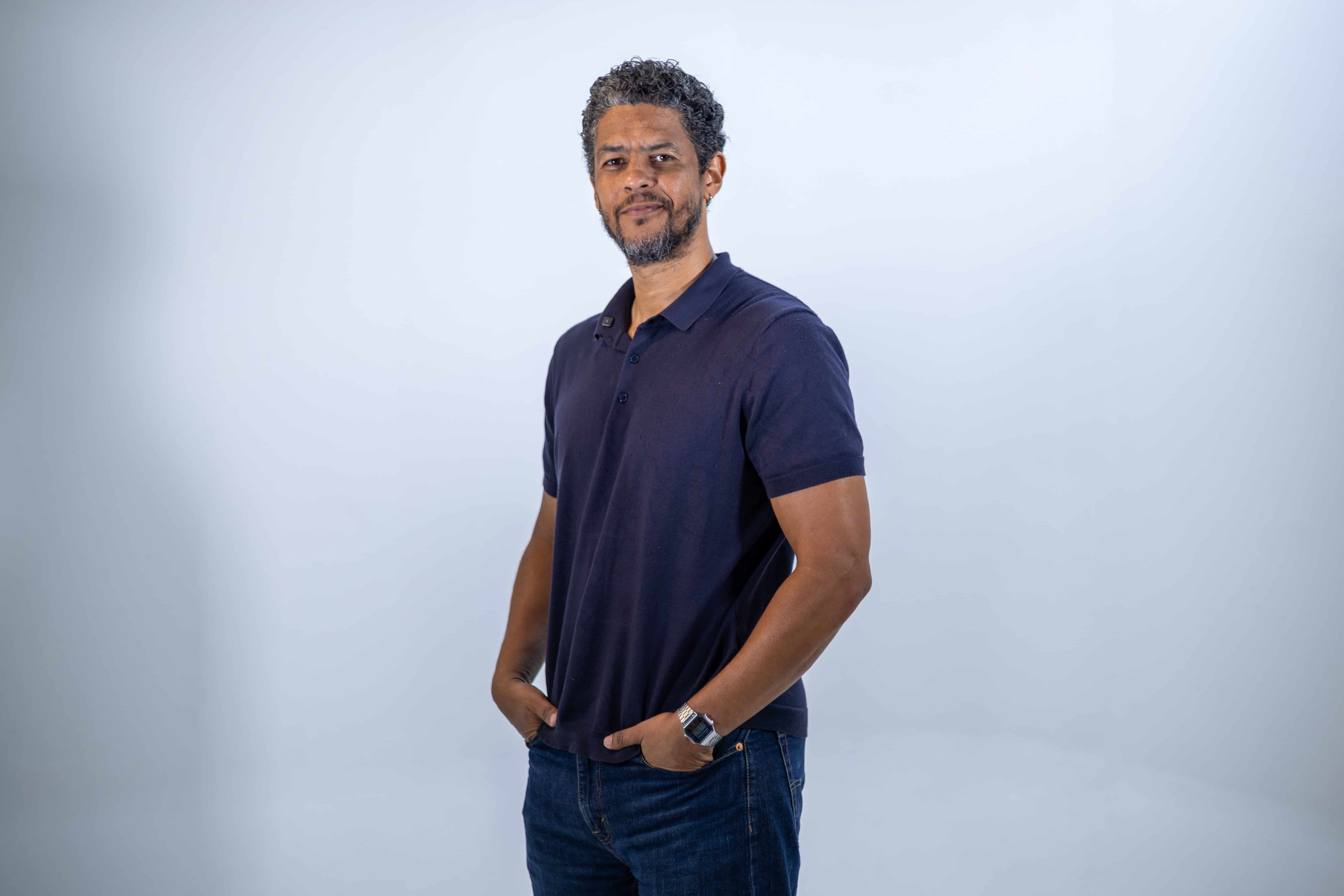
Héctor Aníbal has recently returned to performing on large concert stages with Transfusión, noting that he feels a greater sense of freedom in his work today. He shared that 18-year-old fans frequently approach him to discuss songs they discovered through their parents, which he described as a meaningful confirmation of the band's generational impact.
Film Success and Professional Outlook
In addition to his stage work, Héctor Aníbal has maintained an active presence in Dominican cinema and high-profile live events, such as performing at the opening ceremony of the Central American Games. He recently received the best lead actor award at the Fine Arts Film Festival in the Dominican Republic for his performance in the feature film The Short Life of Flowers.
![[object HTMLTextAreaElement]](https://resources.diariolibre.com/images/2026/08/17/lemar-8-7b52b2e1.jpg)
When selecting new projects, Héctor Aníbal explained that he prioritizes challenging roles and enriching artistic collaborations rather than the quantity of projects. He noted that after a play ends and earnings are spent, the knowledge acquired and the memories shared are what truly remain. Over decades in the industry, he has also learned to navigate professional rejection pragmatically, viewing auditions as job presentations where one gives their best effort without taking outcomes personally.
The staging of Brito features an ensemble cast alongside Héctor Aníbal, including Elvira Taveras, Augusto Feria, Ernesto Báez, Lidia Ariza, Orestes Amador, and Michelle Cruz under Manuel Chapuseaux's direction. Looking at the wider state of Dominican theater, Héctor Aníbal emphasized that the industry continuously requires greater financial investment and more venue spaces to support extended performance seasons, benefiting actors, producers, and sponsors alike.