

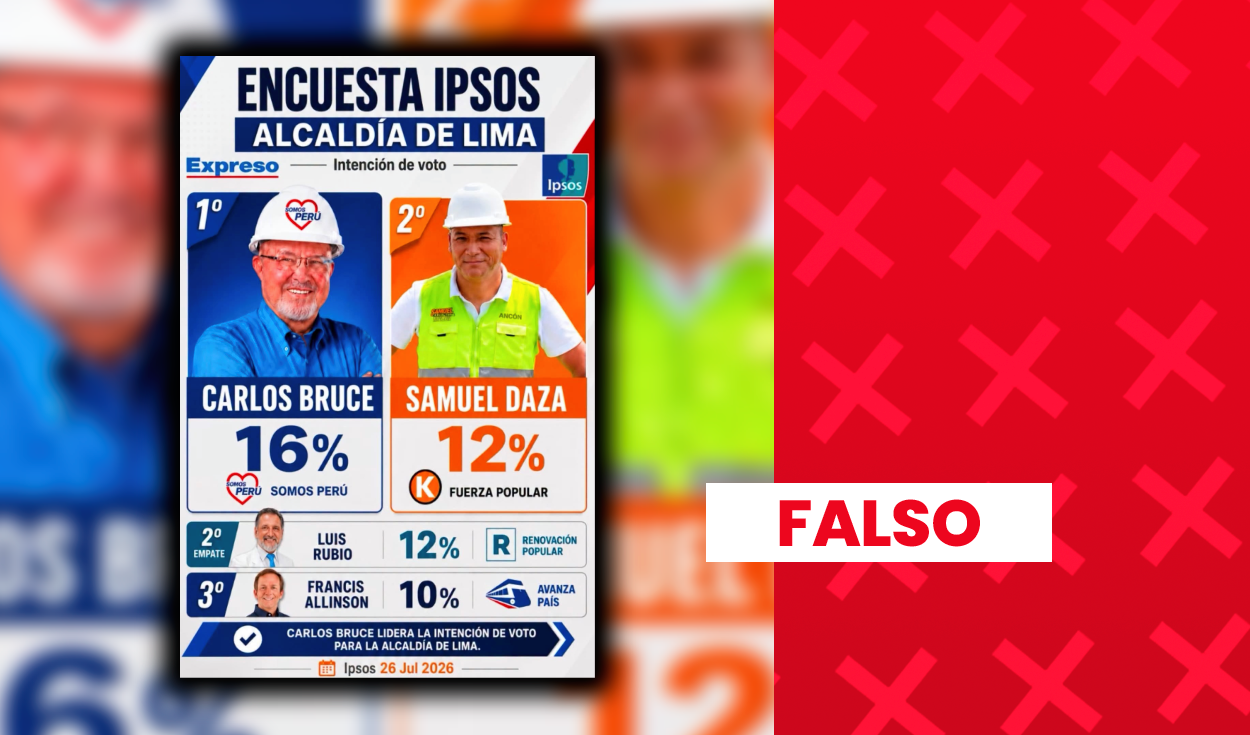
A viral polling graphic circulating on Facebook that claims to show candidate standings for the mayoralty of Lima Metropolitan in Peru is fake, fact checkers and polling company Ipsos have confirmed.
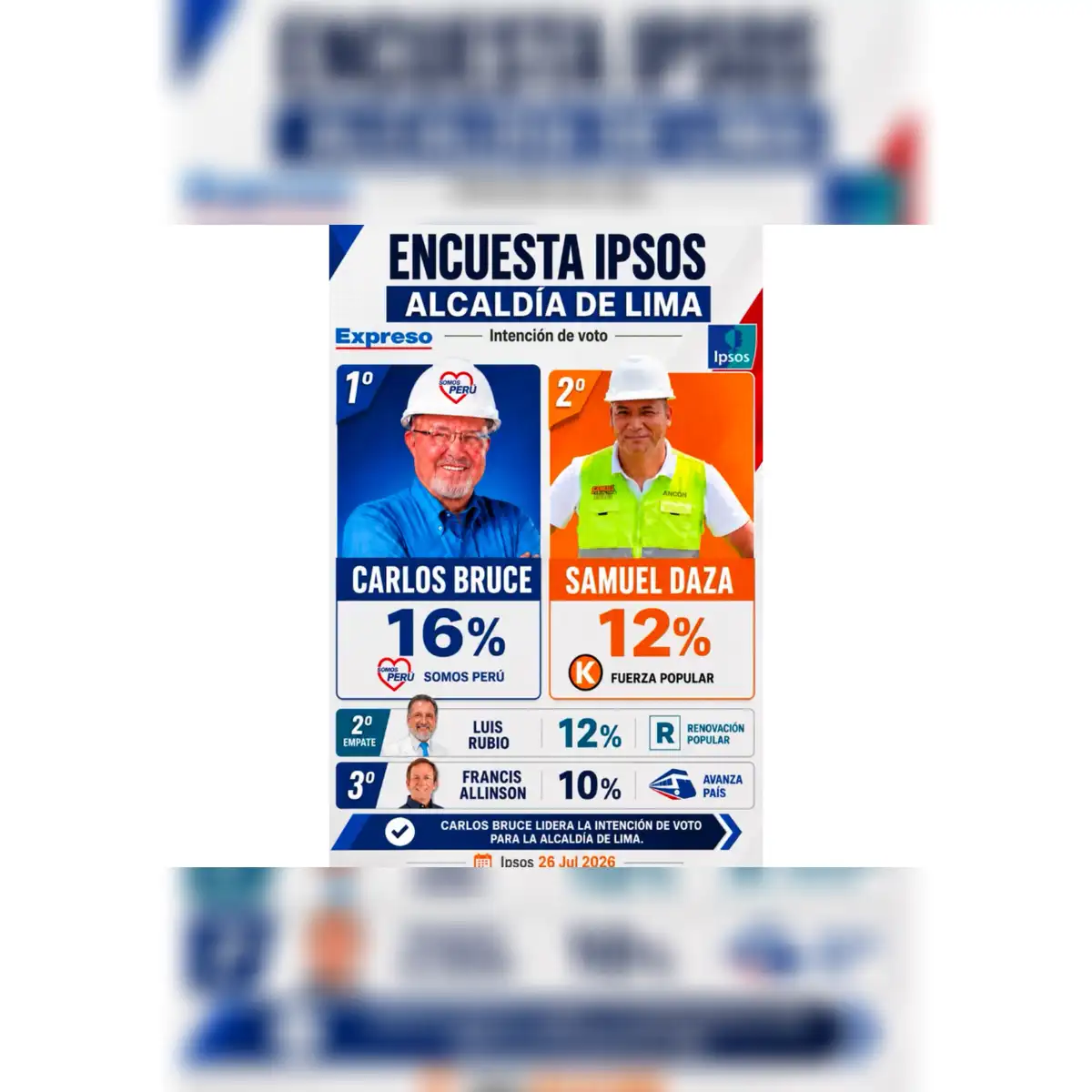
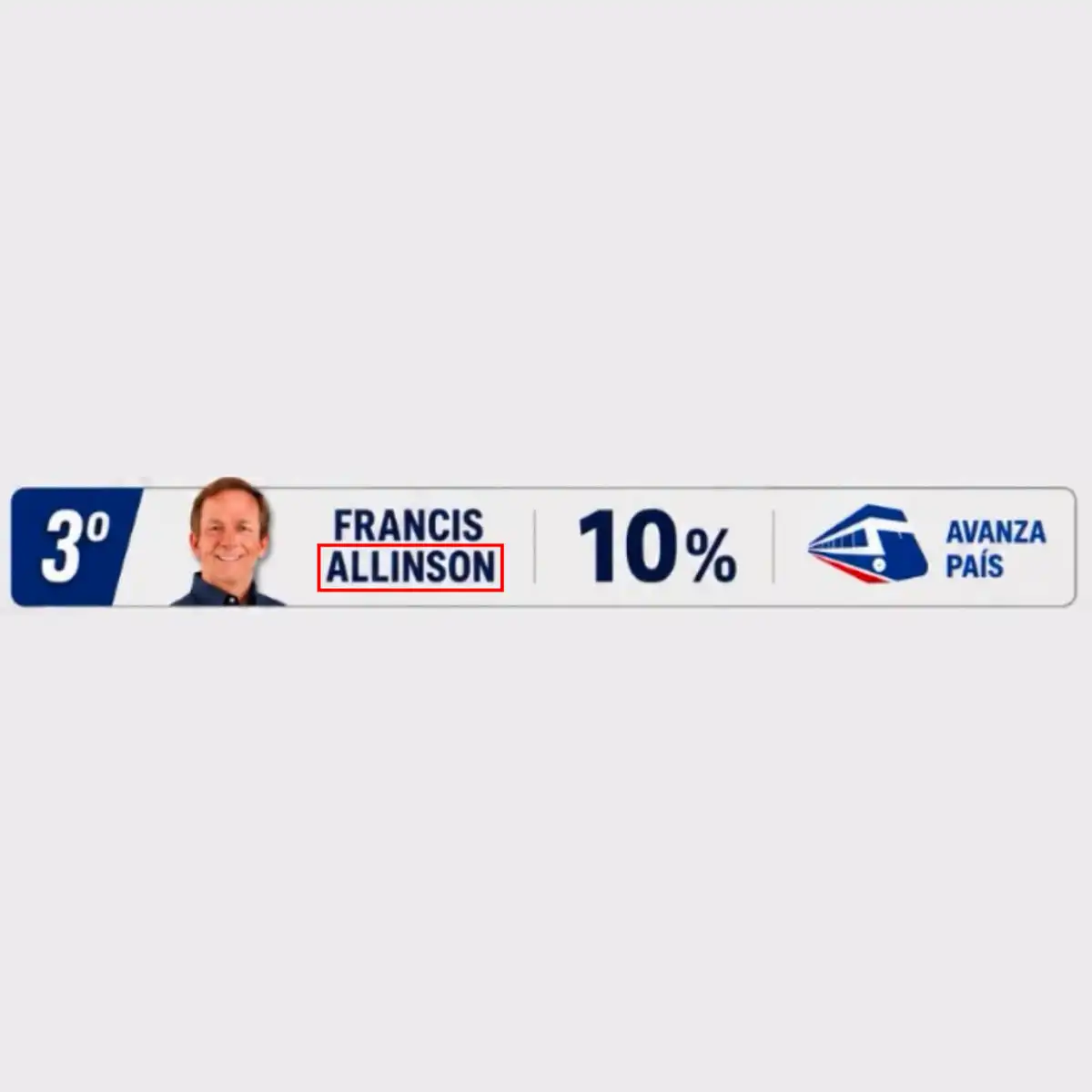
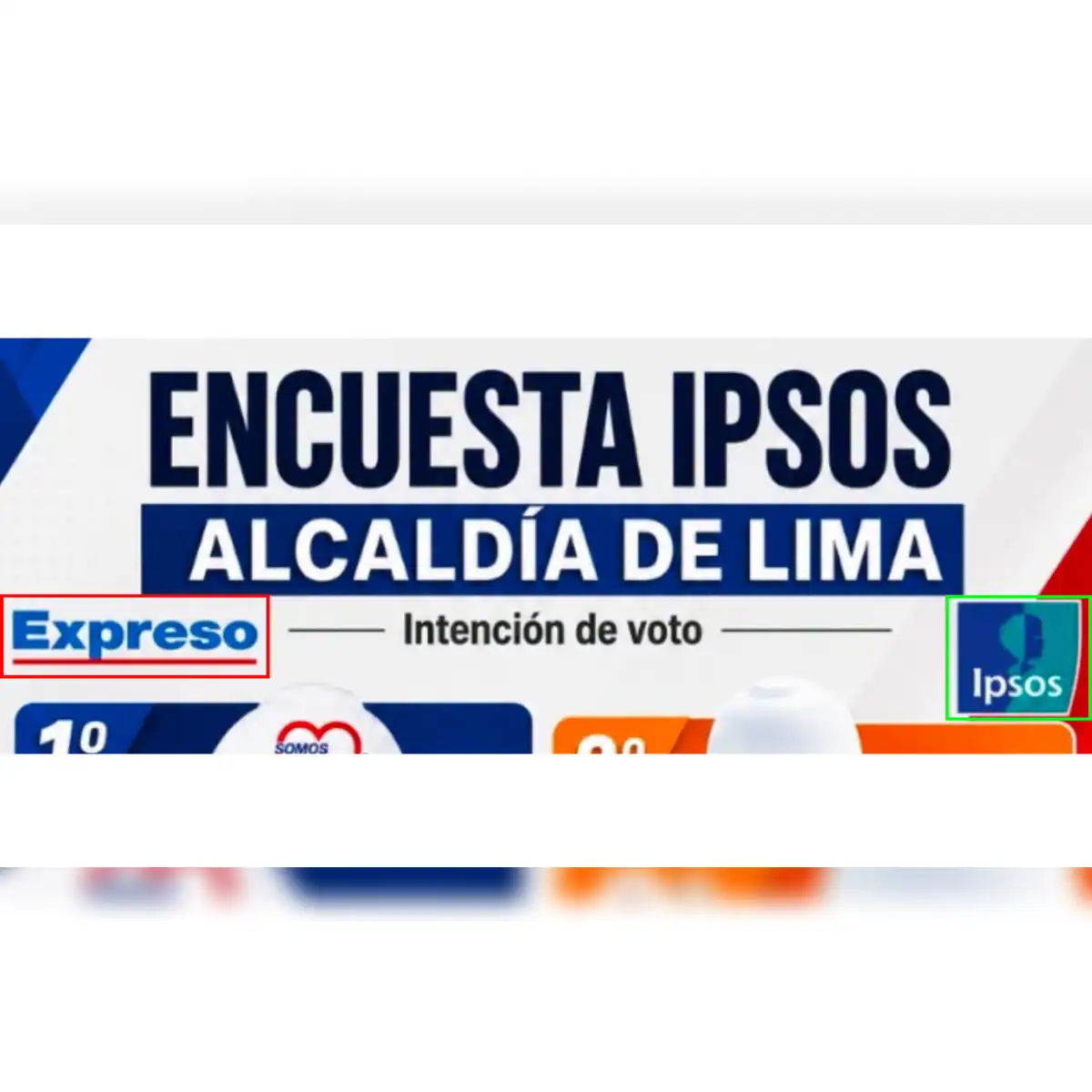
The fabricated survey, shared during the campaign for Peru's 2026 Regional and Municipal Elections, falsely attributed its findings to Ipsos and claimed that Carlos Bruce of the Somos Perú party led voter preferences with 16 percent. It placed Samuel Daza of Fuerza Popular and Luis Rubio of Renovación Popular tied in second place with 12 percent each, followed by Francis Allison of Avanza País with 10 percent. However, several irregularities quickly raised doubts about the authenticity of the post.
Missing Electoral Technical Sheet
The viral post claimed that the survey was conducted on July 26, 2026, by Ipsos. However, the graphic was published without an accompanying technical sheet, omitting vital methodological information such as the total sample size of respondents, margin of error, confidence level, and funding sources.
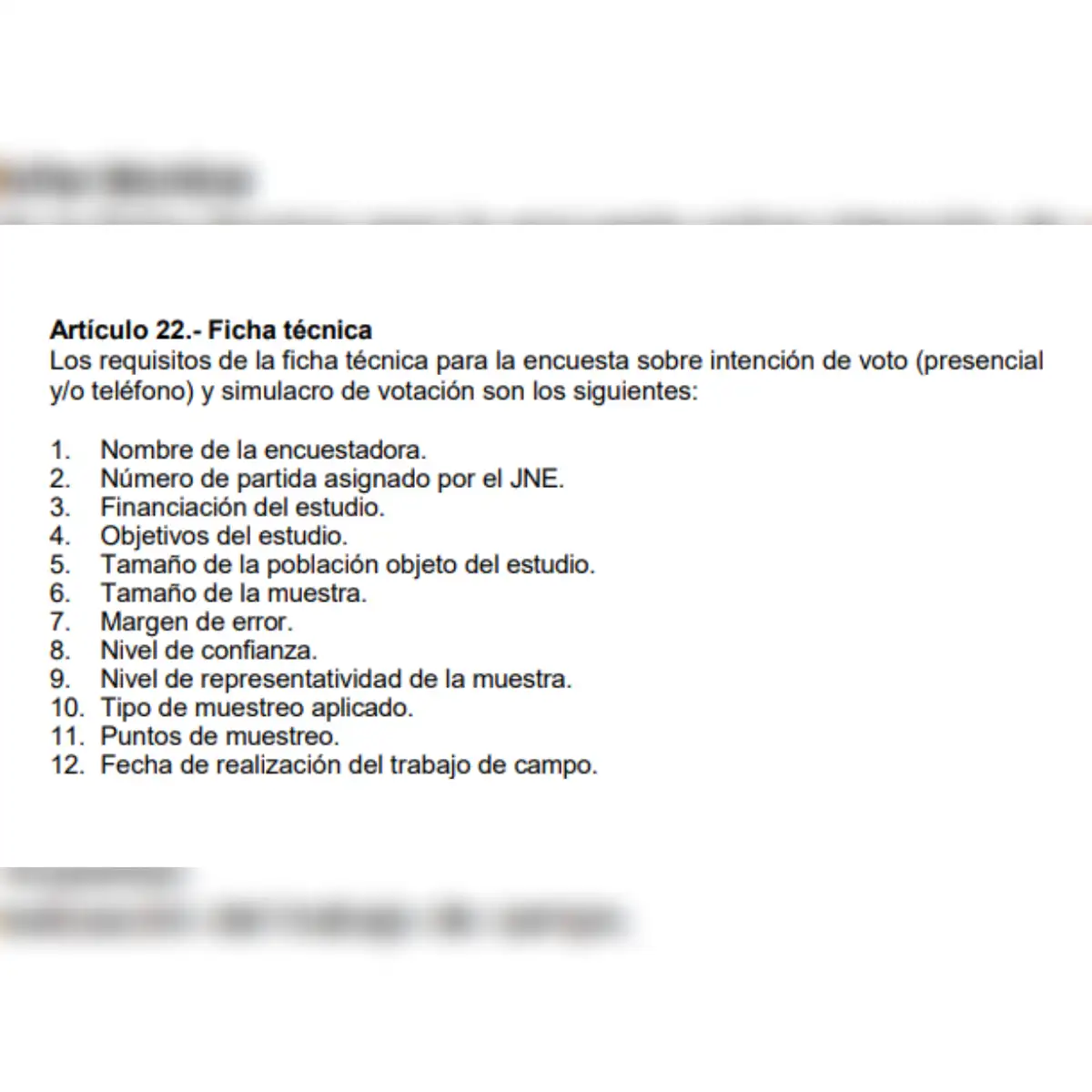
Under Article 22 of the Regulations on Electoral Surveys during Electoral Processes, established by Peru's National Jury of Elections (JNE), publishing a technical sheet is a legal requirement for any poll released during an active election cycle. The JNE enforces these guidelines across Peru to ensure transparency and protect voters from misleading survey claims.
Discrepancies with Official Ipsos Studies
An examination of Ipsos's official website and verified social media accounts confirmed that the polling firm never released a survey conducted on July 26. Ipsos published only two political studies around that period: one in early July and another in August.
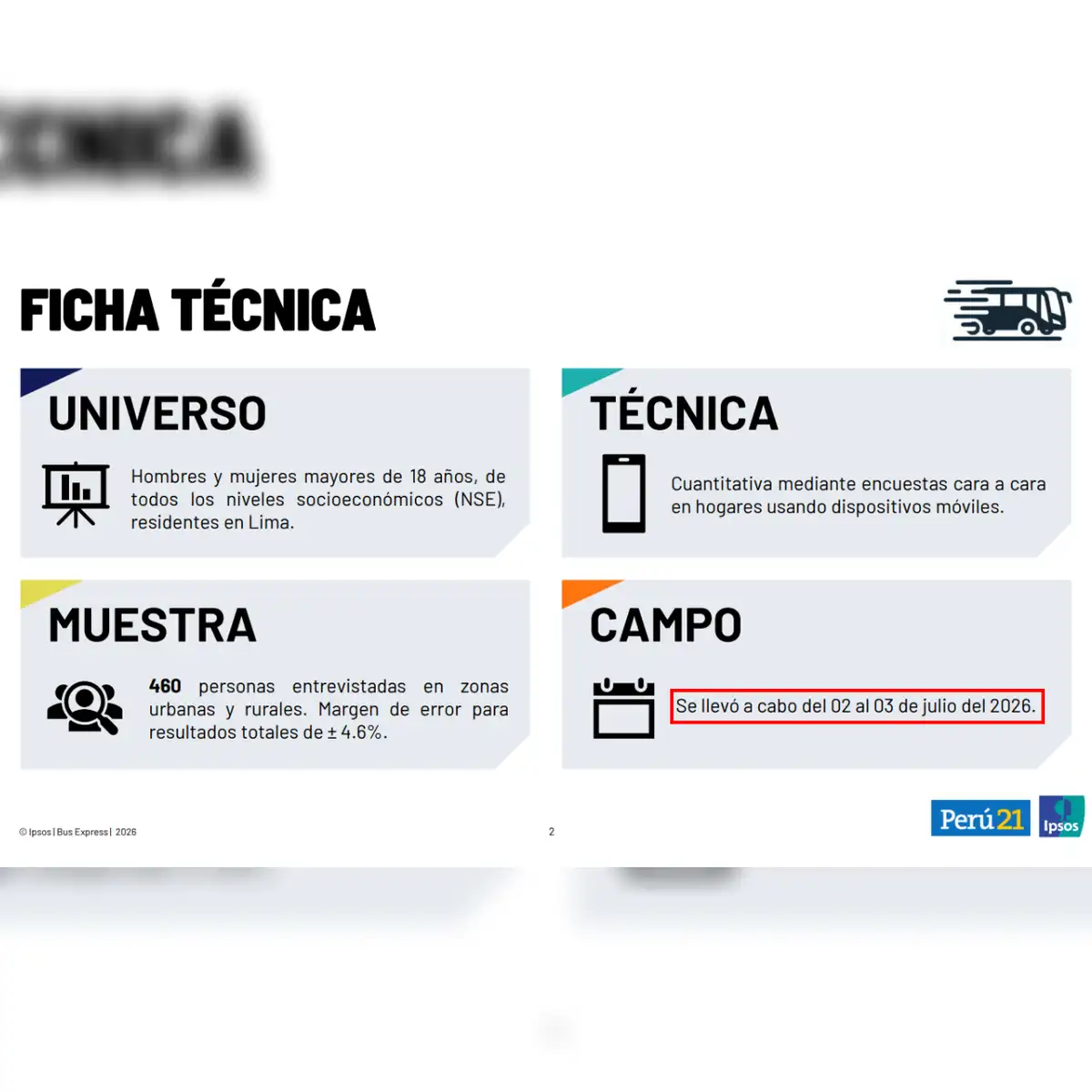
The early July Ipsos survey involved field work conducted on July 2 and July 3. Its findings presented voting percentages and candidate rankings that differed significantly from the figures shown in the fraudulent Facebook graphic.

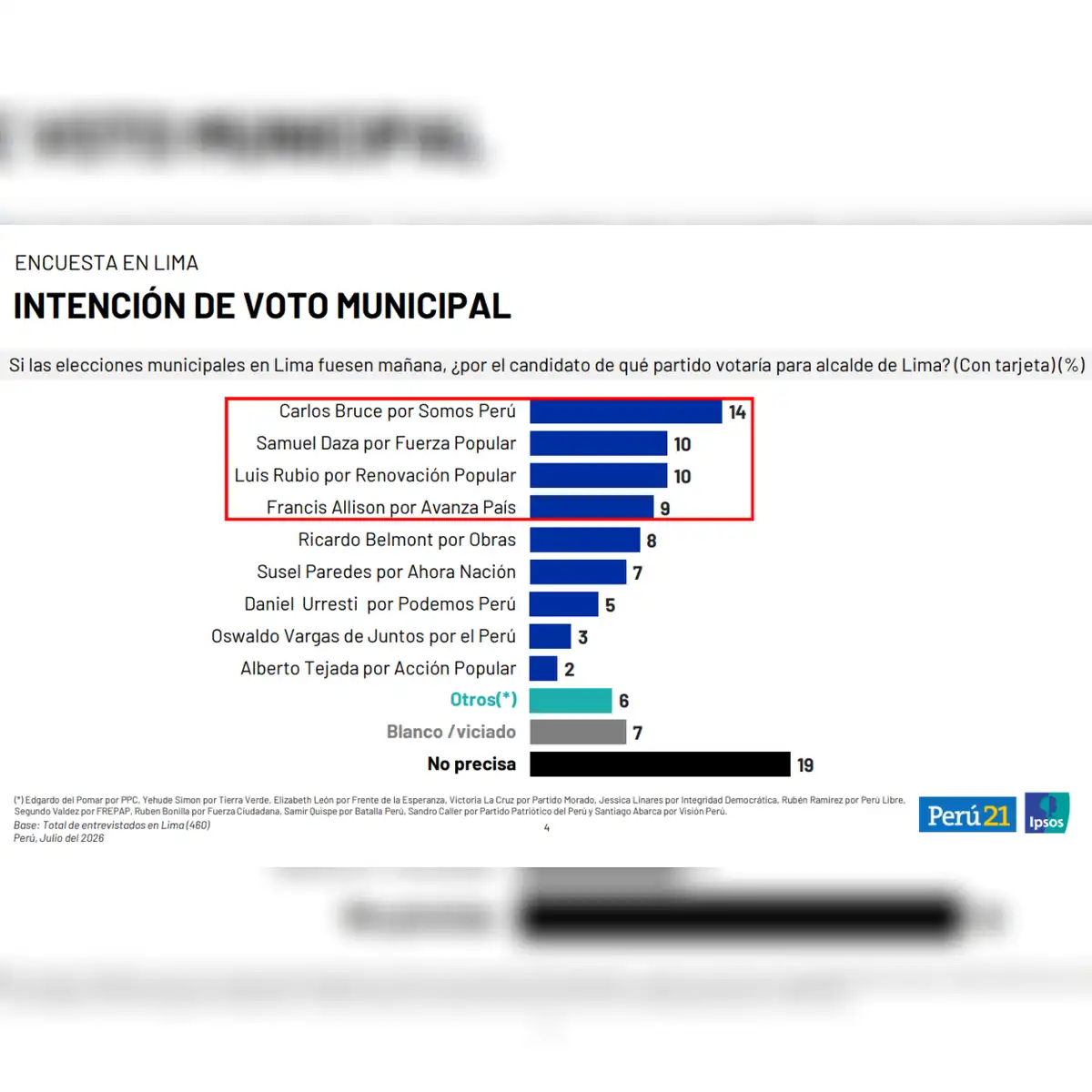
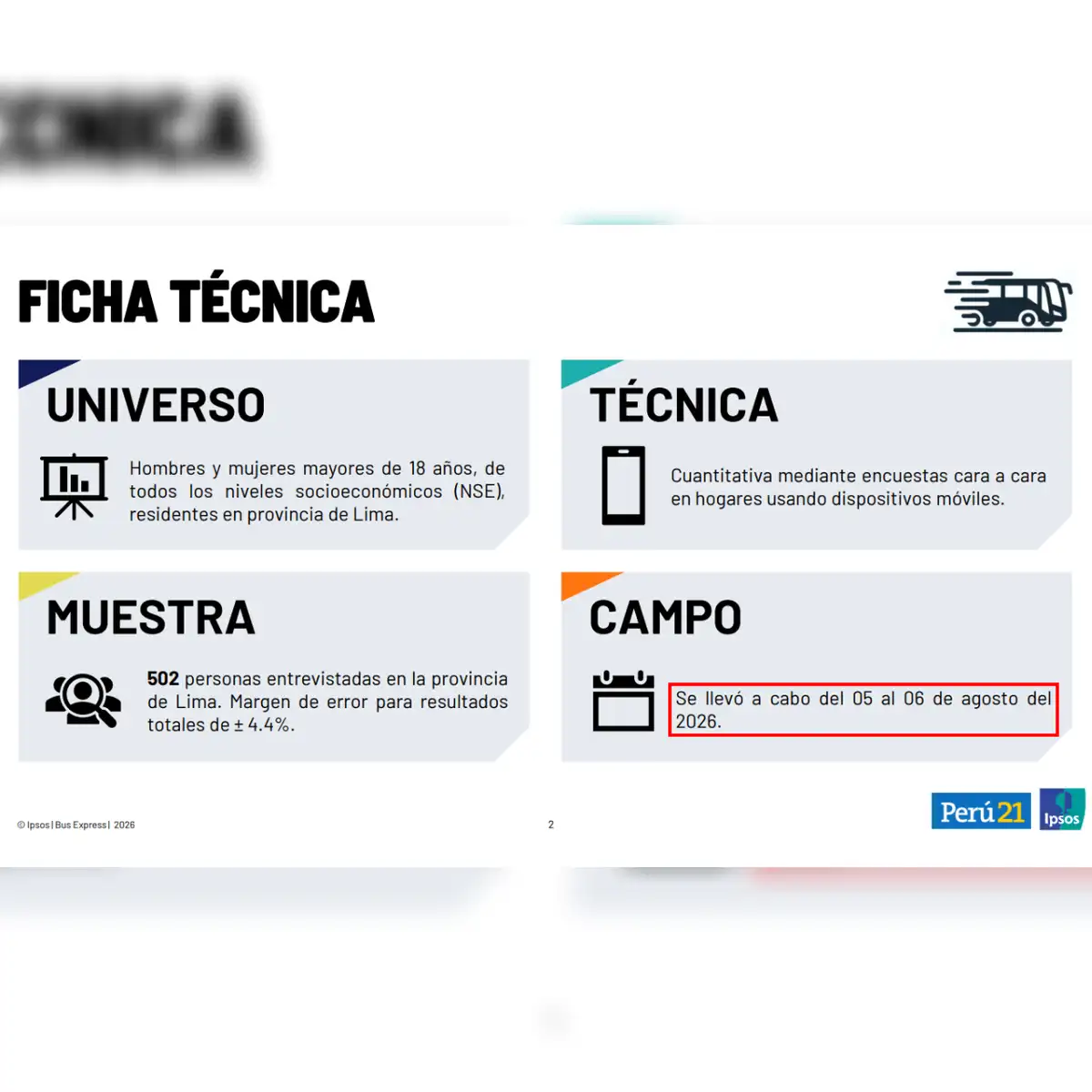
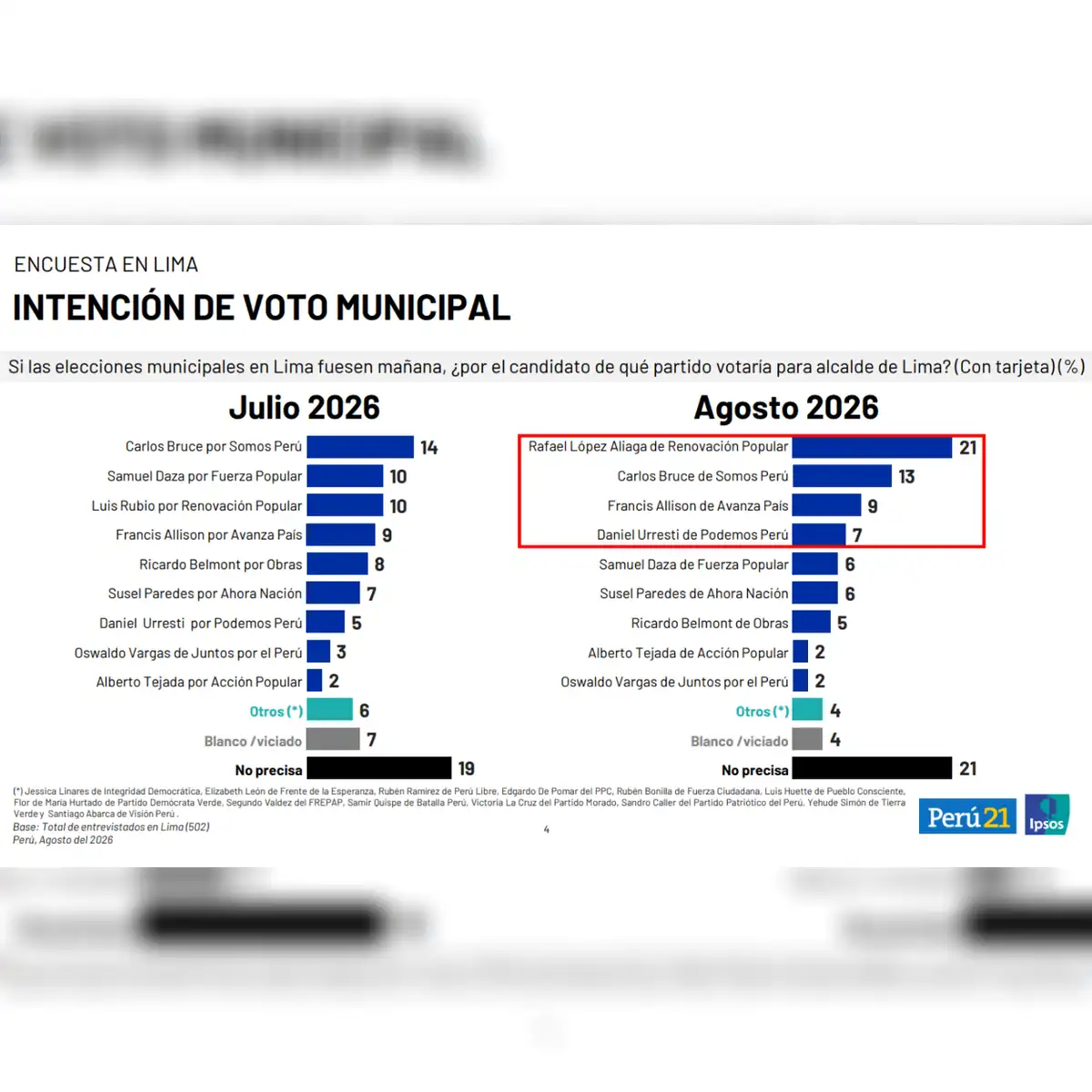
Similarly, Ipsos conducted field work for its August study on August 5 and August 6. The official data from August also recorded candidate rankings and percentage distributions that bore no resemblance to the viral post.

Name Misspellings and Media Partnerships
In addition to methodological gaps, fact checkers identified clear editorial errors in the image. The candidate's name Francis Allison was misspelled as Francis Allinson with an extra letter n.
The viral image also featured the logo of the daily Peruvian newspaper Expreso. However, Ipsos maintains an official polling partnership with the national newspaper Perú 21 and has no media agreement with Expreso.
Fact Checkers Confirm Fabrication
Following the emergence of the fake survey, Verificador de La República, the fact-checking division of the national newspaper La República, contacted Ipsos directly to evaluate the image. An Ipsos representative confirmed to Verificador de La República that the survey was false and reaffirmed that the company holds no media relationship with Expreso.
Lima Metropolitan, home to approximately one-third of Peru's total population, is the central battleground in Peruvian municipal elections. As voters prepare for the 2026 local elections, independent polling firms remain critical sources of political analysis, prompting frequent digital disinformation campaigns targeting leading mayoral candidates.


