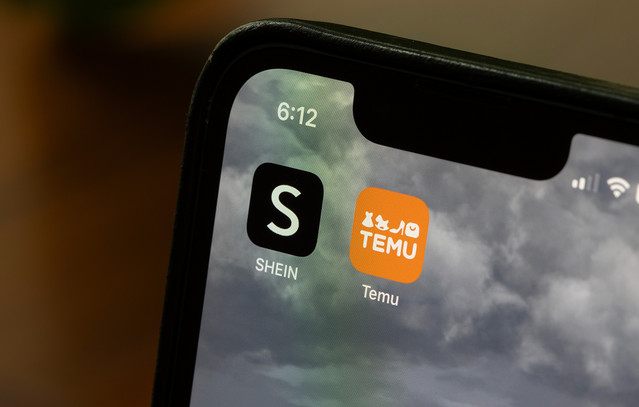
Shoppers across Europe are continuing to buy from Chinese online platforms Temu, Shein and AliExpress despite a new European Union customs tariff imposed on low-value imports.
European market players had expected the new fee to curb sales from major Asian marketplaces, but initial trade data from the first month of operation shows consumer spending has remained resilient.
The European Union officially abolished its previous customs duty exemption for small commercial shipments valued up to 150 euros on July 1, 2026, replacing it with a transitional duty of 3 euros.
Under the new rules, the 3-euro fee is levied per distinct tariff category within a single parcel rather than per individual item.
A package containing multiple identical items within the same category incurs a single 3-euro charge, whereas a shipment containing three different product categories is subject to a 9-euro fee.
European policymakers introduced the transitional charge to address explosive growth in cross-border e-commerce from non-EU countries, with EU data showing low-value parcel imports rose from approximately 1.4 billion in 2022 to 5.8 billion in 2025. About nine out of ten of those shipments originated from China.
Temu, owned by PDD Holdings, Shein, an online fast-fashion retailer, and AliExpress, operated by Alibaba Group, have built global customer bases by shipping low-cost goods directly from manufacturers in China to international consumers.
Consumer Order Adaptation
Data from the Greek market indicates that while the total volume of incoming packages has declined, overall consumer spending on major Asian shopping platforms has not collapsed.
Shoppers are adapting to the tariff by adding more items into a single cart, ensuring that the 3-euro levy makes up a smaller proportion of their total purchase price.
Officials at European customs authorities had warned prior to the July 1 launch that a 3-euro fee would do little to deter buyers, as prices for Chinese products remain significantly lower than comparable goods in Europe.
A 3-euro fee adds a substantial percentage to a single 5-euro item, but its impact is diluted across a larger order worth 40 or 50 euros. Consequently, platforms are actively incentivising buyers to increase their average order value.
Customs Delays and Hidden Charges
The introduction of the new tariff system generated operational friction during its first month, as customs agencies faced increased administrative burdens to process massive volumes of small shipments.
European shoppers reported unexpected handling charges that were not clearly displayed during checkout. The European Consumer Organisation, known as BEUC, requested intervention from the European Commission after consumers were notified of extra costs late in the purchasing process or upon delivery.
Shoppers also faced separate management fees imposed by postal and courier delivery operators handling customs clearance.
The European Commission stated that retailers are responsible for remitting customs duties correctly and confirmed it is monitoring compliance. Temu and AliExpress have started displaying fee breakdowns prior to order completion, while Shein stated that tariffs are either prepaid or included directly in item prices.
Shift to European Warehouses
To lessen their dependence on single direct parcels from China, major platforms are expanding their logistics footprints inside the European Union single market.
Shein began preparing ahead of the July 1 deadline by expanding its distribution hub capacity in Wrocław, Poland, allowing the company to import inventory in bulk prior to customer orders.
Wrocław is a major commercial and logistics centre in southwestern Poland, serving as a primary transit hub for freight distribution across Central and Eastern Europe.
Under this distribution model, products such as clothing, phone cases and accessories enter the EU in bulk, complete customs clearance upon arrival, and are stored in local fulfillment hubs before being dispatched to consumers across member states such as Greece.
As a result of this strategy, labels such as EU Warehouse have gained prominent placement across product listings on Asian e-commerce marketplaces.
Discounts and Price Strategies
Platforms are also using promotional pricing to maintain their price advantage over traditional European brick-and-mortar retailers.
Marketplaces are offering vouchers, temporary discounts, free delivery above minimum spending thresholds, and reward credits for future purchases to absorb the impact of the tariff.
Financial analysts had predicted before the implementation date that platforms would attempt to cushion consumer demand by either absorbing part of the fee temporarily or passing costs back to upstream suppliers.
Market Impact and Future Reforms
The operational shift creates a market paradox where customs statistics may record fewer individual parcel arrivals while the overall volume and monetary value of imported Chinese goods remain high.
European and Greek commercial enterprises view total import value and quantity, rather than parcel counts alone, as the true measure of whether the EU customs policy will protect local retailers.
Industry analysts caution that July data is not fully representative due to technical adjustments, system updates, and pending orders from previous months. They expect post-summer trading in September to serve as the first genuine test of consumer behavior.
The 3-euro tariff is a temporary measure scheduled to remain in effect until July 1, 2028, when the European Union plans to introduce a comprehensive customs system featuring standard category-based tariffs.
The upcoming 2028 reform aims to give EU authorities complete transparency over what products are sold, their value, seller identity, and destination, while addressing growing concerns over safety and regulatory compliance for imported goods.
Until the broader reform takes effect, Chinese marketplaces are adjusting their business models through larger basket sizes, expanded European warehousing, and aggressive pricing strategies to retain European market share.