The Dominican Republic marked the 26th anniversary of Law 65-00 on Copyright last Friday at a gathering in a restaurant in the National District that brought together representatives of collective management societies, the director of the National Copyright Office (ONDA) and members of the press.
Jose Ruben Gonell Cosme, director of ONDA, led the remarks at the event and highlighted the law's impact on international confidence in the country.
Gonell Cosme said the date marked a turning point for respect toward copyright, recalling that the law allowed the country to be removed from the Special 301 Report, the watch list the United States keeps on nations with weaknesses in intellectual property protection.
He explained that the change has been key to attracting foreign investment, especially from Washington. He said foreign companies do not just bring a business, they bring software, and that once they feel protected and guaranteed that their rights will be respected here, that has been one of the main reasons for that investment.
Collective management societies
Gonell Cosme also addressed the evolution of collective management societies in the country, which in the past faced resistance from business sectors. According to the ONDA director, there is now consensus with business owners across nearly the entire country, with the exception of the Cibao region, where he expects an agreement to be reached within less than a month.
Challenges of artificial intelligence
Asked about piracy and intellectual property protection, Gonell Cosme said the phenomenon has moved into the digital sphere and that the Penal Code already includes penalties for the misuse of a person's image.
However, he stressed that Law 65-00, as a special piece of legislation, sets out its own penalties, including prison terms and fines ranging from 5 to 200 minimum wages.
He said the sector's biggest challenge right now is artificial intelligence, since no country in the world yet has clear legislation on how to regulate artificial intelligence at a broad level.
Gonell Cosme added that no country can yet offer full guarantees against this technology, though he said Dominican lawmakers are already working on the issue.
Private copying compensation
On the subject of private copying, the economic compensation owed to authors, artists and performers for the use of their work on storage devices, Gonell Cosme said the mechanism is already provided for under Dominican law, but that it still requires approval from the Executive Branch to define how it will be collected.
He described the current method of collection as very awkward and difficult, and said the Executive Branch is looking at ways to improve the situation. He cited Peru, Paraguay and several European countries as examples of nations that already apply this model.

Pochy Familia on progress and pending debts
Merengue musician and cultural manager Pochy Familia, who has a long record as a union representative in the copyright sector, described the anniversary as an opportunity to reflect on progress made and debts still owed in the field.
He said it was above all a moment to reflect on what has been achieved in copyright in the Dominican Republic from the standpoint of legal protection.
Familia said the law needs adjustments to keep pace with two decades of technological change, arguing that it must be adapted to artificial intelligence. He said work is already underway to create a commission that will approach Congress to push for reforms to the legislation.
The artist also pointed to the economic and union-related impact the law has had on the lives of Dominican creators. He said artists and authors now have medical insurance and funeral insurance, and are guaranteed royalty payments, with authors receiving them every three months and artists every six months, referring to payments for the broadcast of music on radio and in hotels and restaurants.
He called that progress a recognition of the talent, work and effort put in by artists and authors.
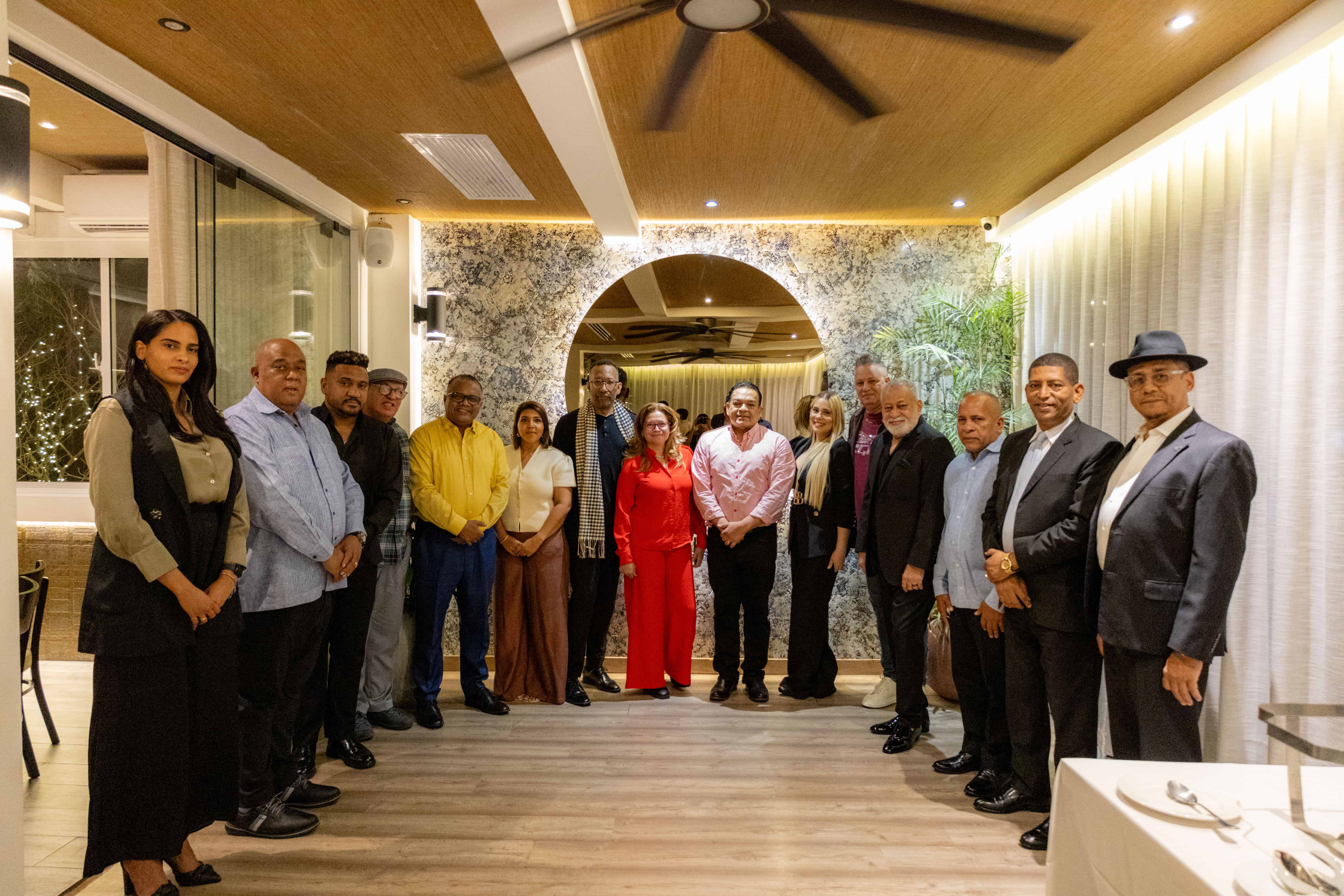
Kinito Mendez highlights the law's legacy
Also taking part in the gathering was Kinito Mendez, president of the Sociedad General de Autores, Compositores y Editores Dominicanos de Musica (SGACEDOM), the Dominican music authors, composers and publishers' rights society, who spoke about the achievements of the sector over more than two decades under Law 65-00 and the law's significance for the protection of Dominican authors.