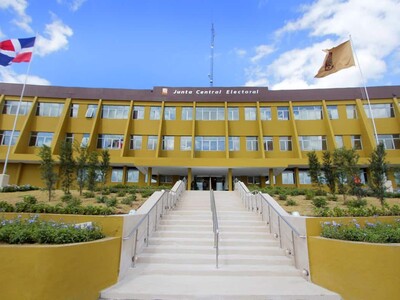
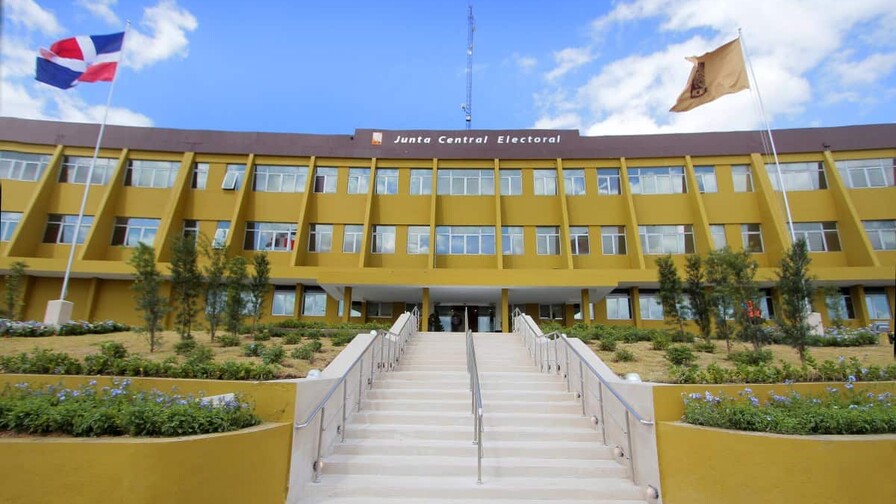
The Central Electoral Board of the Dominican Republic warned on Tuesday afternoon that establishing a political party requires far more than gathering followers.
The election organizing body stated in a series of social media posts on X that Law 33-18 requires prospective political groups to meet strict legal, territorial, and financial criteria before gaining official recognition.
Under the Law on Political Parties, Groupings and Political Movements, organizers must first define whether their proposed political entity will operate at a national, provincial, or municipal level.
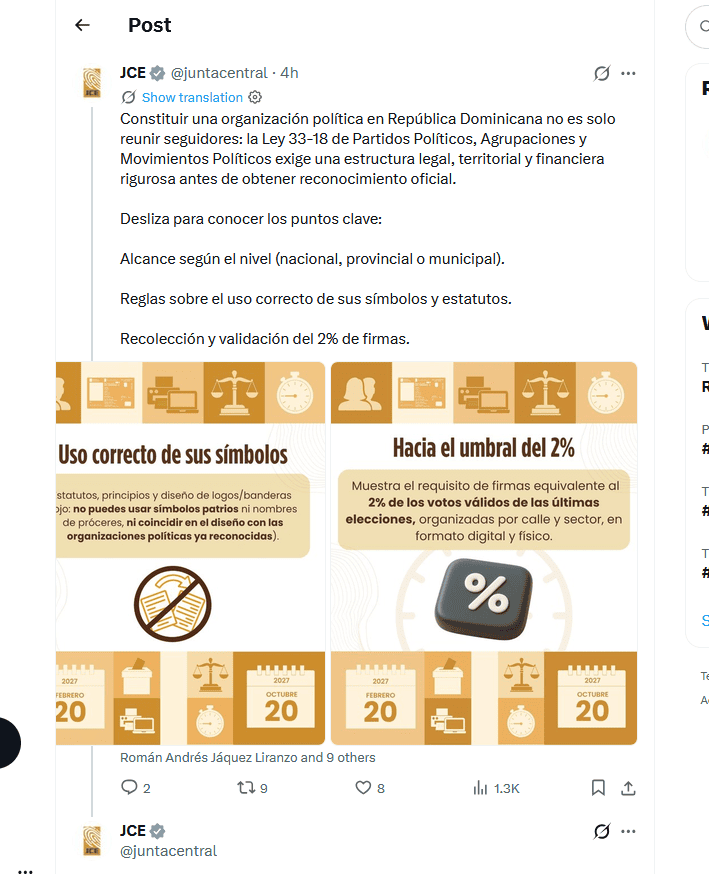
Rules on party symbols and names
The electoral authority specified that new political entities face strict restrictions when choosing their official identity, including their flag designs and logos.
Organizations are prohibited from using national symbols, the names of national founding figures, or any graphic elements and names that could cause confusion with existing recognized parties.
The Dominican Republic currently has 41 officially recognized political organizations and seven recognized political movements operating across the country.
Signature thresholds and voter turnout
To validate membership, organizing committees must gather signatures equal to at least 2 percent of the total votes cast in the previous general election.
The signatures must be organized meticulously by street and sector, and submitted to the electoral board in both physical and digital formats in accordance with official guidelines.
During the most recent presidential and congressional elections on May 19, 2024, a total of 4,429,079 voters cast ballots out of an official voter roll containing 8,145,548 registered electors.
Office locations and operational structure
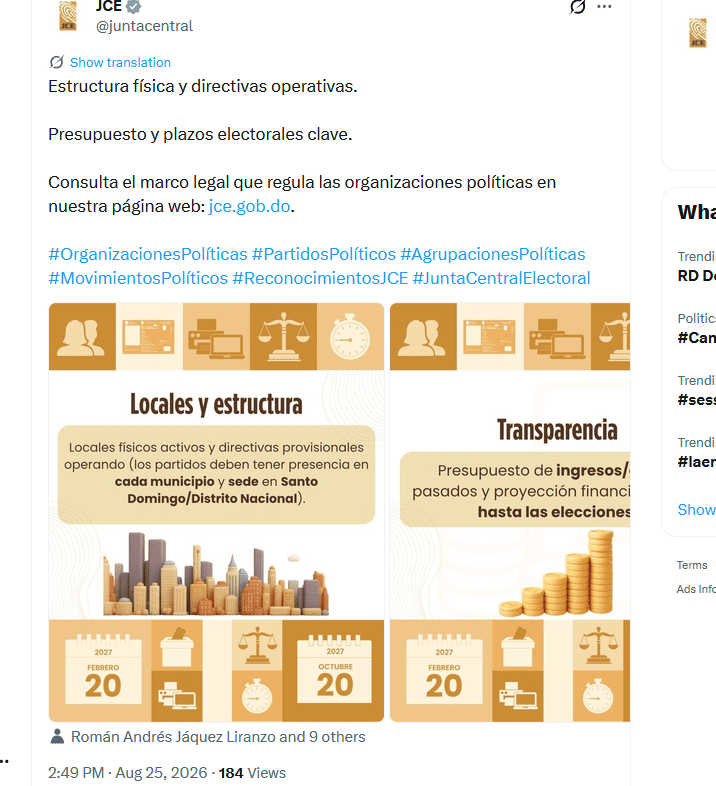
The board highlighted that political groups seeking recognition must establish physical offices and active operational leadership boards to function legally.
Active organizations must maintain physical branch locations in every municipality, along with main headquarters in Santo Domingo and the National District.
Groups must also form operational leadership committees at the provincial level to oversee local party activities.
Budget requirements and election deadlines
Applicants must present a complete financial budget detailing all expenses incurred during party formation alongside annual financial projections up to the next general elections.
General elections in the Dominican Republic take place every four years to elect the president, vice president, members of Congress, and municipal officials.
Following the latest constitutional modification, general elections are scheduled to be held on the third Sunday of May.
Organizers aiming to participate in the next elections must submit all required documentation by February 20, 2027, which is 12 months prior to the polls.
The Central Electoral Board will render its decision on granting official legal recognition by October 20, 2027, four months before election day. The board directed organizers to its official website at jce.gob.do to review the full legal framework.