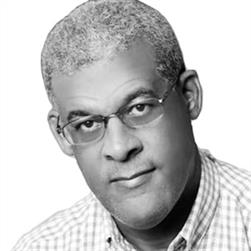
Dominican political partisans evaluate identical presidential gestures through opposing standards based entirely on party loyalty, according to an observational study by a university professor in Santo Domingo.
The academic tracked responses from journalists supporting the Dominican Liberation Party and the Modern Revolutionary Party during separate presidential administrations in the Dominican Republic. Both groups praised frugal habits displayed by their own leaders while dismissing identical actions by opposition figures as cheap populism.
The Dominican Liberation Party held power under former President Danilo Medina from 2012 to 2020, before President Luis Abinader of the Modern Revolutionary Party took office in August 2020. Throughout both administrations, presidential public relations efforts have focused heavily on demonstrating personal humility and financial restraint.
The initial observation occurred near the end of Danilo Medina's first presidential term. A journalist supporting the Dominican Liberation Party displayed a photograph of Medina sitting on a stone during a surprise visit to a rural agricultural community. When the professor described the scene as a gesture of humility, the party supporter agreed emotionally, stating that only a simple president who did not view himself as a god would behave in such a manner.
A competing journalist aligned with the Modern Revolutionary Party immediately interrupted the conversation. He instructed the professor not to be misled, characterizing Medina's rural posture as cheap populism designed for political gain.
Contrasting reactions to presidential travel
Years after Medina left office, the professor encountered the same Modern Revolutionary Party communicator inside a supermarket. The academic noted that he admired President Luis Abinader's decision to travel to the United States alongside his official delegation on a commercial flight rather than a private jet.
The pro-government communicator defended Abinader's travel choice in a speech-like tone, arguing that Abinader had always maintained a humble and austere lifestyle. He asserted that any other president would have chartered a private aircraft without considering the economic situation of the Caribbean nation.
When the professor repeated the exact words previously used against Medina, asking if observers might view the commercial flight as cheap populism, the communicator rejected the comparison. He insisted the flight reflected genuine simplicity rather than political posturing, adding that Abinader had consistently behaved that way.
To verify the pattern, the professor phoned the original Dominican Liberation Party supporter from his home. The academic brought up Abinader's official commercial travel to the United States to gauge the opposition reaction.
The opposition supporter interrupted before the professor could finish his statement. He condemned the commercial flight as pure populism and deceitful posturing, arguing that the president was merely attempting to project an image of being simple and approachable to confuse the electorate. The professor laughed, opened his refrigerator, and poured a glass of wine.
The mechanics of political fanaticism
Following the telephone exchange, the professor concluded that political partisans define authentic humility exclusively through their own party leadership. He regularly uses the case study to instruct his university students on the limits of logical debate with political zealots.
In lectures to his students, the professor explains that genuine debate requires a logical process aimed at convincing others or accepting valid counterarguments. By contrast, he compares political fanatics to pre-programmed computers that operate solely to convince others without processing new data.
The professor observed that devoted partisans fail to think or reason independently, mechanically repeating statements issued by the leaders they idolize. He described party loyalists as wearing metaphorical blindfolds and earplugs, removing them only to consume commentary approved by their political figures.
The academic emphasized that the most dangerous aspect of political fanaticism is that partisans remain unaware of their own bias. He warned that this psychological pattern extends beyond government politics into religious devotion and sports fandom.