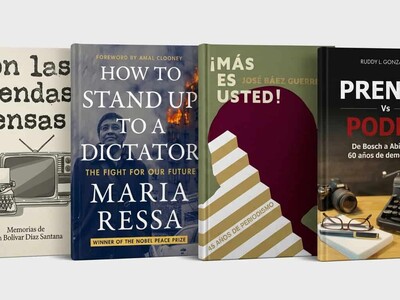
Three veteran Dominican journalists, Juan Bolívar Díaz Santana, José Báez Guerrero and Ruddy L. González, have recently published memoirs, breaking with a Dominican tradition in which few of the country's most influential reporters ever wrote about their own lives, according to columnist Mirope Bragui Pérez.
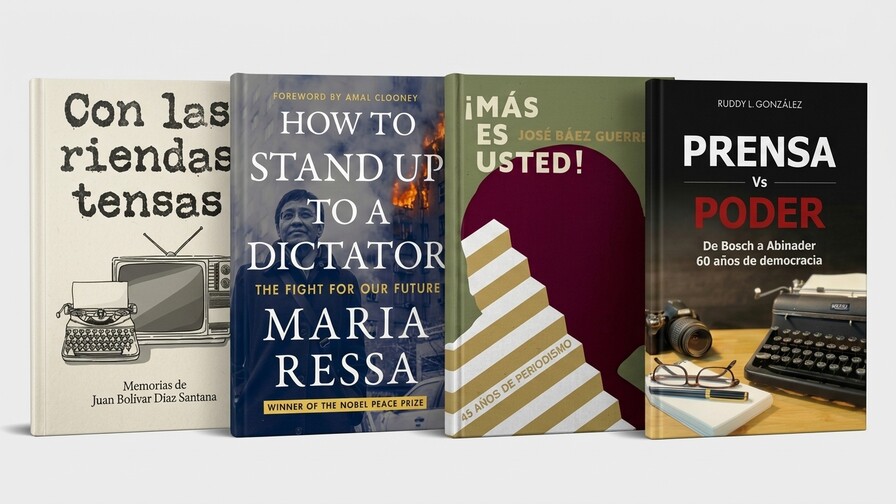
Bragui Pérez wrote that prominent journalists such as Rafael Herrera, Germán Ornes, Mario Álvarez Dugan, Miguel Adriano Tejada, Virgilio Alcántara and Radhamés Gómez Pepín never wrote autobiographies. Ornes did publish a book about the dictator Rafael Trujillo, and a memoir credited to Cucho Álvarez Pina was actually written by his son, Cuchito, the columnist said.
Exceptions include Rafael Molina Morillo, who wrote a 175-page essay, "La prensa y la ley en Santo Domingo," in 1955, a 1959 biography of 19th-century leader Pedro Santana titled "Gloria y Repudio," and his own 2013 autobiography, "Mis Recuerdos Imborrables." Economist and historian Bernardo Vega, who directed the newspaper El Caribe from 2001 to 2003, published "Diario de una Misión en Washington" in 2002 about his time as Dominican ambassador to the United States.
A popular genre abroad
Bragui Pérez contrasted this with the United States, where journalist autobiographies are a popular genre. Of the ten best-selling journalist memoirs recently on Amazon and in bookstores, eight were written by women, she noted, citing a biography of Vogue editor Anna Wintour by Amy Odell; "Starry and Restless" by Julia Cooke, about correspondents Martha Gellhorn, Emily Hahn and Rebecca West; "Book of Lives" by Margaret Atwood, which the Boston Globe called the most spectacular, hilarious and generous autobiography of the past quarter century, or perhaps of all time; and "My Russia" by former CNN Moscow bureau chief Jill Dougherty.
She also cited "How to Stand Up to a Dictator," a 2022 memoir by Filipino-American journalist Maria Ressa, born in Manila in 1963 and winner of the 2021 Nobel Peace Prize, about her fight for freedom of expression under President Rodrigo Duterte's government between 2016 and 2022. Another example, "Personal History" by Katharine Graham, who led The Washington Post after her husband's 1963 suicide, took the company public in 1972 and became the first woman to head a Fortune 500 company, won the Pulitzer Prize for its account of editorial decisions during the Vietnam War, Watergate and Nixon's resignation.
Díaz Santana's 'Con las Riendas Tensas'
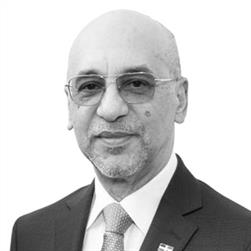
Díaz Santana, born in Batey Consuelo in 1945, titled his 641-page memoir "Con las Riendas Tensas," published this year by Editora Corripio, after a verse by Spanish poet León Felipe, who lived in exile in Mexico following the Spanish Civil War. Díaz Santana himself spent years exiled in Mexico for political reasons and now serves as the Dominican ambassador there.
The book recounts his family's move from the sugar-growing area around the Consuelo mill in San Pedro de Macorís to Santo Domingo so the children could get a better education. He began working as a radio reporter very young, and his combative reporting against President Joaquín Balaguer forced him abroad after he survived an assassination attempt, the memoir says.
After returning while Balaguer still held power, he directed radio newscasts aligned with the Dominican Revolutionary Party, ran the opposition newspaper El Sol and co-founded El Nuevo Diario, before joining the Corripio group when it bought the television station Teleantillas, where he hosted the morning news program "Uno + Uno" for nearly four decades. He was also Dominican ambassador to Peru and Bolivia under President Salvador Jorge Blanco, to Spain (concurrently accredited to Andorra and Equatorial Guinea) from 2021 to 2025, and to Mexico since 2025.
Díaz Santana is a founding member of the civic group Participación Ciudadana and helped create the Dominican College of Journalists with support from the Dominican Revolutionary Party after 1978. He has received the Fundación Corripio journalism award in 2013, the Ministry of Education's National Journalism Award in 2014 and, this year, Mexico's Flores Magón award for what organizers called half a century of militant journalism. Journalist Margarita Cordero wrote the prologue; lawyer Pancho Álvarez and journalist Fausto Rosario Adames presented the book.
Báez Guerrero's 45 years
Lawyer and writer José Báez Guerrero, born in Santo Domingo in 1958, published "¡Más es usted!" in 2023 through Arte Tuto and Editora Búho to mark 45 uninterrupted years in journalism, mainly as an opinion columnist and political analyst. Diario Libre director Aníbal de Castro presented the 588-page book.
Across 64 chapters, Báez Guerrero writes about his childhood, education and early journalism career, and his work as a business consultant, alongside previously untold anecdotes about meetings with dictator Rafael Trujillo and Dominican presidents including Balaguer, Donald Reid Cabral, Juan Bosch, José Francisco Peña Gómez, Antonio Guzmán, Jacobo Majluta, Jorge Blanco, Leonel Fernández, Hipólito Mejía, Danilo Medina and Luis Abinader.
He has written about 30 other books since 1984. His biography "Guzmán, vida, gobierno y suicidio" won the national history prize in 2009, and his 818-page "Buenaventura Báez," published in 2014, won the FIL León Jimenes prize in 2015; both have had eight reprints. His latest book, the 2025 essay "Padre Nuestro," turns to existential and theological themes.
González and 'Prensa versus Poder'
Ruddy L. González, born in Santo Domingo in 1950 and a career journalist, recently presented his first book, "Prensa versus Poder: de Bosch a Abinader, 60 años de democracia," a 666-page volume published by Editora Corripio in 2025. He described it as an unpretentious, heavily illustrated account of his professional life, told as a simple observer, filled with anecdotes involving politicians and military officers.
The book carries three prologues, by Miguel Franjul, current director of the Listín Diario; Manuel A. Quiroz, a former director of El Caribe; and lawyer Ricardo Rojas León, a former colleague of González's at the newspaper Última Hora, which González later directed. Franjul wrote that the book helps readers understand the classic conflict between the press and political power.
González began his career as a photographer at El Caribe in 1967, later studied journalism at the Universidad Autónoma de Santo Domingo and was mentored by the paper's deputy director, Mario Álvarez Dugan, before becoming a correspondent for the Associated Press. One chapter, on Frank Cabral Calcagno, whom González calls the most notorious private specialist in telecommunications interception, argues that the Dominican Republic's post-dictatorship political and military history cannot be written without addressing his role.