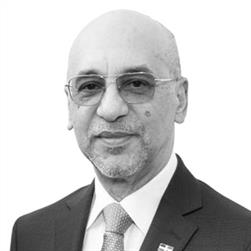
Dominican education is once again preparing for one of those reforms periodically announced as the beginning of a new era, according to opinion writer Rafael Méndez. Commissions, consultations, diagnoses, experts and promises of transformation have returned, while a country accustomed to waiting asks whether this time things will be different.
Méndez argued that for decades every government has announced that real transformation is about to begin. Names change, structures are reorganised, plans are approved and solemn documents are drafted, but low learning outcomes, indiscipline, territorial gaps and ineffective management remain constants in classrooms.

The same rock under different names
The Dominican Republic does not lack research, statistics or diagnoses about its educational reality, Méndez wrote. Public institutions, universities, international organisations and specialists have extensively documented the system's weaknesses, making clear where classrooms are missing, where the worst results are concentrated and how social and territorial inequalities shape learning. Yet between knowing and transforming, he said, an apparently insurmountable wall remains.
He pointed to the provinces of Bahoruco and Independencia as a painful demonstration of that distance. For more than a decade, their regional education authority has ranked last in national evaluations. Studies by the Dominican Institute for Evaluation and Research of Educational Quality have documented the scale of the setback, but repeated diagnosis has not produced an intervention proportional to the severity of the problem.
The reform announced through Decree 309-26 could represent an opportunity if it links different levels of the system, including technical and vocational training, higher education, science, innovation and the labour market, Méndez wrote. However, he warned that the reorganisation risks becoming another administrative exercise if it avoids the uncomfortable areas where real obstacles are concentrated: weak governance, corporate interests, absence of consequences, poor oversight and a lack of clearly established responsibilities.
Laws alone are not enough
A new law that elegantly describes a desired education system but leaves untouched the power relations that prevent building it would also be insufficient, Méndez argued. Laws do not teach on their own, nor do they manage schools, train teachers or guarantee discipline. Their effectiveness depends on the political will to apply them, the authority granted to school leaders and the existence of mechanisms that require accountability for results.
Méndez also raised concerns about the spirit of teaching itself, noting a cultural shift in how the profession is conceived, increasingly associated with competitive entry, schedules, salaries and labour claims, while the formative mission understood as a kind of lay vocation loses ground. He said recognising that loss does not mean denying teachers their rights or demanding poorly paid sacrifice, but rather understanding that salary incentives, though essential, cannot replace an ethical commitment to students.
Repeated failures in teacher entrance examinations also demand scrutiny of initial training and the responsibility of institutions that award qualifications without ensuring corresponding competencies, he wrote.
Accountability for the four percent
The reform must establish a transparent relationship between investment and results, Méndez wrote, noting that the four percent of gross domestic product allocated to education was a social achievement that cannot be reduced to payrolls, unfinished buildings, scattered programmes and triumphalist statistics. He said taxpayers have the right to know how much is invested, where it is invested, which targets were met and who is responsible when resources do not translate into better learning or decent school conditions.
Méndez concluded that the coming reform needs to begin with an honest declaration of crisis and continue with an emergency policy capable of converting accumulated knowledge into transformative action, calling for inclusive consultation that assigns verifiable responsibilities to universities, the Ministry of Education, teachers unions, school directors, families and social organisations.