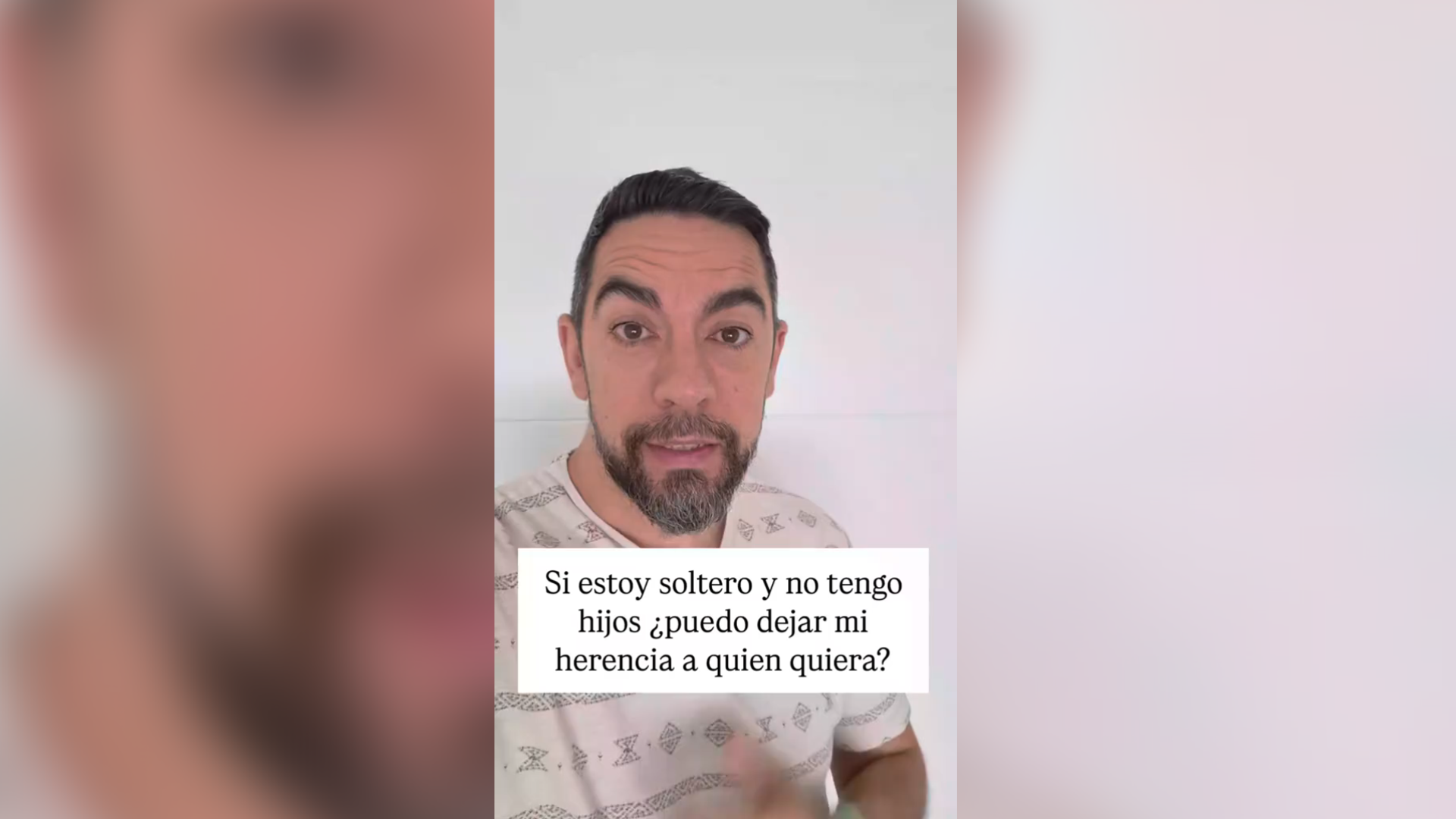
Spanish lawyer and economist David Jiménez has detailed how inheritance rules apply to single individuals without children, highlighting that parents automatically take legal priority.
Under the standard legal framework across most of Spain, direct descendants are designated as the primary forced heirs, followed by parents and surviving spouses when no children exist.
Jiménez explained that when an individual is unmarried and has no descendants, the legal focus falls directly on their parents. He noted that parents retain their statutory rights intact against third parties through the reserved share known in Spanish civil law as the legítima.
Addressing cohabiting couples who have not formally married, Jiménez warned that the general legal framework provides no automatic inheritance protections. He stated that an unmarried partner has no statutory right to any portion of the estate unless the deceased executed a formal will.

Spain operates under a regionalized legal structure governing succession. While the common Spanish Civil Code applies across most autonomous communities, several regions maintain separate civil laws with distinct inheritance regulations. Jiménez highlighted Catalonia as a notable exception, where regional law places cohabiting partners on equal legal footing with married spouses, granting surviving partners statutory inheritance rights.
Estate Freedom When Parents Have Passed Away
The legal framework changes substantially when an unmarried individual's parents have already died and there are no direct descendants. Jiménez noted that under these specific circumstances, single individuals across most of Spain gain full discretion to designate whichever beneficiaries they choose for their estate.
Without mandatory forced heirs, individuals can leave their assets to siblings, nieces, nephews, or unrelated third parties. However, Jiménez emphasized that exercising this freedom requires drafting a formal will before a public notary, as unrecorded personal wishes carry no legal validity and default to statutory inheritance orders.
In Spanish estate planning, executing a will before a notary ensures that individual asset allocations conform to statutory formalities. Legal expert Nuria noted that appointing an estate partitioner, known in Spain as a contador partidor, can assist in dividing assets fairly. This partitioner may be an attorney, a family friend, or another designated individual appointed by the testator.
Rules Governing Intestate Estates and State Succession
When a single individual dies without executing a valid will and leaves no living parents or children, statutory rules of intestate succession dictate asset distribution. Jiménez explained that the estate passes first to surviving siblings, and then to nieces and nephews.

If no surviving relatives recognized by civil law can be identified, the entire estate reverts to the state. Jiménez stressed that dying without a will also increases financial burdens on beneficiaries, as settling an intestate estate requires a formal declaration of heirs, which adds administrative costs and procedural delays compared to executing a personalized document.
Jiménez concluded that establishing a personalized will remains essential for single adults seeking to protect unmarried partners, select specific heirs, or prevent probate complications when a beneficiary refuses to sign inheritance settlement documents.