

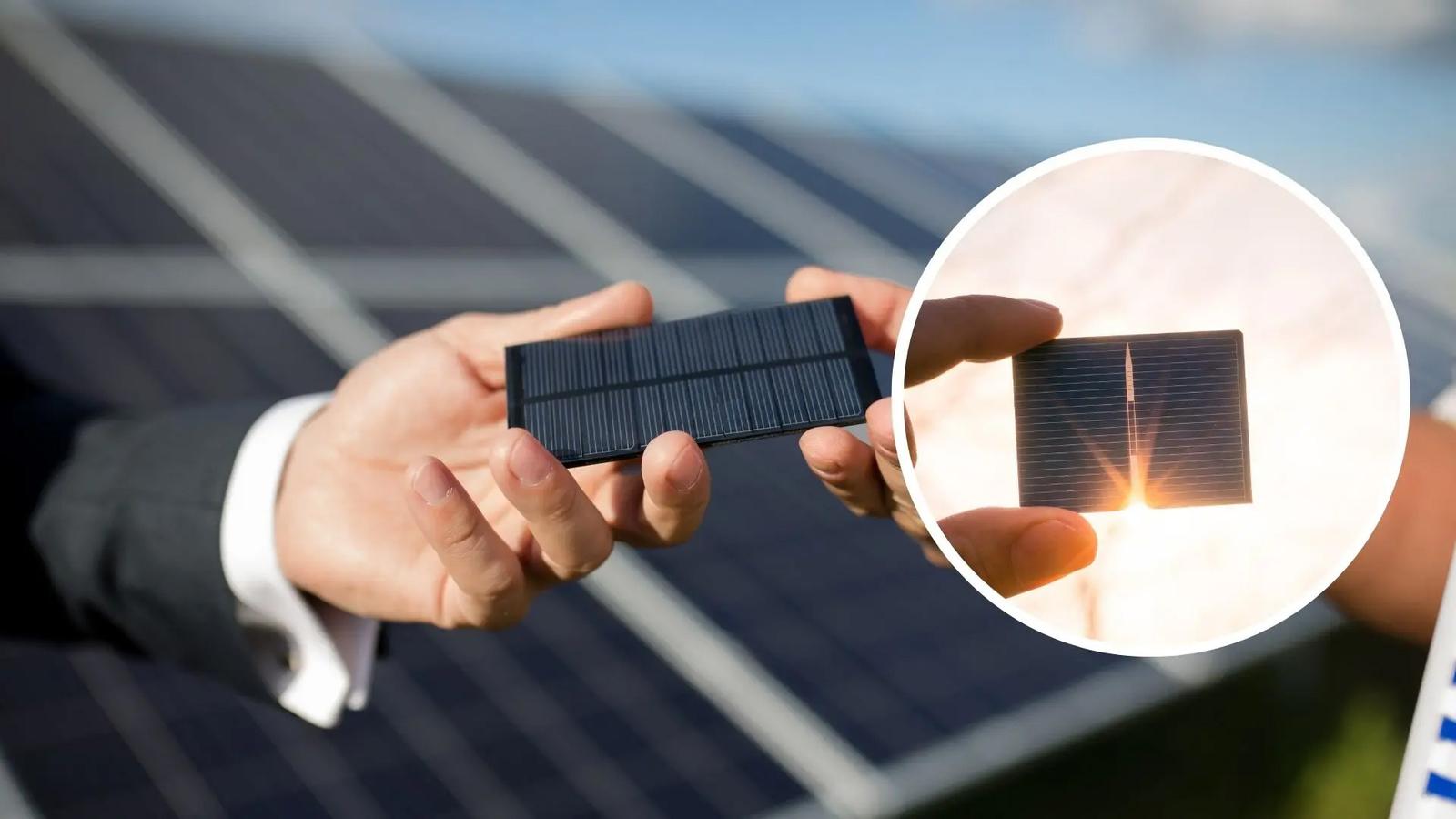
Scientists at the Chinese Academy of Sciences have developed a tandem solar cell that converts sunlight at 29.71% efficiency while significantly improving the durability that has long held back perovskite technology.
The cell stacks two photovoltaic layers. A perovskite top layer absorbs high-energy parts of the solar spectrum, while a lower layer made from CIGS, copper indium gallium selenide, captures lower-energy light that passes through. The combination allows more of the solar spectrum to be used than in conventional panels.
To address perovskite's well-known stability problem, researchers introduced an organic sulfur compound called bis(2-pyridylmethyl)sulfide, or 2PyS, during crystal formation. The additive binds to lead ions, reduces structural defects, limits the movement of charged particles, and protects the material from degradation under light exposure. It also promotes more uniform crystal growth, producing a smoother perovskite film with lower energy losses.
Testing showed the perovskite top cell alone reached 22.21% efficiency. After 2,000 hours of continuous operation, the full tandem device retained more than 91% of its original efficiency.
The researchers said the technology currently exists only at laboratory scale but shows that high-efficiency, long-lasting solar cells are moving closer to industrial use.


