

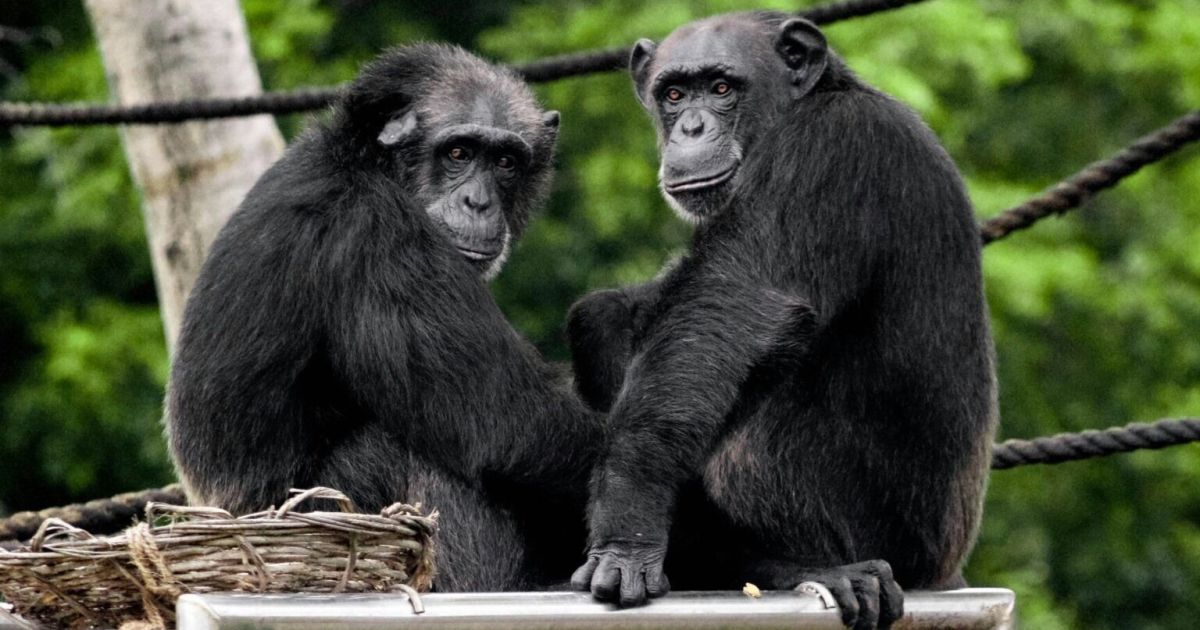
Chimpanzees are less likely to steal food from animals with whom they share close friendships, according to a study conducted at a sanctuary in Uganda.
Researchers found that the primates also showed distinct emotional reactions during feeding tests depending on whether the animal taking the food was a friend or an unfamiliar group member.
The research team tracked 26 chimpanzees at the Ngamba Island Chimpanzee Sanctuary in Uganda, recording more than 800 hours of observation. Located on Lake Victoria, the sanctuary provides a protected environment for rescued chimpanzees, giving scientists an opportunity to monitor natural social dynamics in a controlled setting.
Experimental pineapple tests
Chimpanzees are social primates that form strong interpersonal bonds within their communities. Researchers observed that the animals in the study maintained their relationships through specific daily habits, including mutual grooming, interacting directly, or simply sitting near one another.
To test how social ties influence conflict over resources, scientists set up a trial involving a designated victim and thief with pineapples offered as a reward. The experiment placed the two chimpanzees in separate rooms.
One chimpanzee received three food trays filled with fruit, which were attached to ropes extending into the neighboring room. The second chimpanzee could then choose whether to leave the ropes alone or pull them to steal the food from the other room.
After analyzing the test results, scientists concluded that chimpanzees pulled the rope to steal food in 70 percent of trials when the victim was not a close friend. When the victim was a friend, the frequency of theft dropped to 61 percent.
Emotional reactions to food theft
The study was published in the journal Evolution and Human Behavior, a peer-reviewed publication covering evolutionary approaches to animal and human conduct. Beyond tracking theft rates, the researchers evaluated how the primates reacted emotionally to the loss of their food.
During the tests, scientists observed and evaluated explicit expressions of distress and anger. These included chimpanzees stomping their feet, punching tables, and screaming loudly.
The victims appeared notably irritated when a friend committed the theft. In contrast, victim chimpanzees remained calmer when the animal stealing their pineapple was an individual with whom they maintained no close bond.
The behavior of the thief also changed depending on their relationship with the victim. When stealing from an animal that was not a friend, the thief displayed visible irritation for a much longer period than when taking food from a friend.
Expectations and social bonds
Researchers concluded that these behavioral differences indicate the situation was perceived as hostile when non-friends were involved. The team suggested that for chimpanzees, friendship may not depend solely on an individual's outward behavior, but also on expectations held between individuals.


