

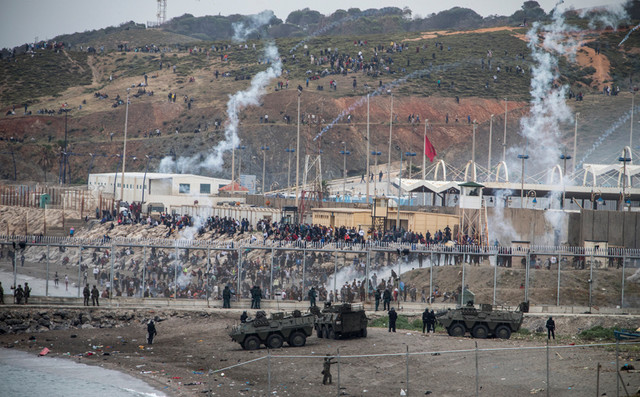
Almost 50,000 migrants crossed into Ceuta by land and sea within days, including hundreds of unaccompanied children, with 20 people drowning in the crossings. The crisis has exposed deep failures in European Union border management and set off a political dispute among member states.
Responsibility for securing the EU's external borders falls on two Brussels commissioners: Magnus Brunner, Commissioner for Home Affairs and Migration, and Dubravka Suica, Commissioner for the Mediterranean. Both watched the mass crossing unfold in real time. Brunner has held the migration portfolio only since December 2024, and his appointment drew scepticism in Brussels given that Austria, where he previously served as finance minister, has a recorded history of opposing key EU migration policies.
A central problem is that the EU's landmark migration agreement has not yet been incorporated into the national laws of member states. When Ceuta needed a functioning European mechanism, the reform was not yet operational in practice. Suica was tasked with building partnerships with Morocco, but her results so far are limited to strategy documents, diplomatic initiatives, a New Pact for the Mediterranean that is still taking shape, and a 152-million-euro financing package signed with Morocco in 2023 by her predecessor's portfolio.
European Commission President Ursula von der Leyen said the images from Ceuta were unacceptable, insisted the EU could not allow entries outside its rules, and called for dangerous crossings to stop, smuggling networks to be dismantled, and returns to be accelerated. Brunner's appeal to Morocco to curb dangerous crossings drew criticism not for being wrong but for being weak, repeating language the EU has used after nearly every major migration crisis of the past decade.
Italian Foreign Minister Antonio Tajani proposed suspending Spain's participation in the Schengen zone, a call that Matteo Salvini described as necessary. Spain summoned the Italian ambassador and accused Tajani of partisan demagoguery. Manfred Weber argued that Spain's regularisation of irregular migrants had caused the influx, a claim that critics said ignored more immediate factors on the Moroccan side of the border.
Juan Vivas, president of the Ceuta region, said the Spanish government did not understand the real scale of the crisis. Prime Minister Pedro Sanchez went further, describing the mass entry as a violation of Spain's territorial integrity. Madrid deployed troops to the border but continued to refuse to declare a national emergency.


