

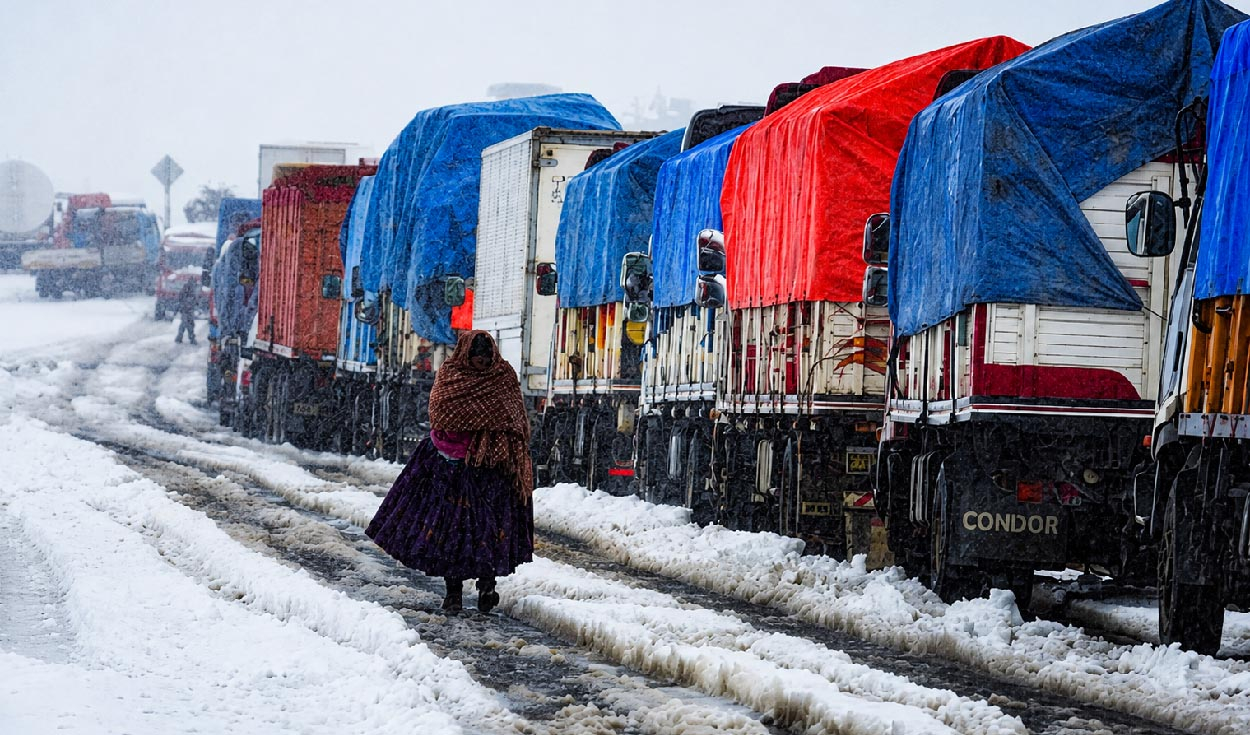
Heavy snowfall across western Bolivia has affected at least 26,220 families and left 323 communities in a state of emergency, according to official reports.
The Andean department of Potosí, located in the southwestern region of the country, has suffered the heaviest impact as severe cold snaps, ice and heavy snow disrupt daily life across high-altitude areas.
Bolivia is a landlocked nation in western South America dominated by the high-altitude Andes mountains, where severe winter weather frequently brings freezing temperatures to remote communities. Potosí sits at an average elevation exceeding 3,000 metres above sea level and is known historically for its rich mineral deposits and rugged high-mountain terrain.
Emergency declarations in Potosí and Uyuni
Bolivian Vice Minister of Civil Defense Roberto Rivero detailed that the municipality of Uyuni has recorded 8,364 affected families and 2,350 families left homeless or severely impacted.
Rivero added that the extreme cold in the area has affected 78,755 camelids, including native alpacas and llamas, with 750 animals confirmed dead.
The Departmental Government of Potosí declared a regional state of emergency to activate additional funding and deployment mechanisms to reach snow-isolated communities.
Civil Defense officials identified urgent relief needs on the ground, including animal forage, veterinary supplies, livestock vitamins, emergency food rations, heavy machinery and blankets.
Damage to farming and tourist reserves
Uyuni, home to the famous Salar de Uyuni salt flat and one of the world's largest lithium reserves, tops the list of damaged municipalities across Potosí.
The Salar de Uyuni spans more than 10,000 square kilometres near the Andes mountains, while the nearby Eduardo Abaroa Andean Fauna National Reserve protects high-altitude alpine wildlife, flamingos and volcanic lagoons near the Chilean border.
Heavy snow covered the tourist circuit and the Eduardo Abaroa Reserve, located at an altitude of more than 4,200 metres above sea level, interrupting guided tours and creating hazardous conditions for travellers.
In the border municipality of Villazón, next to Argentina, local authorities reported that 85,000 head of livestock are in danger and 55,000 hectares of grazing land have been damaged by the snowstorm.
Further damage was recorded in Atocha, where 7,433 families have been affected, while the municipality of Llallagua reported 73 communities experiencing severe storm difficulties.
Emergency crews have conducted multiple rescues of stranded international tourists in recent days. Police officers and firefighters rescued three United States citizens last week who were trapped for more than 30 hours at Laguna Colorada. On Sunday, the Bolivian Army rescued two French citizens in Quetena within the same tourist circuit.
National authorities are also investigating the death of a woman in Oruro after a tree collapsed under the weight of snowfall and struck her. Officials urged residents to observe travel restrictions and reduce vehicle speeds in affected zones.
Major highway closures and transport halts
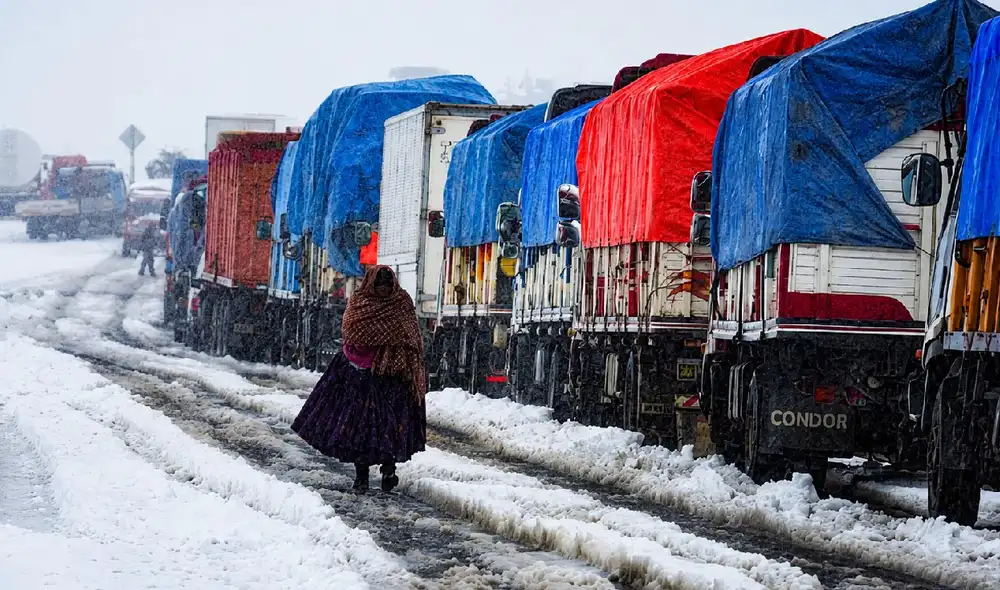
Severe winter weather forced transport authorities to suspend bus departures from the major cities of La Paz and El Alto toward Cochabamba and Santa Cruz.
La Paz serves as the administrative seat of Bolivia's government, while adjacent El Alto is one of the highest major cities in the world, sitting at over 4,000 metres above sea level on the Altiplano plateau.
Officials at the Terminal Metropolitana de El Alto reported that the Bolivian Highway Police detected ice formation on the asphalt road surface in the Confital sector, posing severe risks for vehicle transit.
The Terminal de Buses de La Paz restricted operations to permit departures only toward Oruro and international routes, advising passengers to consult official reports before traveling to stations.
In Cochabamba, transit authorities issued a safety recommendation at 5:30 a.m. on Thursday suspending travel toward Oruro and La Paz due to snow and ice accumulation on the roadway, while departures to Santa Cruz and southern Bolivia continued normally.
The Bolivian Highway Administrator confirmed the complete closure of the road connecting Unduavi to Chulumani in Sur Yungas following the loss of a section of roadbed.
Traffic along the high mountain pass of La Cumbre, situated at an altitude of approximately 4,200 metres, was restricted during the morning before conditions normalized with caution by the afternoon.
Child fatality reported in stranded bus
A three-year-old girl died of suspected hypothermia after being trapped for several hours inside a bus stranded by snow on route 41-21 between K'ala Cruz and K'utini in the municipality of Cocapata, Cochabamba.
Hypothermia is a dangerous medical condition that occurs when the human body loses heat faster than it can produce it, causing body temperature to fall to life-threatening levels.
Departmental Assemblyman Edwin Jiménez traveled to the scene to assist maintenance personnel from the Suticollo highway camp as stranded bus passengers organized a communal kitchen to feed themselves while waiting for road clearance.
Personnel from the Departmental Roads Service were also trapped in the sector as local authorities awaited an official report to establish the precise circumstances of the child's death while monitoring low temperatures.
In Cocapata, council member Susy Bacilio reported that 26 communities across five regions were affected, with preliminary figures showing 945 families damaged, while neighboring Ayopaya province registered losses to crops and livestock.
Snowfall boosts Cochabamba water reservoirs
Despite widespread disruption and agricultural damage, the snowstorm brought a notable benefit to municipal water supplies in Cochabamba.
Semapa General Manager Luis Prudencio reported that the Wara Wara and Escalerani dams increased their stored water levels, accumulating more than seven million cubic metres of water.
Semapa is the municipal public utility responsible for managing drinking water distribution and sanitation services in the city of Cochabamba.
Prudencio explained that Wara Wara reached 74 per cent of its capacity and Escalerani reached 68 per cent. Combined with contributions from the Misicuni dam, the stored reserves will guarantee continuous drinking water distribution for Cochabamba for at least two years.
Prudencio said the snowfall had favoured the municipal reservoirs and secured water distribution for local urban populations.
Snow also blanketed the peaks of the Tunari mountain range, presenting an unusual landscape while feeding mountain lakes and springs that supply regional water networks.


