

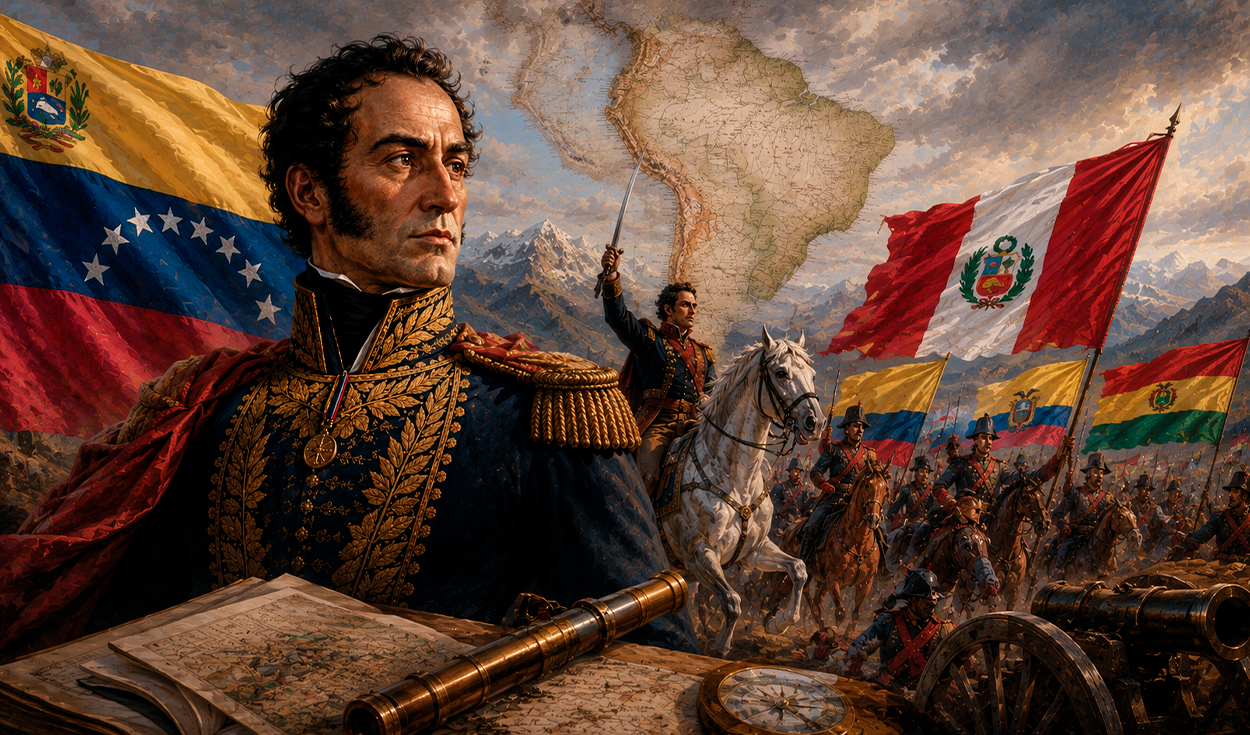
The defeat of Spanish colonial rule in South America was sealed on December 9, 1824, when patriot forces under Antonio José de Sucre routed the viceroyalty's army at the Pampa de la Quinua in Ayacucho, Peru. The battle marked the end of Spanish dominion on the continent and consolidated the independence of multiple South American nations.
The campaign had been two decades in the making. An analysis published by History National Geographic described Simón Bolívar as the political and military conductor of a campaign that changed the map of the continent. Writer Juan Carlos Chirinos noted that Bolívar led twenty years of struggle to secure the independence of Bolivia, Colombia, Ecuador, Peru, and Venezuela.
Building a continental base
Before advancing on the Peruvian viceroyalty, Bolívar established a strong military base in the north of the continent. Patriot victories at Boyacá in 1819 and Carabobo in 1821, together with the incorporation of Quito following Sucre's operations in 1822, secured troops, supplies, and logistical support. The preparation transformed isolated offensives into a coordinated continental effort.
Once in Peru, Bolívar restructured the United Liberating Army with reinforcements from Gran Colombia and integrated fighters from the Andean highlands. Local guerrillas disrupted royalist resupply lines across difficult terrain. The Battle of Junín on August 6, 1824, weakened the Spanish cavalry and cleared the path to a final confrontation.
Ayacucho and the capitulation
The plan concluded at Ayacucho, where Sucre, in command of the military contingent, defeated the forces of Viceroy José de la Serna. After the Spanish commander was captured, a historic capitulation was signed that extinguished the viceroyalty in continental America. In his proclamations, Bolívar had vowed that he would not rest until the chains of Spanish dominion in America were broken.
The capitulation, signed by José de Canterac, ordered the withdrawal of peninsular troops. Royalist resistance persisted at the Real Felipe fortress in Callao until 1826.
The birth of Bolivia
Following the patriot victory, Sucre led an expedition to Alto Peru to eliminate remaining royalist factions. Those actions culminated in 1825 with the founding of the Republic of Bolivia, named in Bolívar's honor. Bolívar later promoted continental integration through the Congress of Panama, though internal disputes prevented the envisioned confederation from taking shape.
Specialists cited by History National Geographic described the Battle of Ayacucho as the culmination of the wars of emancipation, made possible by a collective effort among troops, local leaders, and the civilian population.


