

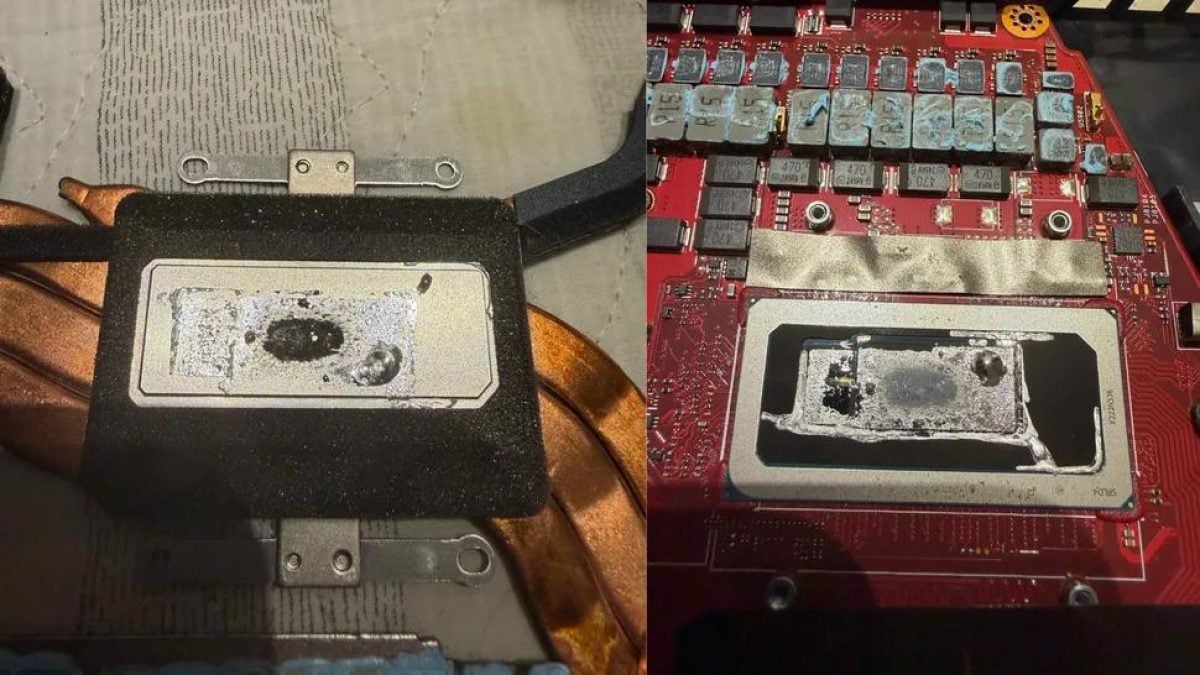
An ASUS ROG Zephyrus M16 gaming laptop suffered CPU damage after liquid metal cooling corroded the processor heat spreader over three years of normal use. The issue was reported by tech publication PCWPlus.hu following a detailed account shared by the device owner online.
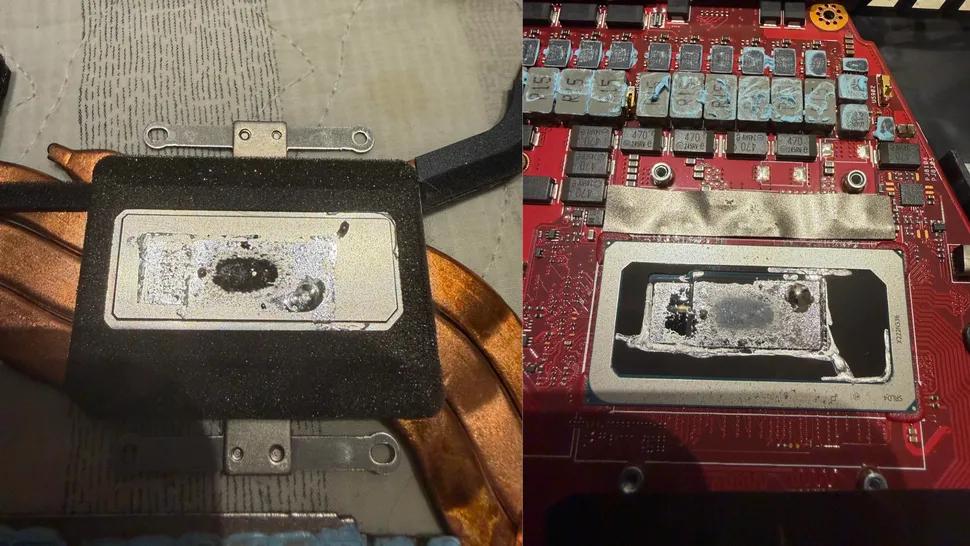
Reddit user Nicknickmeetnick purchased the ASUS ROG Zephyrus M16 in early 2023. The owner stated that the machine saw very little gaming action and was not subjected to heavy workloads during daily operation. Despite the light usage, the laptop eventually began to regularly overheat and restart during routine tasks.
When the owner disassembled the laptop to replace the thermal compound, he discovered an unexpected source of the degradation. The factory applied liquid metal had started damaging the surface of the central processing unit heat distribution lid. The damage was attributed to chemical additives incorporated by ASUS to keep the liquid material from spreading across the circuit board.
ASUS, a major computer hardware manufacturer based in Taiwan, uses liquid metal thermal interface materials across its high performance Republic of Gamers line. Liquid metal is a eutectic alloy, often containing gallium and indium, designed to conduct heat from the silicon processor die to the cooling assembly. While it offers superior thermal conductivity compared to standard silicone pastes, the material requires specialized containment barriers.
Cleaning process and thermal replacement
Removing the degraded liquid metal required extensive cleaning using isopropyl alcohol and a large quantity of cotton swabs. After clearing away the residue, the owner applied standard thermal paste to the processor as a temporary solution.
The owner reported that system performance improved dramatically following the change. In certain video games, the frame rate per second increased almost threefold compared to the degraded performance observed prior to cleaning.
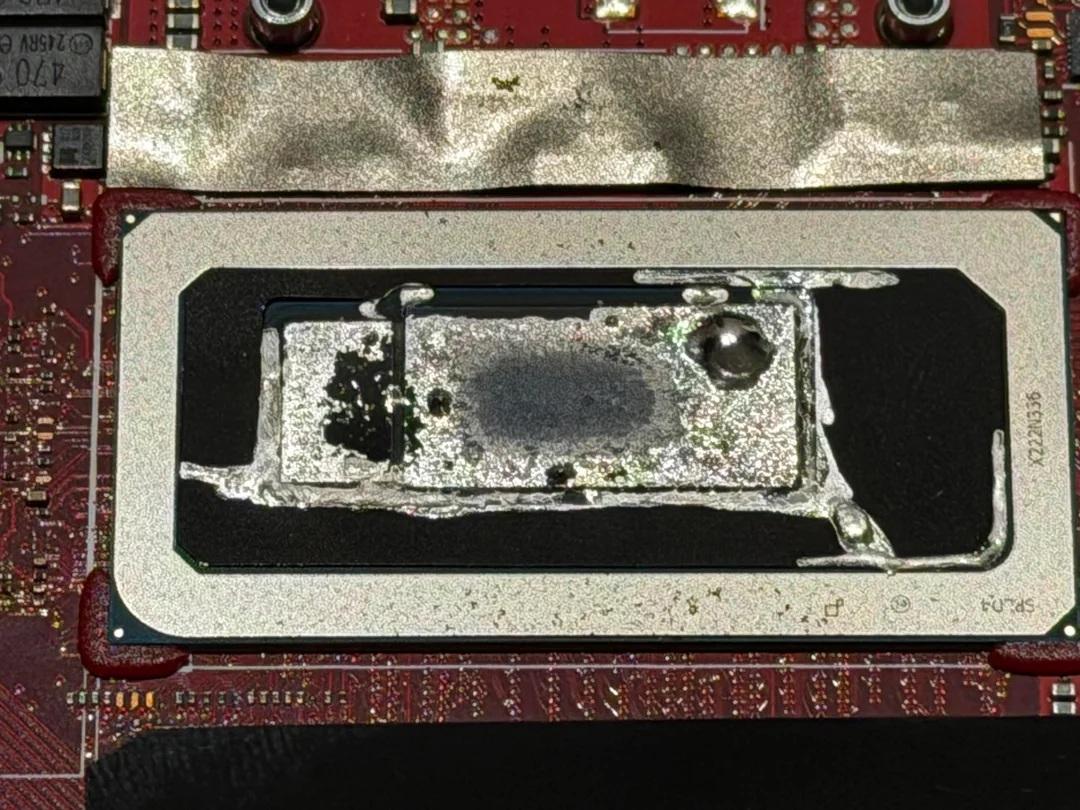
Standard thermal pastes use non conductive silicone or metal oxide compounds to fill microscopic air gaps between the processor and heat sink. Though standard paste transfers heat less efficiently than liquid metal, it does not conduct electricity. In contrast, liquid metal is electrically conductive, meaning even a small stray droplet can trigger a short circuit and destroy expensive microelectronics.
Wider industry concerns and alternative materials
The incident reflects a recurring issue among PC enthusiasts. Tech reports note that multiple ASUS gaming laptop owners have posted on Reddit regarding similar cooling failures linked to liquid metal and factory application methods.
The recurring complaints have sparked debate over why laptop manufacturers do not adopt safer thermal solutions such as PTM7950. Honeywell PTM7950 is a phase change polymer material that remains solid at room temperature but melts into a viscous gel under processor heat. It offers high thermal performance without electrical conductivity or chemical corrosion risks.
The editorial team at PCWPlus noted that manufacturing costs likely dictate why companies stick with liquid metal. When purchased in bulk wholesale quantities, liquid metal remains significantly cheaper than high grade thermal pastes or specialized phase change pads.


