

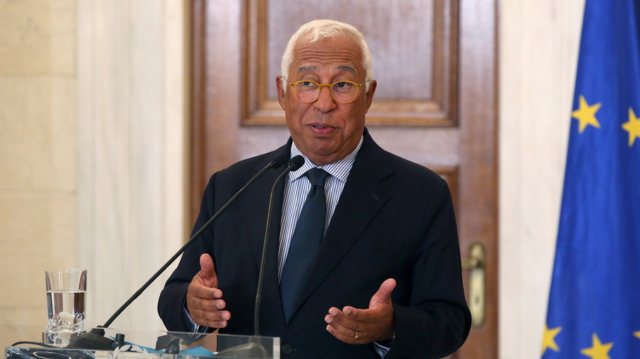
European Council President António Costa has declared in Nicosia that a united Europe requires a reunified Cyprus, offering full European Union support for efforts to restart peace talks on the divided island.
Costa made the statement after meeting Cypriot President Nikos Christodoulides at the Presidential Palace in Nicosia as part of an official tour across EU member state capitals.
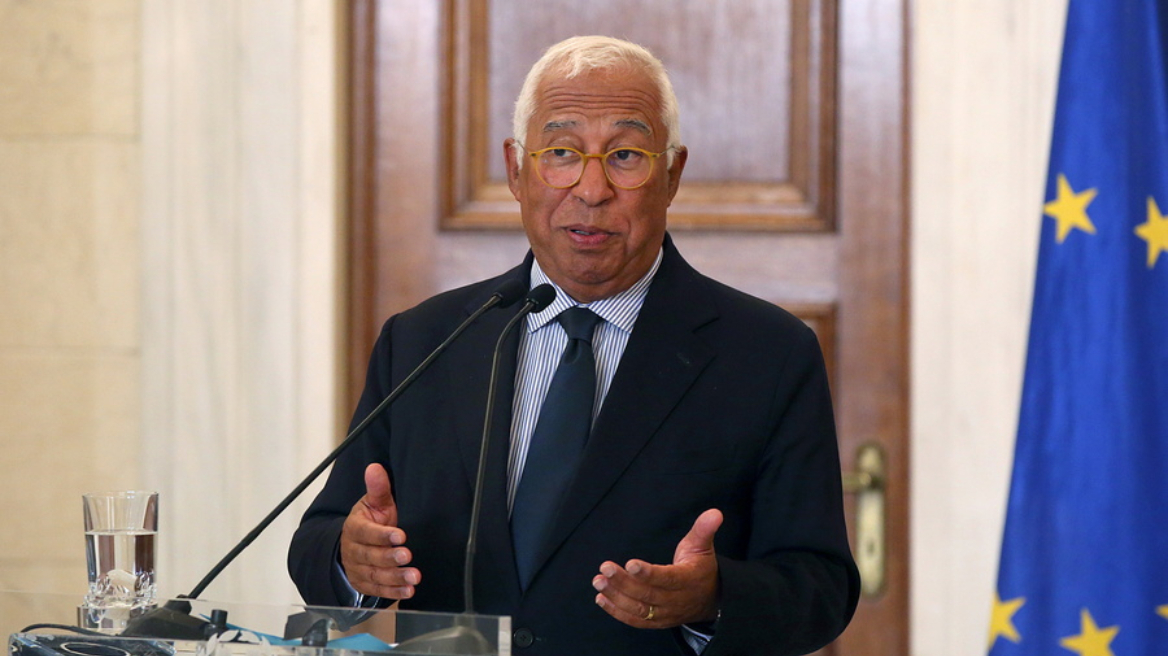
The discussions focused primarily on reviving negotiations over the Cyprus problem and negotiating the European Union's upcoming long-term budget, while also addressing security in Ukraine, conflict in the Middle East, European defence capabilities, EU enlargement, economic competitiveness and migration management.
Costa took office as President of the European Council to coordinate summit meetings among the heads of state and government of the 27 EU member countries. Cyprus joined the European Union in 2004 as a full member state, though the application of EU law remains suspended in the northern part of the island.
Support for United Nations peace process
Speaking after the meeting, Costa reaffirmed the European Union's backing for the peace initiative led by United Nations Secretary-General António Guterres to resolve the Cyprus issue through dialogue under international law.
Costa said the European Union stands ready to contribute constructively to the peace process by leveraging its diplomatic and political channels with Turkey.
The commitment carries significant political weight for Nicosia, which has consistently sought to tie progress in Ankara's bilateral relations with Brussels to tangible steps by Turkey toward resolving the Cyprus conflict.
Cyprus has remained divided since 1974, when Turkish troops invaded the northern third of the island following a brief coup backed by the military junta then ruling Greece. United Nations peacekeepers maintain a demilitarised buffer zone, known as the Green Line, separating the two communities.
Costa assured Christodoulides that Cyprus can rely on continued European Union backing, emphasizing that achieving a resolution on the island remains a fundamental issue for the entire European bloc.
Role of European Union law in settlement
Christodoulides said the European Union is uniquely positioned to play a decisive role in resolving the island's division because it possesses political, legal and economic instruments unavailable to any other international body.
The Cypriot President explained that where differences persist between the Greek Cypriot and Turkish Cypriot sides, the European acquis can provide the framework to resolve those disputes.
The European acquis represents the accumulated body of EU legal rights, obligations, regulations and court rulings that all member states must adopt. Resolutions issued by the United Nations Security Council serve as the primary international framework for Cyprus reunification talks, calling for a bicommunal, bizonal federation with political equality.
Christodoulides reaffirmed that any comprehensive settlement must rest firmly on United Nations Security Council resolutions as well as the fundamental principles, values and legal framework of the European Union.
Call for talks to restart from Crans-Montana
Christodoulides expressed readiness to re-enter negotiations immediately from the exact point where negotiations stalled in July 2017 at Crans-Montana.
The Cypriot leader called for convening a new expanded international conference that would result in a formal commitment from both sides to return to the negotiating table.
The Crans-Montana conference in Switzerland in July 2017 represented the most comprehensive attempt in recent years to negotiate a reunification agreement under United Nations auspices, bringing together Greek Cypriot and Turkish Cypriot leaders along with guarantor powers Greece, Turkey and the United Kingdom before discussions collapsed without a breakthrough.
Christodoulides added that the true political will of all parties involved would be demonstrated at the negotiation table itself rather than through public rhetoric.
European Union budget and Schengen accession
A substantial portion of the bilateral meeting centered on the European Union's upcoming Multiannual Financial Framework, which will define the bloc's spending priorities for the 2028 to 2034 period.
Christodoulides described the budget negotiations as one of the most critical issues facing the European Union and called for a political agreement to be finalized before the end of 2026.
Costa noted that his visits across European capitals were designed to gather member states' priorities and concerns prior to crucial deliberations at the European Council. He emphasized that European institutions must remain connected to citizens and member states, noting that the strength of the bloc depends on its unity.
The Multiannual Financial Framework is the seven-year budget structure that limits overall EU spending and directs resources toward regional development, agriculture, research and external action. The Schengen Area allows passport-free movement across 29 European countries, eliminating internal border controls.
During the talks, Christodoulides also raised Cyprus's formal request for full admission into the borderless Schengen zone. Nicosia considers full Schengen accession a vital step toward complete European integration, despite the complex security and monitoring challenges along the Green Line buffer zone.
Middle East security and regional cooperation
The two leaders reviewed ongoing security developments in the Middle East and considered Cyprus's strategic role in regional stability.
Costa thanked Nicosia for its active contribution to European Union humanitarian and diplomatic efforts across the region.
Christodoulides reaffirmed Cyprus's commitment to acting as an essential diplomatic and operational bridge linking the European Union with countries across the Eastern Mediterranean and the broader Middle East.


