

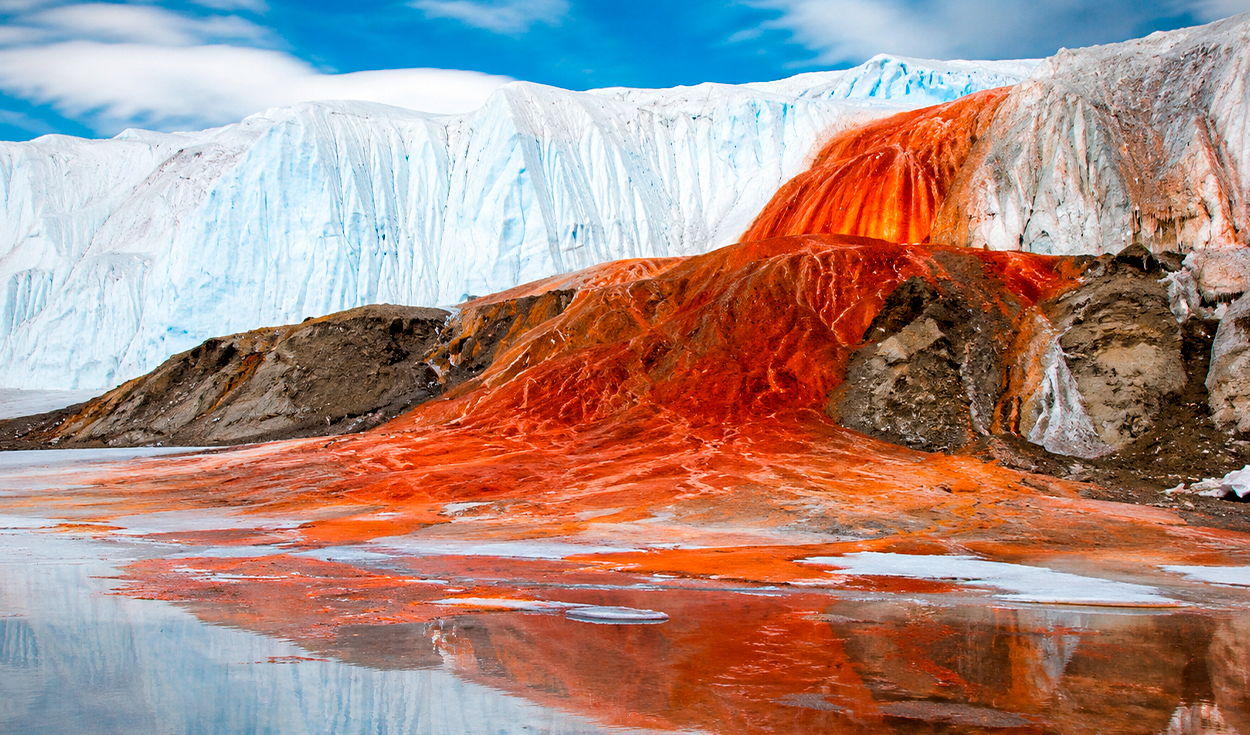
Researchers from the United States and Sweden have identified active marine micro-organisms trapped for 1.5 million years at Blood Falls in Antarctica. A study published on August 3, 2026, in Nature Geoscience revealed molecular evidence of ancient ocean life inside the subglacial brine system at the Taylor Glacier.
The discovery comes from water, ice, and sediment samples collected in the McMurdo Dry Valleys of East Antarctica. Previous research indicates that the saline deposit was cut off from the ocean about 1.5 million years ago, though scientists noted that the analysis does not determine the precise age of the microbes.
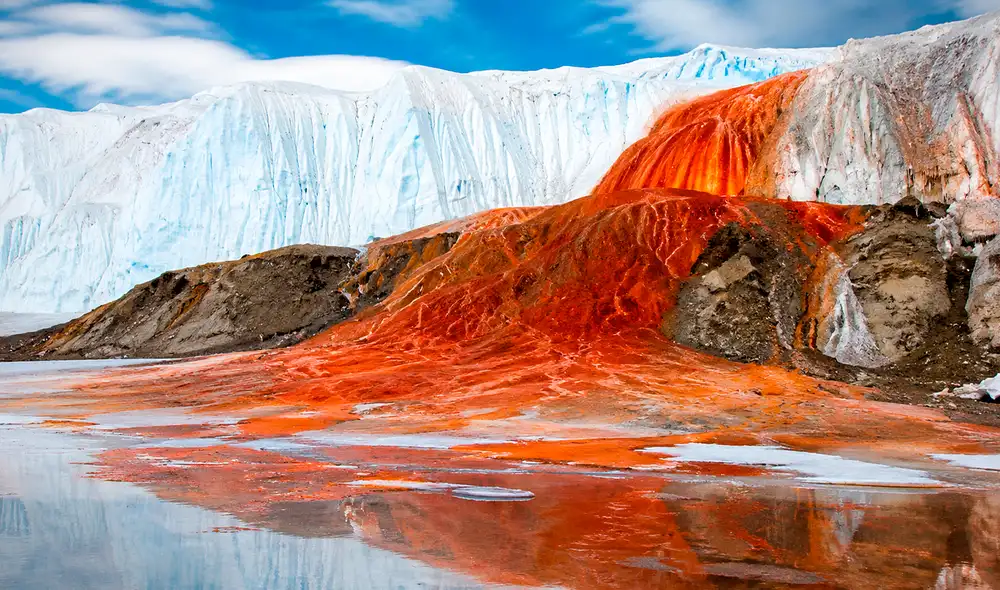
Testing on red mud from Blood Falls revealed eukaryotic microbes of oceanic origin. Marine-affinity species made up between 60% and 80% of the detected biological community, with high concentrations of diatoms, haptophytes, dinoflagellates, and ciliates.
Cellular RNA analysis showed that these microscopic organisms remain actively alive in the hyper-saline conditions. Genetic data indicated that the microbes retain functions for photosynthesis, cell repair, and environmental stress responses. Lead author Angela Zoumplis said researchers were not simply looking at genetic remains, but seeing evidence of living organisms adapting to a harsh environment.
Subglacial brine and red ice
Scientists attribute the presence of marine organisms to ancient warm periods when sea water flooded Taylor Valley. As climate conditions shifted and ice sheets advanced, the ocean water became trapped beneath the glacier. Prolonged geographic isolation created distinct genetic variations among current microbial populations.
The characteristic red color of Blood Falls occurs when subglacial brine rich in salt and iron flows out from deep beneath the ice. Upon reaching the air, the iron oxidizes into a vivid red color across the glacier surface before flowing into Lake Bonney.
Strict environmental protections
Visiting Blood Falls is tightly restricted to protect its scientific value. The location is designated as Specially Protected Antarctic Area No. 172 under the Antarctic Treaty System, which mandates a formal management plan to preserve its glaciological and microbial features.
While some scientific expeditions travel to the McMurdo Dry Valleys, access to Taylor Glacier requires specialized permits. Authorities do not permit open tourist access to the protected zone.


