


Andalusia has received more than 5.4 million euros in agricultural insurance compensation for fire damage over the past decade, making the southern Spanish region the highest recipient in Spain.
Data released by agricultural insurance agency Agroseguro shows Andalusia collected 5,465,335 euros between 2017 and 2025. That total represents 26.6 percent of the 20,513,739 euros paid across Spain for fire damage to crops and livestock during that period.
The payout figure places Andalusia far ahead of second-placed Castilla y Leon, which received 3,124,746 euros, and third-placed Extremadura, which received 2,749,470 euros over the nine-year timeframe.
The financial figures take on additional significance in 2026, as two Andalusian provinces, Seville and Cordoba, rank among the four hardest-hit agricultural areas in the country.
Agroseguro reported that 41 provinces in Spain have declared fire damage this year. Seville leads nationally with 2,030 hectares declared damaged by fire, while Huesca follows with 1,559 hectares. Cordoba ranks fourth nationally with 1,489 hectares, ahead of Lleida.
Across Spain, a total of 15,842 agricultural hectares burned up to August 17, 2026. Agroseguro expects that figure to increase as farmers report damage in areas that have only recently become accessible.
The current total is already the second-highest annual figure recorded in Spain over the past decade, behind only the more than 20,700 hectares damaged in 2025. Agroseguro projects that compensations across the country could exceed two million euros by the end of the year, with herbaceous crops accounting for more than 90 percent of the damage.
Agricultural damage and the Niebla wildfire
The agricultural destruction in Andalusia coincided with a massive forest fire in Niebla, located in Huelva province, which became the defining wildfire of the summer season.
The blaze broke out on August 6, 2026, in the Raboconejo area. It was stabilized on Sunday, August 17, after ten days of continuous effort by Plan Infoca, the regional forest fire fighting service.
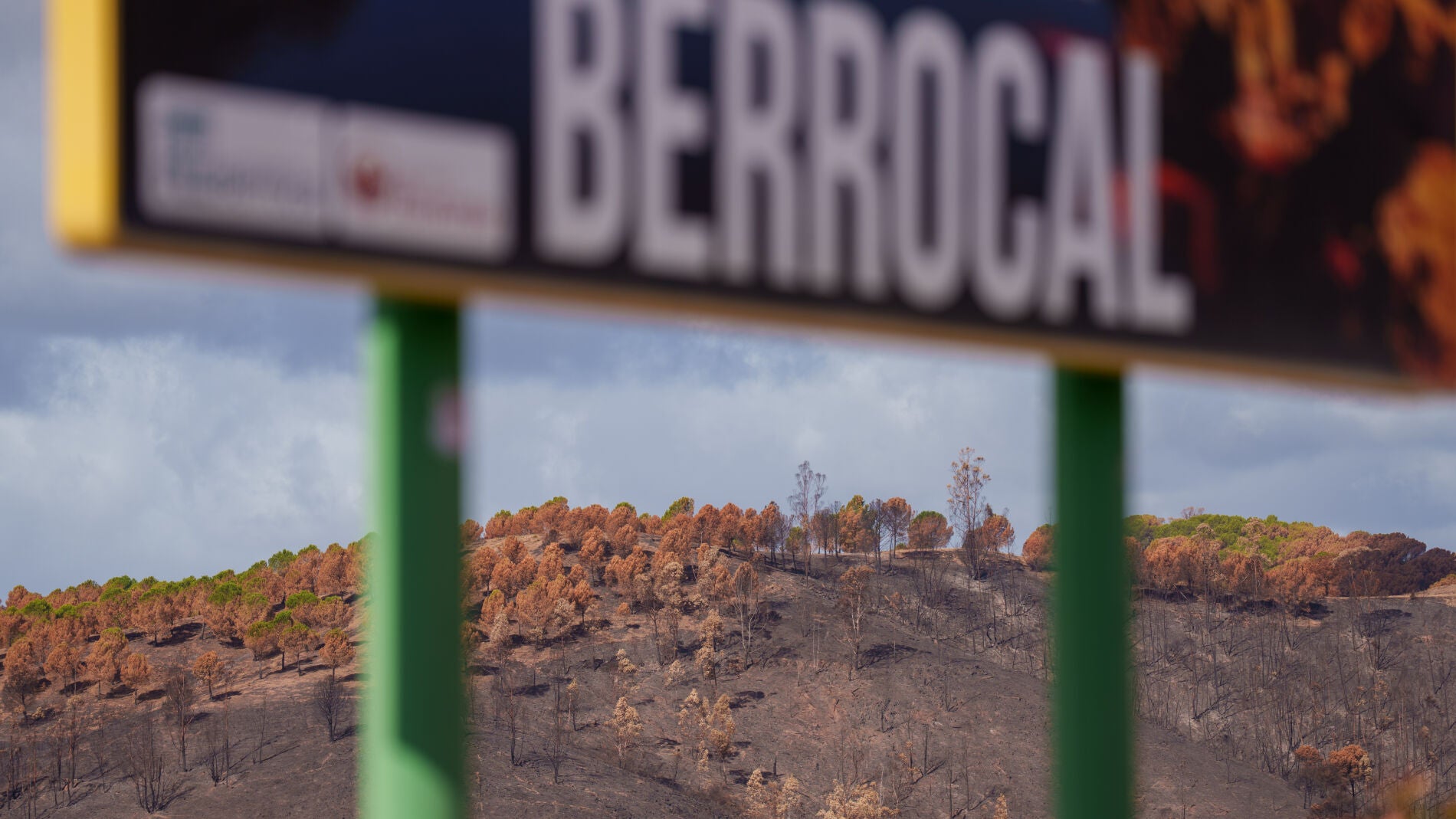
The fire swept across more than 33,000 hectares in 11 municipalities across Huelva and Seville provinces. It affected more than 90 percent of the land in municipalities such as Berrocal in Huelva.
Berrocal was previously the epicenter of the 2004 Riotinto wildfire, which burned 34,000 hectares and stood as Andalusia's largest recorded blaze.
The area burned by the Niebla fire covers roughly 350 square kilometers, an expanse larger than the island nation of Malta, which measures 316 square kilometers. Initial estimates placed the burned area at 38,000 hectares, but satellite imagery later adjusted the figure downward after revealing unburned pockets of land within the perimeter.
Eucalyptus expansion and fire risks
Alejandro Garcia Hernandez, the director of the Emergency Agency of Andalusia, explained the technical factors behind the extreme severity of the fire.
Garcia Hernandez stated that the forest composition played a central role, as essential oils in eucalyptus trees act as high-potency fuel. Eucalyptus trees are referred to in Australia as the gasoline tree due to their high flammability.
He added that the peeling, laminated bark of eucalyptus trees detached and created new spot fires meters away. Combined with strong wind gusts reaching up to 60 kilometers per hour and an absence of agricultural fields to serve as natural firebreaks, the flames jumped distances of more than three kilometers.
During the emergency, regional President Juanma Moreno announced a plan to progressively eradicate and reduce eucalyptus forests across the region, replacing them with native holm oaks and cork oaks. Moreno noted that up to 40 percent of the area burned in the Niebla fire consisted of eucalyptus groves.
The environmental organization Ecologistas en Accion expressed skepticism regarding the announcement. The group recalled that a similar pledge made after the 2004 Riotinto fire was never fulfilled.
According to data provided by the Andalusian regional government, the Junta de Andalucia, the region has reduced eucalyptus coverage by 117,269 hectares since the 1980s, with more than half of that reduction occurring in Huelva province.
The department of regional minister Fina Martinez noted that the Andalusian Forest Plan and its Horizon 2030 adjustment aim to continue reducing eucalyptus plantations while expanding native species.
The regional ministry stated that its priority is recovering native Mediterranean forests, protecting biodiversity, and increasing the resilience of regional ecosystems against climate change.
Historical context of Andalusian blazes
The combination of agricultural loss and forest destruction leaves Andalusia facing two of its worst historical wildfire metrics in 2026: the highest cumulative cost in agricultural insurance compensations in Spain and the second-largest modern wildfire in its history.
Seville province serves as a common link between both records, featuring among the provinces with the highest agricultural surface area damaged this year and among the areas impacted by the Niebla fire.
Although the Niebla fire ranks second in total area burned in Andalusian history, authorities consider it the most complex firefighting operation ever undertaken in the region.
The Niebla fire and the 2004 Riotinto fire remain the two largest forest fires recorded in Andalusia. They stand far above other major blazes from the past decade, including the 2021 Sierra Bermeja fire in Malaga, which burned 10,000 hectares; the 2015 Quesada fire in Jaen, which burned 9,761 hectares; and the 2022 Los Guajares fire in Granada, which burned 5,200 hectares.


