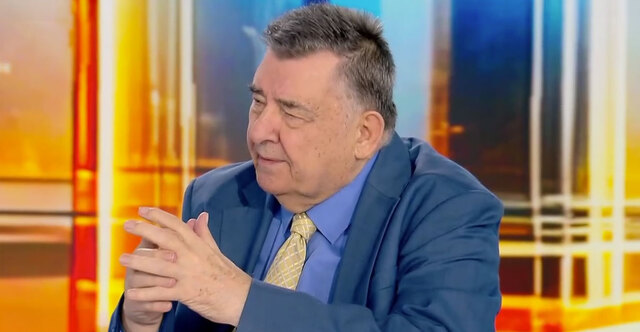

Greek Minister of State Akis Skertsos has defended the government decision to make an early repayment of state debt, rejecting criticism from political opponents.
In a social media statement analyzing the decision, Skertsos argued that using fiscal surpluses to reduce national debt faster reflects responsible economic management and secures long term economic independence.
He also launched a sharp critique against opposition parties, accusing them of irresponsibility after they issued statements condemning the early debt payoff as an anti-growth measure.
Greece endured a severe sovereign debt crisis beginning in 2009, requiring international bailouts and years of strict financial supervision. Skertsos serves as Minister of State in the cabinet of Prime Minister Kyriakos Mitsotakis, which has sought to lower the national debt ratio as economic recovery has taken hold.
Analogy of the prudent borrower
Skertsos framed the government strategy by asking what the debt crisis had ultimately taught the nation, comparing Greece to an over-indebted individual borrower.
He described a borrower whose business struggled for many years, forcing them to take out new loans to service old debts and meet daily business and household expenses.
Following significant efforts and sacrifices, that borrower brought their finances under control, ensuring that business revenues exceeded expenses in recent years to allow measured spending increases alongside savings.
Under the terms of such a loan, Skertsos noted, savings cannot simply be spent without constraint, because unmanaged spending risks pushing expenses above income and forcing renewed borrowing while already heavily indebted.
He explained that a borrower could either leave excess funds idle in a bank account without earning interest or apply them toward paying off debt sooner to achieve financial freedom faster.
Greece is adopting the prudent option by using its cash surplus to reduce debts rapidly rather than leaving deposits sitting unused, Skertsos said.
European spending limits and fiscal policy
Addressing broader economic constraints, Skertsos highlighted new European Union fiscal rules that set strict limits on state expenditure for member states.
Under these regulations, each EU member state is prohibited from increasing state spending beyond 3 to 3.5 percent annually.
Skertsos noted that Greece has already made these permitted annual spending increases across key sectors, including health, defence, education, infrastructure, salaries, and pensions.
He stated that utilizing the remaining surplus to cut debt avoids creating deficits and transfers less debt burden to future generations.
Lowering public debt provides the government with greater degrees of freedom in shaping economic policy in the coming years, Skertsos argued, adding that a country with lower debt is freer to make economic choices in favour of growth and social cohesion.
Reaction to opposition criticism
In the second part of his statement, Skertsos directly addressed political opponents who released statements yesterday reprimanding the government over the debt repayment decision.
He expressed criticism toward opposition parties that reacted against faster debt reduction, noting that several of them had governed during the difficult years of the Greek debt crisis.
Skertsos asserted that opponents criticizing the decision either do not know the new European fiscal rules that any future government would be obligated to follow, or understand them and are lying about spending that would place the country back under financial supervision.
He described both possibilities as evidence of massive irresponsibility on the part of opposition political parties.
Closing his statement, Skertsos observed that society, which suffered greatly from reckless policies in previous years, is watching and judging all political actors.