

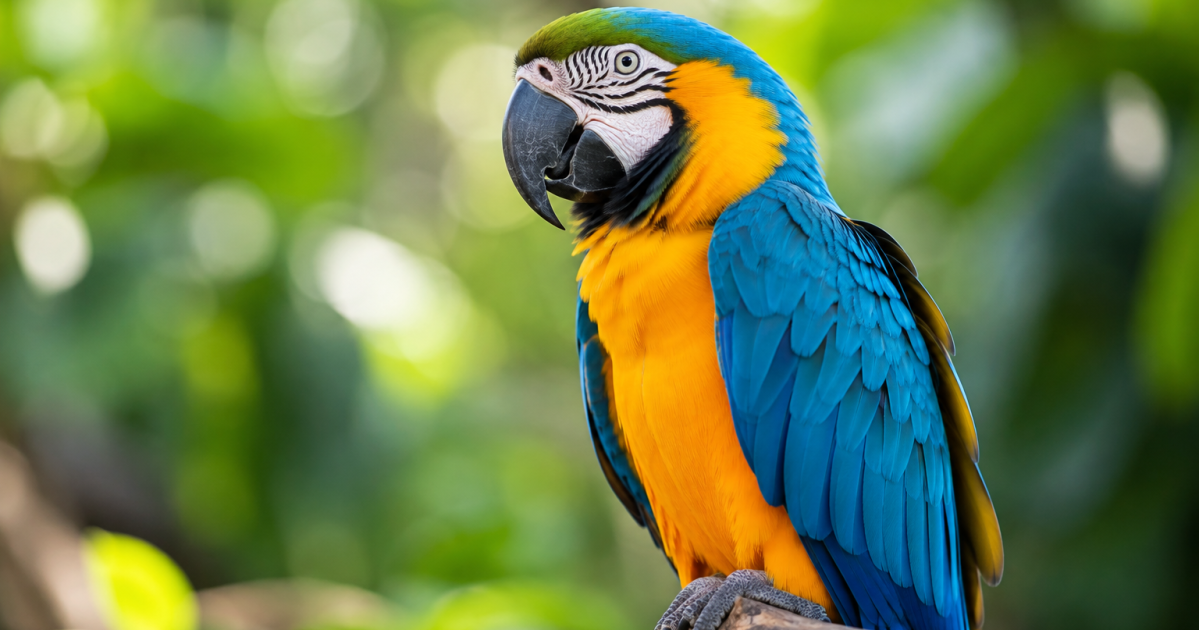
Macaws, parrots, parakeets and cockatoos belong to a bird group called psittacines, known for strong learning, memory and association skills. Some of these birds can link vocalizations to objects, colors, shapes, quantities or situations, though that does not necessarily mean they understand those sounds the way humans understand language.
Biologist Joana Corbellini, who holds a master's degree in botany, said there is no evidence that a macaw has awareness of its own identity in the same way humans do. When a bird appears to correct someone who calls it a "parrot," she said, the behavior likely reflects its ability to learn and link certain words to specific situations rather than genuine self-recognition.
How birds produce speech-like sounds
Humans produce voice mainly through vocal folds. Birds instead use an organ called the syrinx, located where the trachea splits into two bronchi. In psittacines, precise movements of the beak, tongue and other structures involved in vocalization let the birds modify sounds and reproduce patterns similar to human speech, including rhythm and changes in frequency, according to Corbellini.
Why some birds seem to 'talk' with their owners
The explanation also lies in the animals' social lives. In the wild, macaws and parrots use vocalizations to stay in contact and interact with other members of their group. When they live in a home, humans effectively become part of that social group, Corbellini said.
A bird can learn that certain vocalizations trigger responses, such as attention, interaction or food. That helps explain behaviors like saying "hi" when someone arrives, calling out to a specific person, or repeating sounds that provoke a reaction, she said.
The demands of keeping a macaw at home
This capacity to learn and interact with people can make macaws fascinating, but it also helps explain why keeping them in a home requires specific conditions and is not suited to most households, Corbellini said. Macaws are wild animals that need space to move, social interaction, environmental enrichment, cognitive stimulation and a specific diet.
When kept in environments that offer little stimulation, prolonged confinement or inadequate interaction, the birds can develop behavioral changes such as aggression and excessive vocalization, according to Corbellini. They may also pluck their own feathers, a behavior that can have different causes and requires veterinary evaluation.
Legal rules on keeping wild birds
In Brazil, capturing wild animals directly from nature to keep as pets is prohibited, except in cases provided for by law. Anyone acquiring a macaw legally needs to verify the animal's origin and the required documentation, Corbellini said.
The ability to imitate human speech may be fascinating, she said, but it represents only a small part of these animals' biology. Before bringing a macaw home, people need to understand it is a highly social, long-lived and cognitively complex wild bird whose needs are rarely met in a conventional household, according to Corbellini.


