

The United States has told international allies it is not planning a new round of military strikes against Iran for now, choosing instead to step up economic and naval pressure on Tehran.
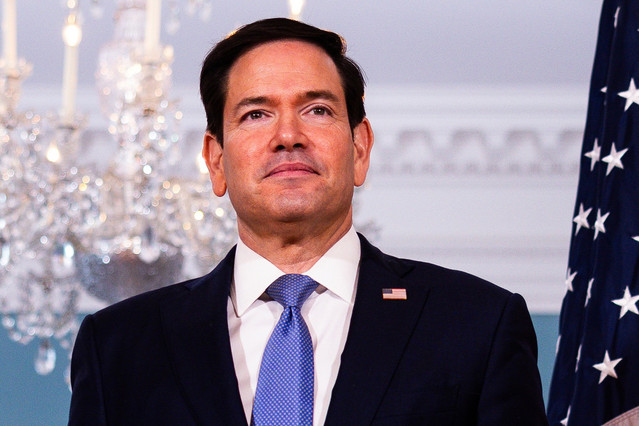
US Secretary of State Marco Rubio conveyed the position to counterparts in several allied countries in recent days, according to news outlet Axios. Sources familiar with the discussions said President Donald Trump's administration intends to rely primarily on a new Treasury Department sanctions package and a naval blockade that has severely restricted Iranian oil exports.
Rubio reportedly clarified that while large-scale military operations are not currently planned, Washington has not ruled out a military response if Iran attacks first.
A second US official cited by Axios said this strategy is expected to remain in place at least until the US midterm elections, after which a new military campaign could be re-examined.
Rubio serves as the chief US diplomat overseeing foreign policy in the Trump administration, which has frequently used economic sanctions alongside military deterrence in the Middle East.
Control of the Strait of Hormuz
US officials consider the situation in the Strait of Hormuz central to their strategy. Clearance of mines across most of the strategic passage by the US Navy is viewed by officials as a turning point that limits Tehran's ability to use oil traffic as leverage.
An increasing number of oil tankers are now using the southern lane near Oman to bring crude to international markets. A US official told Axios that the Iranians had lost control of the strait and that the United States now controlled it.
The Strait of Hormuz is a narrow waterway connecting the Persian Gulf to the Gulf of Oman and the Arabian Sea. It serves as one of the world's most critical maritime transit points for petroleum shipments. Oman lies on the southern coast of the passage opposite Iran.
Impact of sanctions and naval blockade
The naval blockade is targeting Iran's primary source of foreign revenue. US officials reported that almost no tankers have arrived at Kharg Island, Iran's main oil export hub, over the past two weeks.
Kharg Island is a fortified island terminal in the northern Persian Gulf that handles the vast majority of Iran's crude oil exports.
Economic pressure has also mounted through new US sanctions that helped push the Iranian rial to historic lows near two million rials per US dollar. Washington claims Tehran faces growing obstacles finding alternative commercial routes and securing basic revenue.
State Department spokesperson Tommy Pigott told Axios that the Iranian economy was in free fall and that the regime's military had been decimated, adding that the United States was attempting to cut off every remaining source of funding for Tehran.
The State Department manages US diplomatic affairs and official foreign communications, while the Treasury Department enforces international sanctions regimes.
Diplomatic outreach by Pakistan
Despite the shift toward economic coercion, diplomatic efforts continue. Pakistan's army chief, Field Marshal Asim Munir, visited Tehran on Sunday for discussions with Iranian leaders. Pakistan has acted as an intermediary between Washington and Tehran since the conflict began.
According to news network Al Arabiya, Munir spoke with Trump before traveling to the Iranian capital and presented him with a new proposal that could be conveyed to Tehran. The White House did not deny that communication occurred between the two leaders, but insisted that no negotiations with Iran are currently underway or scheduled.
Pakistan shares a long land border with southeastern Iran and maintains active diplomatic ties with both Washington and Tehran, positioning its military leadership as a frequent diplomatic bridge during regional crises.
Assessment of future military moves
US officials believe recent developments in the Strait of Hormuz have stripped Tehran of a major bargaining chip, making any potential navigation agreement between Iran and Oman less significant for Washington.
A US official told Axios that Washington was not negotiating with Iran at present but pressing it, adding that pressure could bring the Iranians back to the table.
The next phase will include evaluations by military leadership. White House envoys Steve Witkoff and Jared Kushner, who have played prominent roles in discussions regarding Iran, are scheduled to visit US Central Command on Wednesday for briefings on ground conditions.
US Central Command, headquartered at MacDill Air Force Base in Tampa, Florida, oversees American military operations across the Middle East and Central Asia.


