
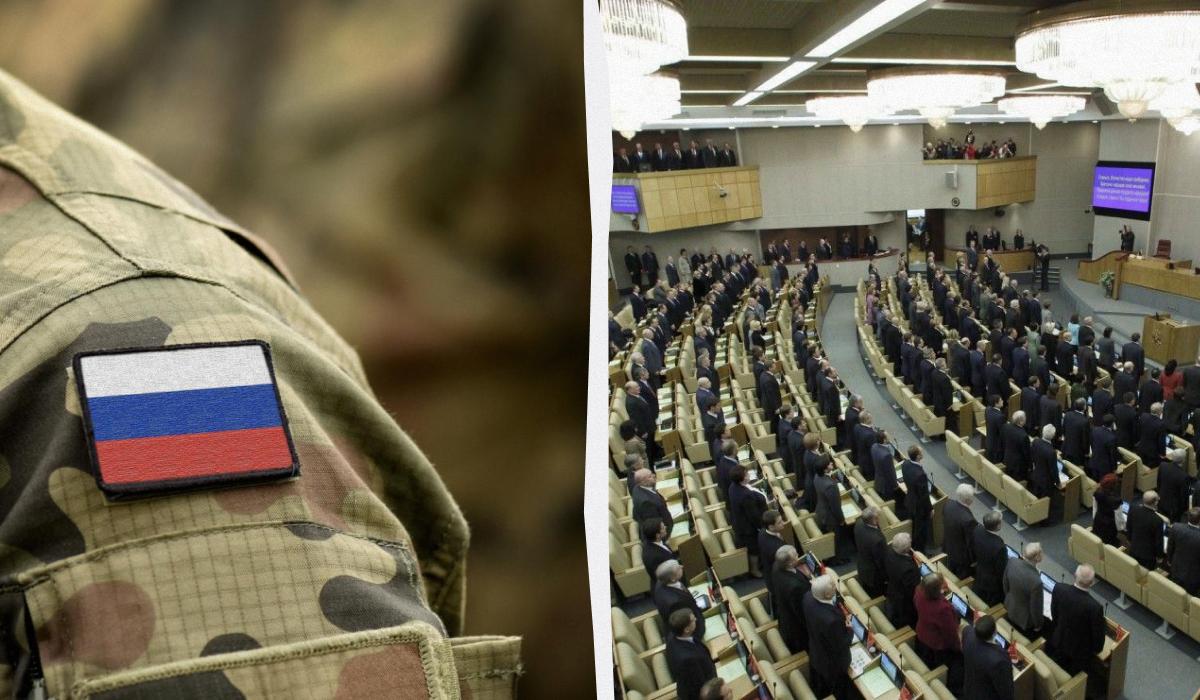
Russia's ruling United Russia party won a record 355 seats in the 450-member State Duma parliament in Moscow, with 49 war veterans entering the assembly.
The outcome further consolidates power for President Vladimir Putin, giving United Russia a supermajority that surpasses its previous record of 343 seats set in 2016.
The election was the first parliamentary vote held since Russia launched its full-scale invasion of Ukraine in 2022. Officials cited by The Guardian confirmed that 49 deputies who participated in the war against Ukraine will join the new lower house of parliament.
United Russia Secretary General Vladimir Yakushev initially stated that 86 veterans of the special military operation from Moscow had likely been elected. Yakushev later adjusted that figure down to 49, adding that the group represented a fairly significant contribution to the legislature.
Election results and voter turnout
Russian Central Election Commission Head Ella Pamfilova reported that United Russia secured a decisive victory with 57.83 percent of the vote after 95 percent of ballots were counted. That result represents an increase from the 49.8 percent the party achieved during the previous parliamentary vote in 2021. Pamfilova expressed gratitude to voters for remaining steadfast and not yielding to what she described as psychological pressure.
The State Duma serves as the lower legislative chamber of the Federal Assembly of the Russian Federation, responsible for drafting and voting on federal legislation. Election administration is overseen by the Central Election Commission, the official state body managing federal voting processes across Russia.
Kremlin spokesman Dmitry Peskov said the results demonstrated strong popular backing for Putin, who has served continuously as either prime minister or president since 2000. Peskov stated that the voting figures showed the highest level of society's cohesion around the head of state.
Western condemnation and opposition ban
Western governments condemned the vote, particularly the balloting conducted in Russian-occupied regions of Ukraine, labeling the process a sham. European Union top diplomat Kaja Kallas described the election as another serious blow to Russian democracy.
Writing on social media platform X, Kallas stated that the Kremlin had suppressed dissent and barred international election observers, leaving behind only the appearance of democracy. Kallas serves as the High Representative of the European Union for Foreign Affairs and Security Policy.
The Supreme Court of Russia banned the anti-war party Yabloko from participating in the elections last month, removing the sole organized political platform opposing the war. Founded in the 1990s as a social-liberal party, Yabloko had provided liberal voters with their only option to voice political dissatisfaction.
All other political parties securing seats in the new parliament support the military campaign in Ukraine. The Communist Party took second place with 40 seats, followed by the ultranationalist Liberal Democratic Party of Russia with 25 seats, and the New People party with 20 seats. In Chechnya, regional leader and Putin ally Ramzan Kadyrov was re-elected, reportedly securing more than 99 percent of the vote.
Mobilisation concerns and economic warnings
The election was conducted amid widespread speculation that Putin might announce a large-scale military mobilization this autumn to revitalise Russia's prolonged war effort in Ukraine.
Criticism of current government policy also emerged from within the parliamentary system. Communist Party leader Gennady Zyuganov warned that Russia would ultimately lose if it maintains its current political course while continuing the war in Ukraine. Zyuganov urged Moscow to adopt policies based on justice, friendship, and socialism.
Zyuganov criticized the Kremlin's economic management, citing rising consumer prices and technological lag behind foreign competitors. He noted that while the global economy expands by 3 to 4 percent annually, Russia's economic growth has lingered at roughly 1 percent per year for 15 years.
Sergei Guriev, dean of London Business School and a prominent Kremlin critic, predicted that Putin will use the election results to claim that Russian citizens can endure economic hardship, thereby hardening war objectives aimed at Ukraine's surrender.
Guriev noted that given Russia's expanding budget deficit and record spending on defense, drafting soldiers by force would be cheaper for the state, creating a choice Putin may soon face. He added that the economic toll of the conflict is turning into a political burden for Putin as several Russian officials release gloomy financial forecasts.


