The Ukrainian government has approved new regulations governing military draft deferrals for workers, establishing a 95 percent exemption quota for defense manufacturing staff.
Under Resolution No. 1328, published on the Cabinet of Ministers website on October 26, government ministries and regional administrations must audit all existing critical enterprise designations within 10 days of the decree taking effect.
The measure reorganizes how Ukraine shields civilian workers from conscription during wartime, tightening eligibility across the wider economy while safeguarding arms factories.
The new rules establish a specialized government body, named the Coordination Centre for the Organization of Reserving Draft-Eligible Persons. This agency will oversee the allocation and cancellation of critical business designations and evaluate requests to increase employee deferral limits.
Companies seeking exemptions must now submit documentation to public authorities well in advance to prove their operations are essential.
Audit of critical businesses
Under the decree, regional administrations and central government ministries must carry out a comprehensive review of all enterprises that currently hold critical status. Officials must re-examine the criteria used to grant these exemptions and confirm whether existing beneficiaries still qualify.
Ukraine has relied on a reservation system, known domestically as bronyuvannya, since Russia launched its full-scale invasion in February 2022. The program allows designated public bodies, utilities, energy providers, and commercial firms to exempt a portion of their workforce from military service to prevent the collapse of municipal services and basic economic production.
However, the system has faced recurring domestic scrutiny and public debate over fairness, as the armed forces require steady reinforcements along hundreds of miles of active combat lines across eastern and southern Ukraine.
Defense sector protection
The Ukrainian Ministry of Defense stated that draft deferrals must remain guaranteed for personnel in the defense-industrial complex who are genuinely engaged in manufacturing weapons and military equipment for the armed forces.
Defense officials said the Cabinet decision creates the necessary administrative mechanism to ensure that skilled weapons builders remain at work.
At the same time, the defense ministry warned that workforce reservations must not be turned into an instrument for abuse. Officials stressed that the system requires total transparency and an honest dialogue between business leaders and the state.
The defense minister said Ukraine needs both soldiers defending the country on the front line and industrial specialists supplying them with armaments. He said the responsibility of the state is to create conditions in which both pillars of national defense function effectively under fair rules.
New mobilization contract
The government of Prime Minister Serhiy Koretskyi is finalizing the complete regulatory framework, which aims to decouple the definition of critical enterprise status from purely economic performance metrics.
Koretskyi said companies granted exemptions will still be required to deliver concrete results that assist the country's broader mobilization effort.
The prime minister announced that his administration must present a new social contract on mobilization obligations by December 1.
Koretskyi described the proposed framework as an idealistic model. Speaking about the initiative, he said that if such a solution could be achieved, it would eliminate the need for military authorities to search for prospective conscripts on city streets.
Alongside the administrative overhaul of corporate exemptions, the Ministry of Defense is moving to stiffen legal penalties and liability for individuals who evade military service.
Lawmaker and veteran criticism
The impending changes have drawn sharp criticism from military veterans and members of the Ukrainian parliament, who argue that the government is focusing its efforts on the wrong targets.
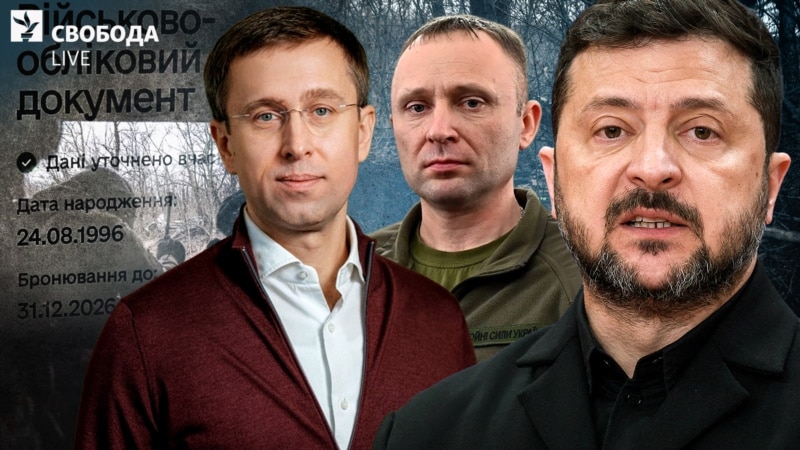
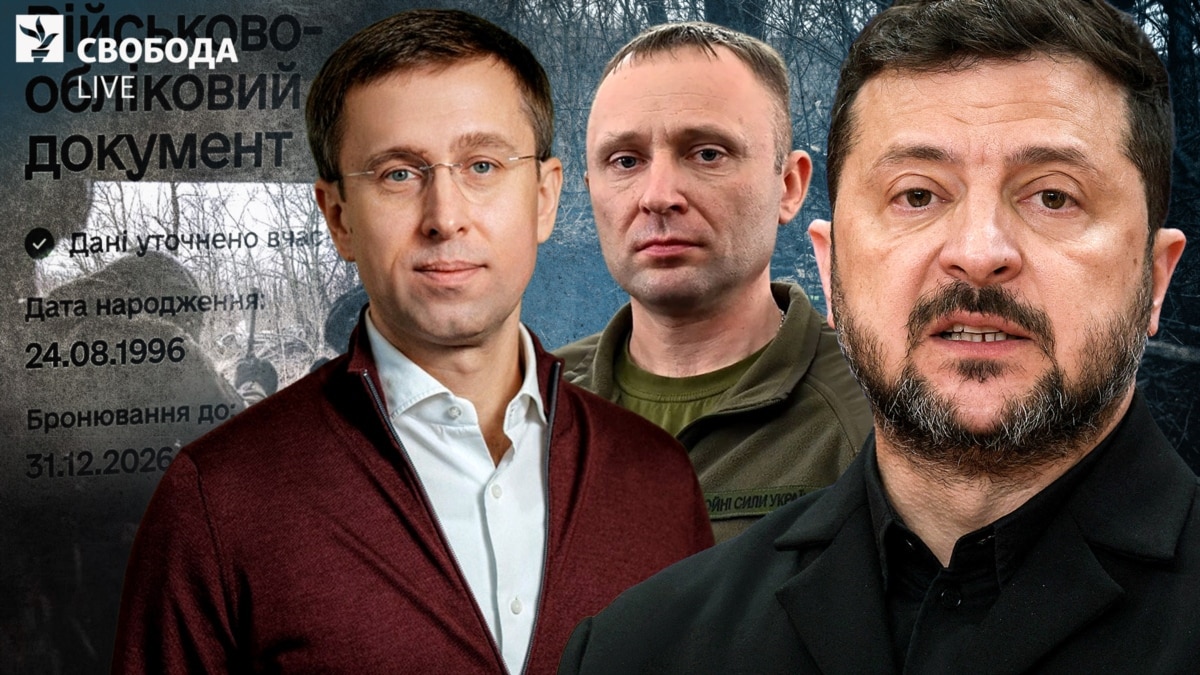
Yuriy Bereza, the commander of the Dnipro-1 volunteer units and a former member of the Verkhovna Rada during its eighth convocation from 2014 to 2019, said the government is looking in the wrong place.
Speaking on the Radio Svoboda program Svoboda Live, Bereza said authorities could mobilize substantial numbers of personnel through other channels without disrupting businesses.
Bereza argued that a major untapped mobilization reserve exists among retired law enforcement personnel, former judges, and individuals previously connected to state institutions. He said these former officials currently draw substantial state pensions, are not being utilized in the defense effort, and are essentially in hiding.

Volunteer battalions such as Dnipro-1 were initially formed in 2014 when fighting first broke out against Russian-backed forces in the Donbas region of eastern Ukraine. Many early volunteer commanders later entered parliament and have remained influential voices on military staffing and defense management.
Calls to target evaders
Oleksandr Fediyenko, a member of parliament representing the governing Servant of the People party, voiced similar reservations about reducing the proportion of exempt civilian employees.
Fediyenko said lowering the percentage of reserved personnel could inflict serious damage on the national economy. He maintained that military recruiters should first concentrate on returning soldiers to their units and conscripting men who have avoided registration.
Fediyenko said he and several fellow lawmakers had appealed directly to the prime minister, urging the government to prioritize individuals who remain off official records, those evading service, and military personnel who have left their units without authorization.
He said authorities should deal with unregistered individuals and unauthorized absences before stripping remaining workers away from essential economic enterprises.
The issue of unauthorized leave, known in Ukrainian military terminology as SZCh, along with draft evasion, has become a sensitive subject of debate inside the Verkhovna Rada as lawmakers attempt to sustain both army ranks and civilian tax revenues.
President Volodymyr Zelenskyy's Servant of the People party holds a parliamentary majority and has overseen extensive legislative revisions to conscription rules, aiming to balance front-line manpower demands with economic stability during wartime.
Upcoming deadlines and enforcement
The government faces immediate milestones as the new regulations take effect. Ministries and regional administrators have 10 days to conclude their audits of exempt companies, determining which employers will lose their protected status.
The new Coordination Centre will begin handling disputed designations and processing requests from vital industries, while the Koretskyi administration works toward its December 1 target to present the comprehensive mobilization framework.