


Brigadier General Antonio Ortiz has stated that Spain's national security is not only guaranteed on national territory, but is also supported beyond its borders through international peacekeeping operations in Lebanon. Ortiz, who commands Spanish forces in the region, emphasized that maintaining external stability requires advanced military technology.
Ortiz serves as commander of both the Roncesvalles Mountain Troops Command and the Lebanon Brigade XLV, designated as BRILIB XLV. He leads United Nations Interim Force in Lebanon operations in Sector East, where nearly 700 Spanish service members operate under UN Resolution 1701 in an unstable environment.
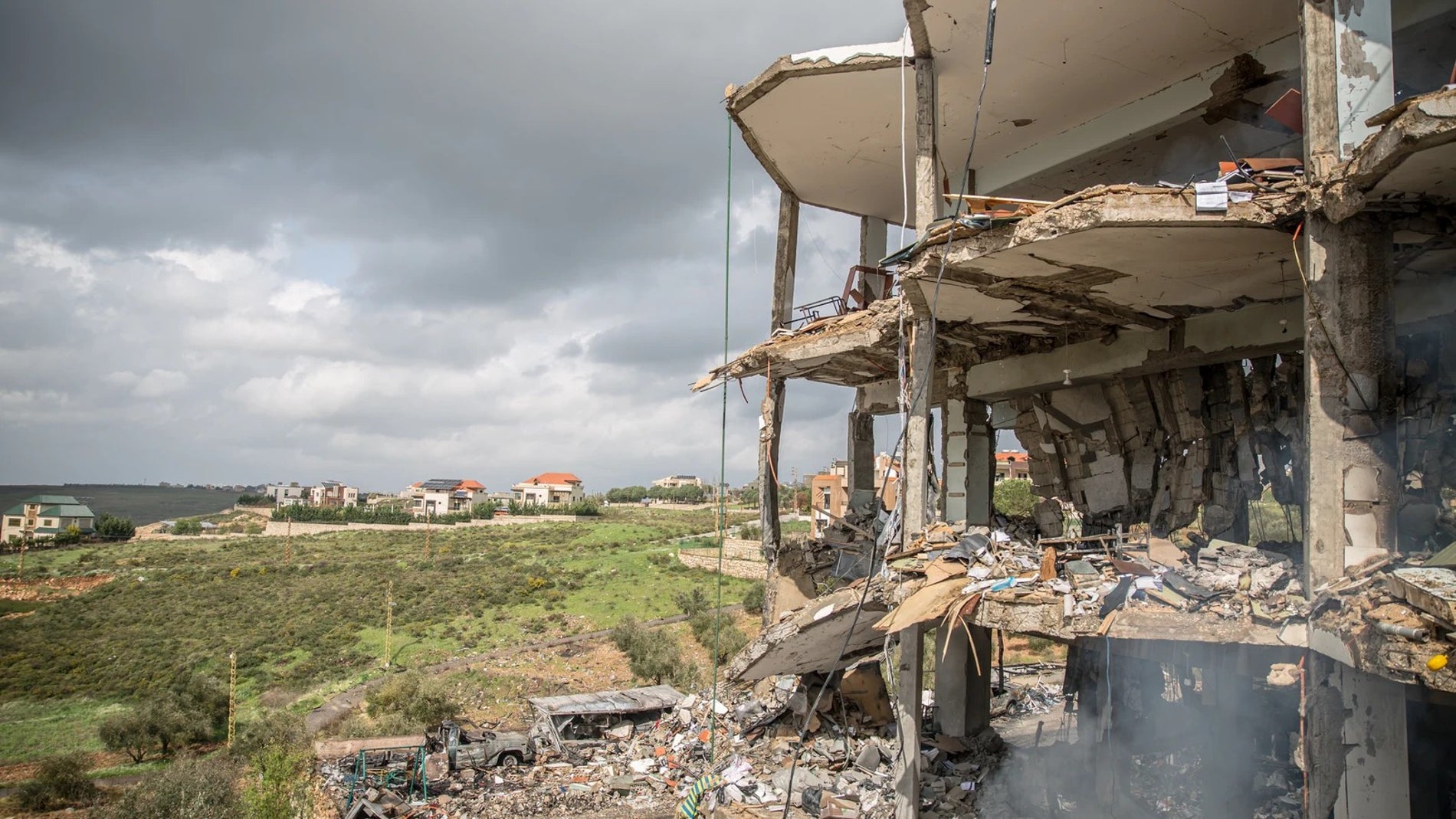
Spanish military strategy positions overseas deployments within a security chain that begins before a crisis reaches national territory. Troops monitor the area, maintain communication channels, and reduce operational risks in southern Lebanon to prevent regional instability from affecting the Mediterranean and broader European areas.
Official explanations clarify that maintaining forces abroad under collective United Nations decisions does not constitute a threat toward any nation. Spanish personnel focus on containing regional volatility, preserving liaison channels between opposing forces, and supporting Lebanese state institutions within defined legal boundaries.
Command rotation and multinational force structure
The general outlined Spain's operational role during an interview published by Jacetania Express on August 26, 2026. Official military communications confirmed that Ortiz remained in active command of both the Roncesvalles unit and BRILIB XLV at the beginning of September 2026.
Spain's current rotation began its mission on May 10, 2026, and officially assumed command of Sector East on May 22, 2026. The official handover took place at Miguel de Cervantes Base near Marjayoun, where Ortiz took over leadership from General Antonio Ramon Bernal Martin, the former chief of BRILIB XLIV. The Defense Staff established a six-month command period for the rotation.
Public reporting on Spanish troop numbers has updated over time. The Defense Staff initially reported approximately 650 deployed personnel on May 22, 2026, while the Ministry of Defense updated the figure on August 20, 2026, to nearly 700 military members. Most Spanish troops reside at Marjayoun, alongside additional personnel positioned at UNIFIL headquarters in Naqoura.
The Spanish command coordinates a multinational brigade comprising approximately 2,500 troops, according to Defense Staff figures. The joint unit integrates military contingents from Spain, Brazil, El Salvador, India, Indonesia, Nepal, and Serbia. Coordinating forces from seven distinct nations requires standardized procedures, unified communication channels, and a central headquarters capable of managing task distribution.
Logistics, technology, and supply lines
Maintaining a multinational brigade requires extensive support systems, including medical care, engineering units, military signals, logistics, and base infrastructure maintenance. BRILIB XLV incorporates specialized personnel drawn from various branches of the Spanish Armed Forces as well as the Civil Guard.
Advanced communications remain central to managing multi-nation force structures. While Spain previously tested a tactical 5G network during operations in Slovakia, military planners point to such technology as an example of how modern command and information sharing function across multinational coalition forces.
Heavy equipment and essential supplies reach the region primarily through maritime routes. The Spanish Navy operates El Camino Espanol, a 154.5-meter transport ship based in Cartagena, which delivers military cargo directly to the port of Beirut to ensure deployed units remain fully supplied throughout their six-month rotation.
The Litani River mandate and Blue Line withdrawal
UNIFIL operates within a designated zone in southern Lebanon extending from the Litani River to the Blue Line. The United Nations established the Blue Line in 2000 to verify the withdrawal of Israeli forces, though international law does not recognize it as an official international border. Spanish leadership oversees Sector East from its command center in Marjayoun.
United Nations Security Council Resolution 1701, adopted in 2006, directs peacekeepers to monitor the cessation of hostilities, support the deployment of the Lebanese Armed Forces, coordinate with both Lebanese and Israeli authorities, and facilitate humanitarian access. The resolution mandates that armed authority between the Litani River and the Blue Line belongs exclusively to the Lebanese state and UNIFIL.
The mission operates under a defined legal timeline. Resolution 2790, adopted unanimously on August 28, 2025, extended UNIFIL's mandate for a final period ending on December 31, 2026. United Nations directives require operations to cease at that point, initiating an orderly withdrawal expected to conclude by the end of 2027.
The Ministry of Defense designated BRILIB XLV on August 20, 2026, as Spain's final troop rotation for the mission. While specific dates for the complete withdrawal of Spanish forces have not been published, military commanders noted that the conclusion of the UN mandate does not indicate plans for any subsequent foreign intervention.
Security conditions and operational frameworks
International peacekeepers continue to operate amidst ongoing regional violence. United Nations reports published on August 10, 2026, documented that UNIFIL recorded 455 Israeli artillery projectiles fired into southern Lebanon alongside 97 airspace incursions during a single weekend. Peacekeepers also routinely locate and clear unexploded ordnance and weapons caches within their area of responsibility.
UNIFIL maintains operations within a fragile ceasefire framework. Peacekeeping forces hold the capacity to observe movements, document incidents, maintain liaison with opposing parties, and mitigate immediate risks, but they do not possess the mandate to enforce a permanent political settlement independently.
Military doctrine divides the mission's responsibilities into four core categories: peace operations, deterrence, force protection, and active combat. Peacekeeping tasks include foot and vehicle patrols, Blue Line surveillance, host-nation military support, explosive ordnance disposal, and humanitarian convoy escorts, while primary territorial defense remains the responsibility of Lebanese authorities.
Deterrence relies on a visible multinational presence to document violations and prevent military miscalculations. This function differs from collective defense arrangements, such as NATO's southern flank operations in Rota, and does not serve as a direct military guarantee for Spanish territory. Force protection encompasses measures to protect personnel and facilities, including hardened shelters, medical facilities, surveillance equipment, and explosive device response systems.
UNIFIL is not configured for combat operations and has no assigned adversary or offensive campaign against Israel or Hezbollah. However, Resolution 1701 grants authority for peacekeepers to take necessary action within their capabilities to prevent hostile acts, resist violent interference with their mandate, protect UN personnel, and shield civilians from imminent physical threats.


