Lawmakers from six different parliamentary blocs in Peru's Congress have jointly submitted a bill that would ban industrial fishing inside all Protected Natural Areas, setting aside political and ideological differences to back the measure.
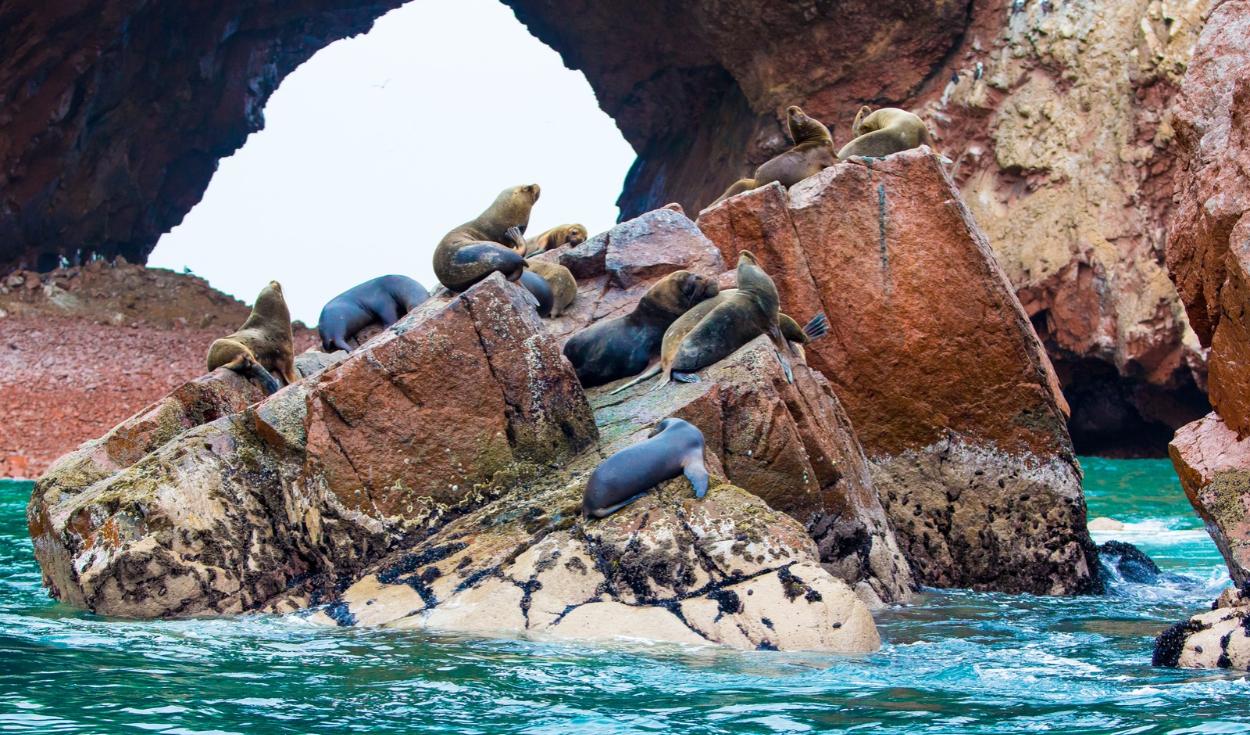
The legislative initiative reflects demands from artisanal fishers, scientists and citizens committed to defending Peru's sea, after attempts by some sectors to push large-scale fishing operations into protected zones such as Paracas.
The backing from Congress comes alongside a citizen mobilization that has collected more than 300,000 signatures, reflecting the commitment of fishers and scientists to defending marine reserves, according to the bill's promoters.
Changes to Peru's protected areas law
The multiparty proposal seeks to modify Law No. 26834, the Protected Areas Law, to strengthen aquatic biodiversity. It would add a new Article 27-A stating that the use of hydrobiological resources inside protected natural areas could only be authorized for aquaculture, artisanal and small-scale fishing, subsistence and sport fishing, and scientific research, provided this is compatible with the area's category, zoning and Master Plan.
The article also specifies that resource use must not undermine the purposes for which an area was established, and that large-scale fishing is prohibited inside marine or continental protected natural areas, regardless of category or zoning. Holders of fishing permits issued before an area was declared protected would still have to comply with the article.
A ban on industrial fishing in protected natural areas already exists, but only at the level of a regulation, which is why a stronger legal norm is considered necessary to guarantee the integrity of the National System of State-Protected Natural Areas, known as SINANPE, particularly its marine and coastal-marine spaces.
The bill carries the signatures of lawmakers Rossana Alayza Maccera (PBG), Victor Pinan Mamani (Obras), Ernesto Zunini Yerren (JPP), Angel Meneses Crispin (AN), Lila Prado Vallejos (PBG), Nora Llaque Linares (PBG), Carlos Zegarra Sanchez (FP), Jeenny Samanez Gonzales Vigil (Obras) and Georgina Duarte Patino (PBG), along with Carlos Yalta Sotelo (RP), Norma Yarrow Lumbreras (RP), Jessica Benitez Barrionuevo (PBG), Fernando Garcia Huby (PBG), Giannina Avendano Vilca (JPP) and Romina Uribe Saenz (JPP).
Legal battle over Paracas
Since 2001, Article 112.5 of the Regulation of the Protected Natural Areas Law has restricted industrial fishing inside protected natural areas, both marine and continental.
However, the National Fisheries Society, known by its Spanish initials SNP, has argued it holds acquired rights and has questioned the validity and scope of the rule, pursuing a series of legal actions to secure industrial fishing access. The SNP sued the Peruvian state to allow its members to fish industrially in protected zones such as the Paracas National Reserve, but the effort was rejected.
Peru's Supreme Court ratified the constitutionality of the prohibition and recognized it as part of the conservation objectives set out in national legislation.
Enforcement and next steps
Despite that court ruling, the lawmakers behind the bill believe protected marine areas need to be shielded through a measure with the force of law, to close possible gaps in interpretation and give the areas set aside for conserving the country's biodiversity greater legal stability.
Under the bill's first complementary provision, the Executive would have no more than 60 calendar days from the law's entry into force to approve the regulations needed to comply with it, including defining administrative infractions for breaching the ban on large-scale fishing in marine and continental protected natural areas.
A second provision assigns enforcement duties to the Ministry of Production and the National Service of State-Protected Natural Areas, known as SERNANP, which would have 60 calendar days to begin permanent oversight actions to prevent large-scale fishing inside protected natural areas, marine or continental.
Broad support for the bill
The multiparty bill revives a proposal drafted by the Environment Committee of the previous Congress, which had approved a report combining several legislative initiatives. That report was never debated in the full chamber, reportedly due to political interests.
The initiative now returns with strong political backing from six parliamentary blocs and, according to its promoters, the momentum of a citizen mobilization that has gathered more than 300,000 signatures in defense of marine reserves.
The scientific community has also joined the effort through a statement signed by several recognized researchers, urging authorities to close ranks in defense of protected marine areas. Fishing guilds, from the Macro Sur to the Federacion Integrada de Pescadores Artesanales del Peru, known as FIUPAP, have likewise voiced their support, saying the protection of marine areas defends both their livelihoods and the resources that reach the tables of millions of families.
Jose Hernandez, a fisherman and president of the Management Committee of the Paracas National Reserve, said protecting Paracas and Peru's marine reserves was not an ecologist whim but a way of guaranteeing the direct livelihood and food supply of millions of Peruvian families. He said that if industrial fishing entered the natural breeding grounds, within a few years there would be no resource left to fish, either for artisanal fishers or for the national market.