


Russia is now producing more jet-powered Shahed kamikaze drones than conventional internal combustion engine models, according to Ukrainian military intelligence data reported by defence news portal Militarnyi.
The Main Directorate of Intelligence of the Ministry of Defence of Ukraine, known as GUR, estimates that Russian factories assemble approximately 3,000 Geran-4 and Geran-5 jet-powered drones each month. By comparison, Russian industry produces about 2,800 Geran-2 strike drones with standard engines. Russian forces began gradually increasing their deployment of jet UAVs in early 2026, followed by a sharp escalation in June and July as manufacturing capacity was redirected.
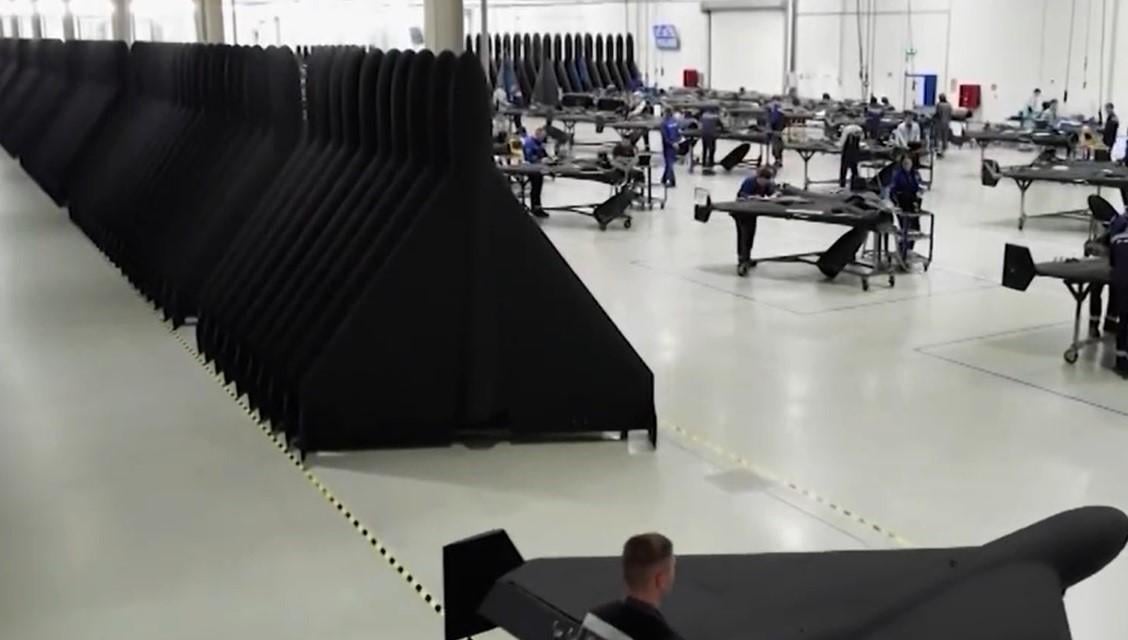
The primary manufacturing operations are centered in the Alabuga industrial zone in the Republic of Tatarstan, near the city of Yelabuga. Additional assembly for the Garpiya drone series takes place at the Izhevsk Electromechanical Plant Kupol, a state-owned defense facility in Russia's Udmurt Republic.
Technical specifications of Geran-4 and Geran-5 drones
The turbojet-powered Geran-4 and Geran-5 represent Russia's newest drone developments, modernized after acquiring Shahed technology from Iran. Kamikaze drones, also known as loitering munitions, are aerial weapons designed to loiter over target areas before detonating on impact. Russia has rebranded the Iranian drone designs under the Geran designation and deployed them extensively during the war in Ukraine.
According to Militarnyi, the Geran-4 builds upon the concept of the earlier Geran-3 jet prototype, featuring a fuselage optimized for higher flight speeds. The drone retains a wingspan of about 3 metres and a length of 3.5 metres, matching previous dimensions, while its maximum takeoff weight has increased from 350 to 450 kilograms. It is equipped with a Chinese turbojet engine providing 160 kgf of thrust, doubling the output of the Telefly JT80 engine used on the Geran-3. The power upgrade elevates its cruising speed to between 350 and 500 km/h and extends its flight range up to 850 kilometres.
The Geran-5 adopts a fundamentally different aerodynamic design, abandoning the classic delta-wing structure of earlier Shahed variants. Its fuselage more closely resembles a cruise missile. The model is fitted with a Chinese TELEFLY TF-TJ2000A jet engine generating 200 kgf of thrust, carries a 90-kilogram warhead, and has a reported strike range of roughly 1,000 kilometres.
Ukrainian targeting and threat assessment
Russia's main kamikaze drone assembly facility near Yelabuga in Tatarstan sits in the Volga region, more than 1,000 kilometres from the Ukrainian border. Although Ukrainian forces previously launched a successful long-range strike against an oil refinery in Tatarstan, intelligence reports indicate that Ukraine currently lacks the technological capability to hit the Alabuga drone plant directly.
Ukrainian military intelligence analysts emphasized that the Alabuga plant remains a top-priority target. The facility has expanded dramatically in scale in recent years, presenting a severe and growing security threat to Ukrainian defense forces and civilian infrastructure.


