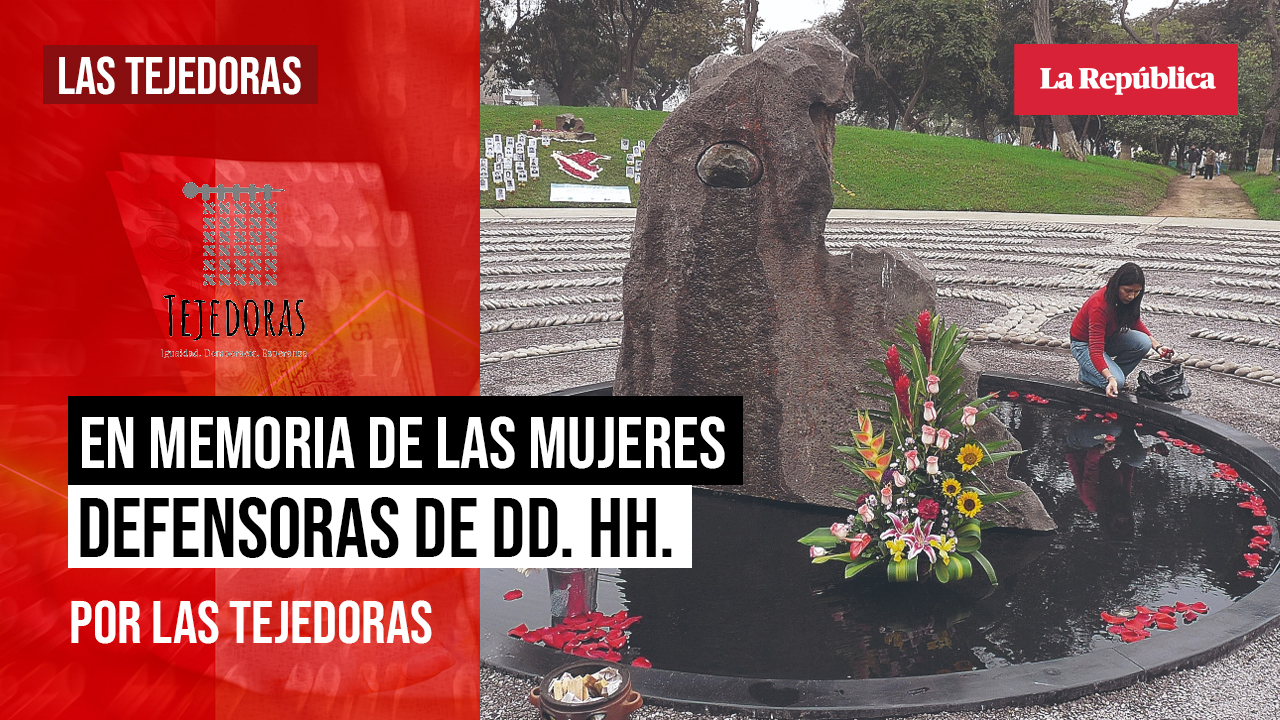
A garden of roses, rosemary, and fruit trees planted near the El Ojo que Llora memorial in Lima pays tribute to women human rights defenders killed or affected during Peru's internal armed conflict.
Sociologist and feminist Patricia Amat, writing on behalf of the women's collective Las Tejedoras, said these defenders must be named to remember the thousands of women killed and abused during the conflict, including local residents, community members, grassroots leaders, activists, religious sisters, journalists, and their families.
Peru's internal conflict between state security forces and insurgent groups between 1980 and 2000 claimed tens of thousands of lives, disproportionately affecting rural and indigenous communities across the Andean nation.
Victims of political violence
The tribute honors Consuelo García, a feminist social activist killed in 1989 by the Rodrigo Franco command, a paramilitary death squad active in Peru during the late 1980s.
It also commemorates women targeted by the Maoist insurgent group Shining Path, known in Spanish as Sendero Luminoso. Those honored include environmental journalist Bárbara D’Achille, killed in 1989, and prominent grassroots feminist leaders María Elena Moyano, assassinated in 1992, Rosa del Águila in 1993, and Pascuala Rosado in 1996. Moyano was a prominent community leader in Lima's Villa El Salvador district.
Two religious sisters who served local populations in the conflict-torn southern region of Ayacucho are also recognized: Sister María Agustina Rivas, known as Aguchita, killed in 1990, and Australian-born Sister Irene McKormack, killed in 1991.
Relatives seeking truth and justice
The garden tribute pays homage to women who spent their lives demanding truth and justice for slain family members. Among them are Gloria Trelles de Mendívil, mother of journalist Jorge Luis Mendívil, and Gilma Torres de Retto, mother of photojournalist Willy Retto. Both journalists were killed in 1983 in the Andean village of Uchuraccay alongside six colleagues.
It honors Margarita Patiño de Bustíos, wife of investigative news journalist Hugo Bustíos, who was killed by members of the Peruvian Army in 1988. Angélica Mendoza de Ascarza, known affectionately as Mamá Angélica, is recognized alongside other mothers from Ayacucho who spent decades searching for their disappeared children.
The remembrance extends to Dutch-born artist Lika Mutal, who created the El Ojo que Llora monument in Lima's Campo de Marte park, and Sister Pilar Coll, a religious sister who devoted much of her life to defending human rights in Peru.
Preserving spaces of memory
Amat emphasized that memory is always contested, warning that historic memory sites across Peru face ongoing threats of removal, closure, or being rendered irrelevant. She said honoring these women requires preserving places of remembrance, including the Place of Memory, Tolerance and Social Inclusion (LUM) in Lima, the El Ojo que Llora memorial garden, and the Para que no se repita Museum operated in Ayacucho by the National Association of Families of the Kidnapped, Detained and Disappeared of Peru (Anfasep).
Las Tejedoras, a collective bringing together women across different political backgrounds, territories, and personal experiences, pledged to maintain open dialogue and foster democratic ties aimed at preventing corruption and authoritarianism from seizing state institutions.