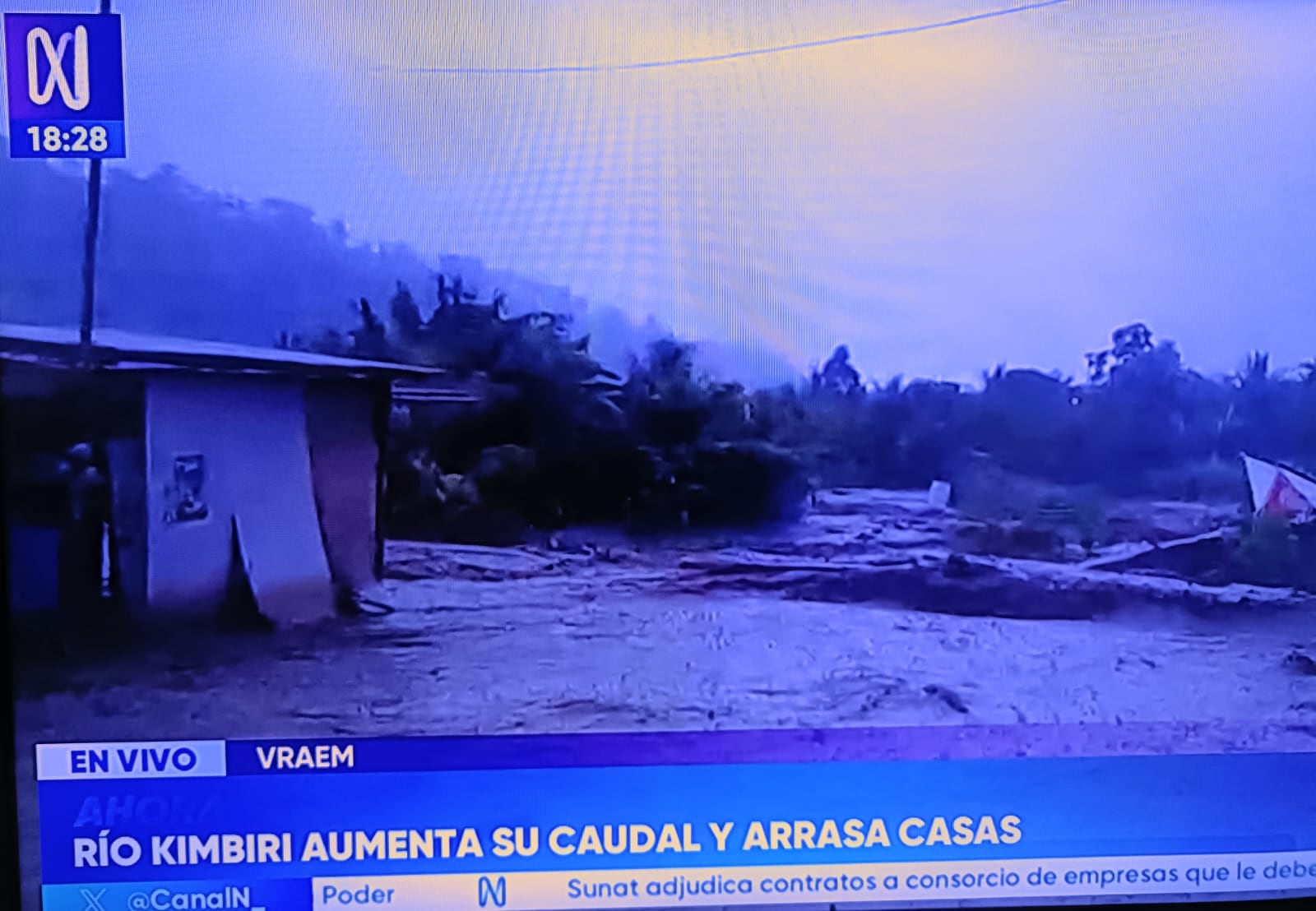
Peru has placed 11 departments on red alert as heavy rains linked to the El Nino weather pattern threaten communities across the country.
The emergency warning from the National Service of Meteorology and Hydrology of Peru, known as Senamhi, runs for three days from Tuesday, October 27 to Thursday, October 29, 2026.
The country's disaster risk agency, the National Center for Estimation, Prevention and Reduction of Disaster Risk (Cenepred), warned that more than 20 million Peruvians face serious danger from disasters capable of destroying homes and critical infrastructure.
Issuing Meteorological Warning No. 440, Senamhi raised the alarm for the northern coast and the Andean highlands, prompting national officials to urge regional and municipal governments to adopt immediate civil defence measures.
Regions facing severe weather
The red alert covers 11 of Peru's 25 administrative departments: Tumbes, Piura, Lambayeque, Cajamarca, La Libertad, Ancash, Huanuco, Apurimac, Arequipa, Cusco, and Puno, according to a report shared by Infobae.
The northern coastal departments of Tumbes, Piura, and Lambayeque border Ecuador and the Pacific Ocean, where low lying agricultural plains are especially vulnerable to flash flooding. Further inland and south, the alert extends across the rugged Andes mountain chain to regions such as Cusco, the historic heart of the Inca Empire, and Puno, which borders Bolivia around high altitude Lake Titicaca.
Forecasters anticipate that the northern coast will register rainfall between 2 and 21 millimetres per day. In the northern highlands, daily accumulations are expected to oscillate between 11 and 29 millimetres.
In the southern highlands, drizzle between 1 and 15 millimetres per day is forecast, with conditions capable of producing destructive hailstorms. Senamhi also warned of snowfall in mountain areas situated above 3,900 metres in altitude, alongside electric storms and wind gusts of up to 40 kilometres per hour.
El Nino climate impacts
The severe weather warnings come as several districts in the capital city of Lima and other regions continue to experience unseasonal heat combined with high humidity, light drizzle, and strong coastal winds attributed to El Nino.
El Nino is a cyclical climate phenomenon driven by the warming of surface waters in the central and eastern Pacific Ocean. Under normal conditions, the cold Humboldt Current flows northward along Peru's coast, keeping the coastal desert dry and temperate. When El Nino warms coastal waters, the air above absorbs immense amounts of moisture, triggering torrential rainfall when ocean winds collide with the steep slopes of the Andes mountains.
The torrential downpours regularly produce huaicos, a Quechua term for fast moving flash floods and mudslides that surge down Andean gorges, sweeping away unpaved roads and informal housing developments. Cenepred calculates risk exposure using mapping data that factors in geography, construction quality, and proximity to riverbeds, indicating why more than half of Peru's population of roughly 34 million faces acute hazards during major climate anomalies.
Government economic relief plan
To mitigate the impact of the extreme weather, the Peruvian government has formalized a package of economic relief measures. Minister of Economy and Finance Elmer Cuba told the radio broadcaster RPP that the state will allocate 18,000 million Peruvian soles to sustain national economic growth during 2027 and assist vulnerable households.
Cuba explained that the state funding is designed to counter three converging economic pressures: the fallout from El Nino, rising domestic fuel costs, and higher commercial interest rates that have squeezed family budgets across the South American country.
Among the measures announced, the government will deliver a one-time extraordinary bonus of 200 soles in December to nearly 800,000 pensioners registered with the National Social Security Normalization Office, known as the ONP. Cuba described the cash payment as a preventive step to support elderly citizens on fixed pensions before the worst weather arrives.
Preparations for upcoming hazards
The Executive branch and the Ministry of Development and Social Inclusion, known as Midis, are evaluating additional relief programs for families exposed to droughts, torrential rainstorms, and impending landslides that specialists predict will strike in the coming weeks.
Cuba said that authorities cannot yet determine the exact number of people or specific geographical zones that will require emergency assistance. He explained that final relief operations will depend directly on the ultimate magnitude and track of El Nino.